
10 Fruit Platter for Kids Ideas That Actually Get Eaten
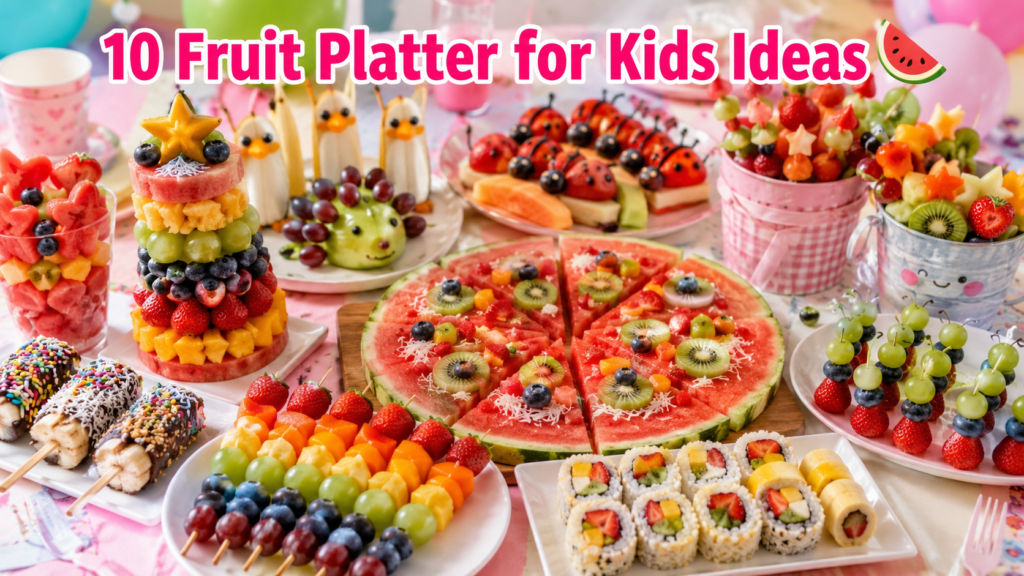
Every summer, I’d spend 45 minutes arranging a gorgeous fruit platter for kids‘ birthday parties. Watermelon stars. Perfectly fanned strawberries. The whole Pinterest fantasy. And every single time, the kids would walk past it to grab chips. The adults ate the fruit. The kids ate the chips. I’d spent nearly an hour on something that functioned as decoration.
That changed the day I stopped making fruit platters that looked impressive to adults and started making ones that looked irresistible to children. The difference is enormous, and it’s not just about cutting things into shapes. It’s about understanding how kids actually engage with food, what excites them, and what makes them feel like the platter was made specifically for them.
Here’s what nobody in the food blogging space talks about enough: kids eat with their eyes first, their hands second, and their mouths last. If the presentation doesn’t immediately communicate “this is fun and this is for me,” they’re already mentally at the chip bowl.
In this guide, you’ll discover 10 fruit platter ideas tested on real kids at real parties, school events, and lazy weekend mornings. You’ll learn not just what to make, but exactly why each one works, where most people go wrong, and how to adapt each idea for different age groups, dietary needs, and budget ranges. You’ll also find out which fruits hold up for hours without browning and which ones turn into a sad, weeping mess by the time the party actually starts.
Why Do Kids Ignore Most Fruit Platters?
The real reason kids ignore fruit platters isn’t that they hate fruit. It’s that most platters aren’t designed for kids at all. They’re designed to impress other adults on Instagram. The moment you shift your design philosophy toward your actual audience, everything changes.
Think about what a traditional fruit platter looks like: a large oval serving dish with carefully arranged slices of melon, grapes in clusters, strawberries fanned out, maybe some kiwi rounds. It’s beautiful. It photographs magnificently. It is also completely uninviting to a seven-year-old who doesn’t understand portion boundaries, doesn’t want to serve themselves from a shared platter in front of peers, and would genuinely rather have something that feels like a personal adventure.
I watched a child at a party last year stand in front of a stunning fruit arrangement for a full 30 seconds, decide it was “too big,” and walk away. The platter intimidated her. She didn’t know where to start. There were no clear “entry points.”
Kids need invitation, familiarity, fun, and most importantly, individual ownership. When you design with those principles, fruit suddenly becomes the thing everyone fights over.
There’s also a tactical reality. Fruit platters at kids’ events typically sit out for two to three hours minimum. Apples brown. Cut melon becomes watery. Berries start leaking purple juice everywhere. If you don’t plan for food safety and presentation longevity, your beautiful platter becomes an unappetizing mess by the time most kids actually want a snack.
The 10 ideas below solve every one of these problems.
Idea 1: The Rainbow Fruit Skewer Station
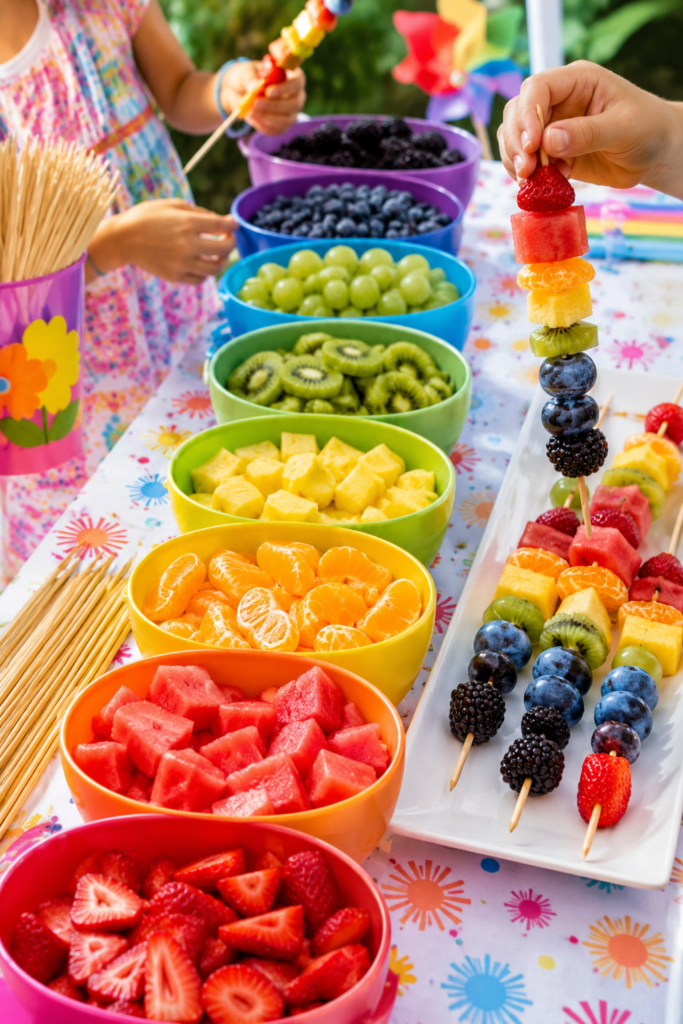
Rainbow skewers transform passive fruit consumption into an active, creative experience. Kids build their own skewers by color, turning healthy eating into a craft project that takes about three minutes to set up per child.
Here’s the setup: arrange fruit by color in small individual bowls or sections of a muffin tin. Red bowl holds strawberries and watermelon cubes. Orange has mandarin segments and cantaloupe. Yellow features pineapple chunks and mango. Green gets grapes and honeydew. Purple and blue holds blueberries and blackberries. Set out bamboo skewers (cut the sharp tips off with scissors for younger kids) and let them build.
The genius of this approach is that kids create ownership over what they eat. A child who builds their own rainbow skewer will eat every piece on it, because they chose it. I’ve seen children who “don’t like grapes” eat grapes enthusiastically because they needed purple for their rainbow and they put it there themselves.
For kids under five, skip the skewers entirely and just put the colored bowls out as a serve-yourself rainbow bar. For older kids, eight and up, add a challenge card: “Can you make a pattern? Can you use every color twice?”
The single biggest mistake people make here is using fruits that don’t thread well. Banana slices fall apart on skewers. Watermelon cubes need to be at least an inch thick or they crack. Cut your pieces slightly larger than you think you need.
Budget reality: this setup costs between $15 and $25 for 20 kids, depending on your local fruit prices and the season. Berries are the expensive wildcard. In winter, swap blueberries for red grapes and use canned mandarin segments instead of fresh.
Idea 2: Watermelon Pizza Slices
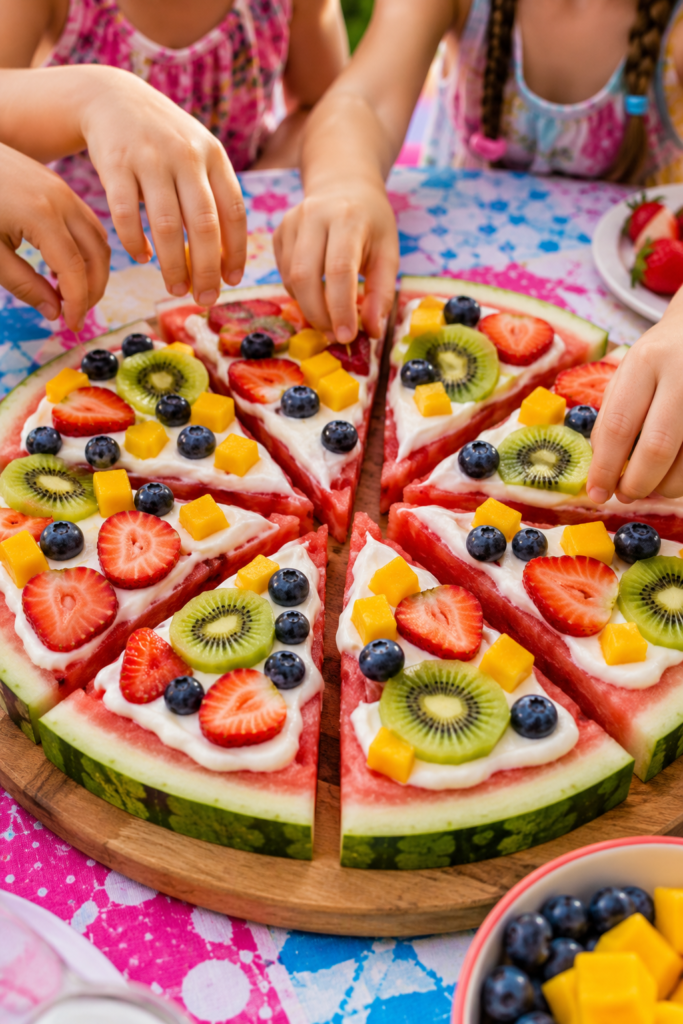
Watermelon pizza might be the single most photographed kids’ food concept of the last decade, but most people execute it wrong. Done right, it becomes the centerpiece that kids actually eat down to the rind.
The basic concept: cut a whole watermelon into round cross-sections about an inch thick. Each round becomes a “pizza.” Top with yogurt (plain or vanilla works as the “sauce”), then arrange small fruits as “toppings.” Blueberries work perfectly as olives. Strawberry slices become pepperoni. Kiwi rounds are the green peppers. Then slice the whole round into triangles.
What makes this work is the pizza narrative. A child who refuses to eat plain fruit will eat watermelon pizza because their brain has already categorized it as pizza. It’s familiar. The yogurt adds creaminess that plain fruit lacks. The combination of textures keeps them engaged through the whole slice.
The mistake I made the first time I tried this: I used Greek yogurt straight from the container. It’s too thick and slides right off the wet watermelon surface. Mix one cup of Greek yogurt with one tablespoon of honey and let it sit for five minutes. It loosens slightly and adheres much better. Alternatively, full-fat coconut yogurt works beautifully for dairy-free kids and has a slightly firmer texture.
One watermelon yields about eight pizza rounds, which you can cut into six to eight triangles each. That’s enough for 30 to 40 kids if you’re serving this as part of a larger spread.
Timing is critical here. Assemble no more than 30 minutes before serving. The watermelon releases juice that dilutes the yogurt and makes everything soggy. If you’re prepping for a party, refrigerate the plain watermelon rounds and add toppings at the event.
Idea 3: Fruit Sushi Rolls
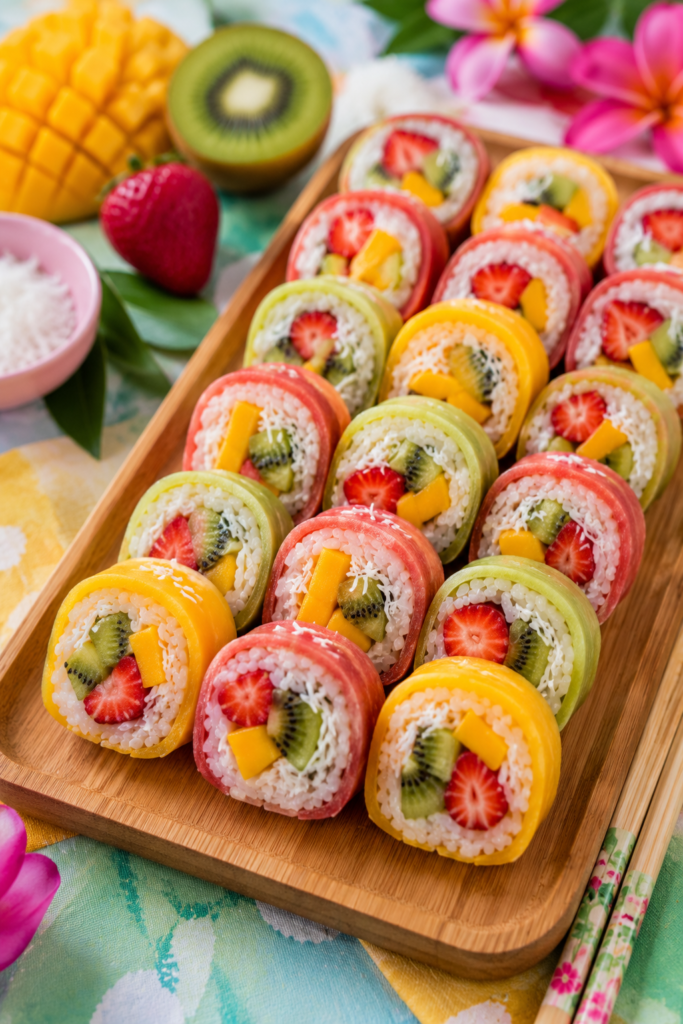
Fruit sushi is the idea that consistently shocks adults while absolutely delighting kids aged six and up. It takes about 20 minutes to make, looks complex, and is actually straightforward once you understand the technique.
The “rice” is made from sweetened coconut rice: cook one cup of sushi rice according to package directions, then mix in two tablespoons of coconut milk and one tablespoon of sugar while still warm. Let it cool completely. The “nori” wrapper is a thin fruit leather strip, either store-bought or homemade. The filling is thin strips of mango, strawberry, and kiwi.
To roll: lay fruit leather flat, spread a thin layer of coconut rice over two-thirds of it, arrange fruit strips across the center, and roll tightly. Slice into rounds with a sharp knife. They look exactly like maki rolls. The cross-section reveals beautiful color combinations.
Kids who are familiar with sushi find this thrilling. Kids who aren’t familiar with sushi find it mysterious and adventurous in exactly the right way.
The honest challenge here is the fruit leather. Store-bought fruit leather (Stretch Island makes the most pliable variety, available at most grocery stores for around $4 for a pack of eight) works reliably. Homemade fruit leather is wonderful but requires a dehydrator or a long slow oven and considerable advance planning.
This works best for kids eight and older. The concept might confuse younger children, and the chewing texture of fruit leather can frustrate kids who are still developing their bite strength.
Idea 4: Individual Fruit Cups with Dipping Sauce
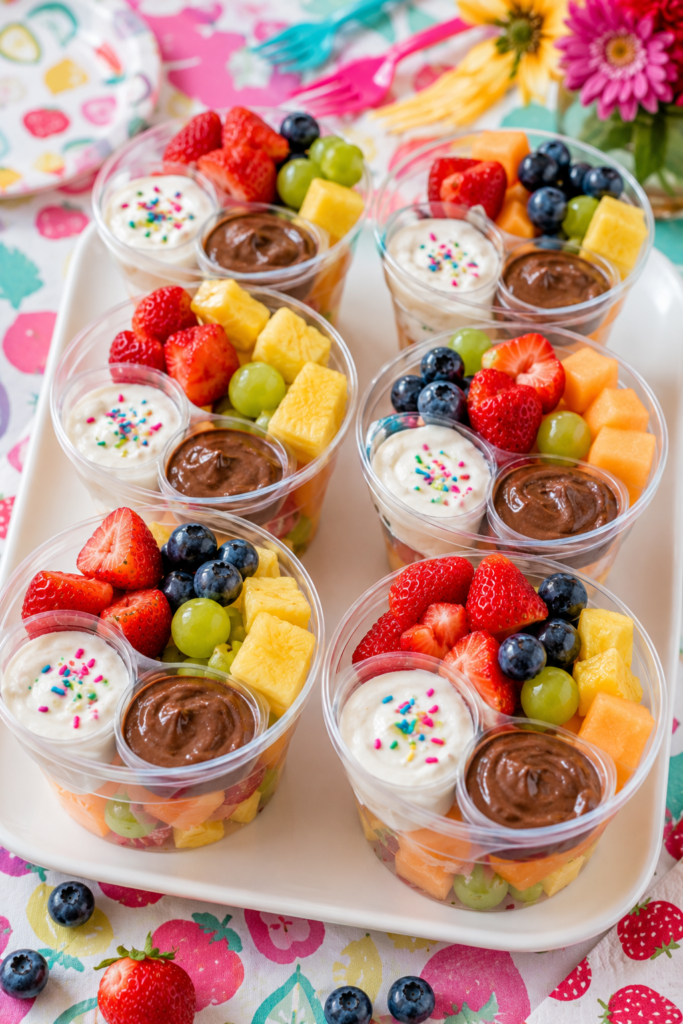
Individual servings solve the single biggest psychological barrier to kids eating from communal platters: the anxiety of serving themselves in front of other children.
This is simpler than most of the other ideas, but don’t underestimate its power. Small clear plastic cups (3 oz portion cups work perfectly, available in packs of 100 for about $6 online) filled with a mix of cut fruit and one dipping sauce cup attached to the side. Each child gets their own. Nobody has to reach past anyone else. Nobody worries about taking “too much.”
The dipping sauces are where this becomes genuinely exciting. Yogurt-honey dip is the safe crowd-pleaser. Chocolate hummus (sounds unusual, absolutely works) is the unexpected hit that makes kids’ eyes go wide. Peanut butter thinned with a little apple juice is deeply satisfying. Coconut cream whipped with a pinch of vanilla turns fruit dipping into something that feels slightly naughty and completely wonderful.
Always confirm allergy information before using peanut butter. For school events especially, offer a clearly labeled peanut-free alternative as the default.
Fruit that holds up best in individual cups without browning: grapes, strawberry halves, pineapple chunks, melon cubes (chill well and drain before adding), blueberries, blackberries, and mandarin segments. Fruits to use with caution: sliced bananas (brown within 20 minutes), apple slices (need a lemon juice toss to delay browning), and cut kiwi (becomes slimy after a few hours).
You can prep these cups up to four hours ahead, cover with plastic wrap, and refrigerate. Pull them out 15 minutes before serving.
Idea 5: Flower-Shaped Fruit Arrangements
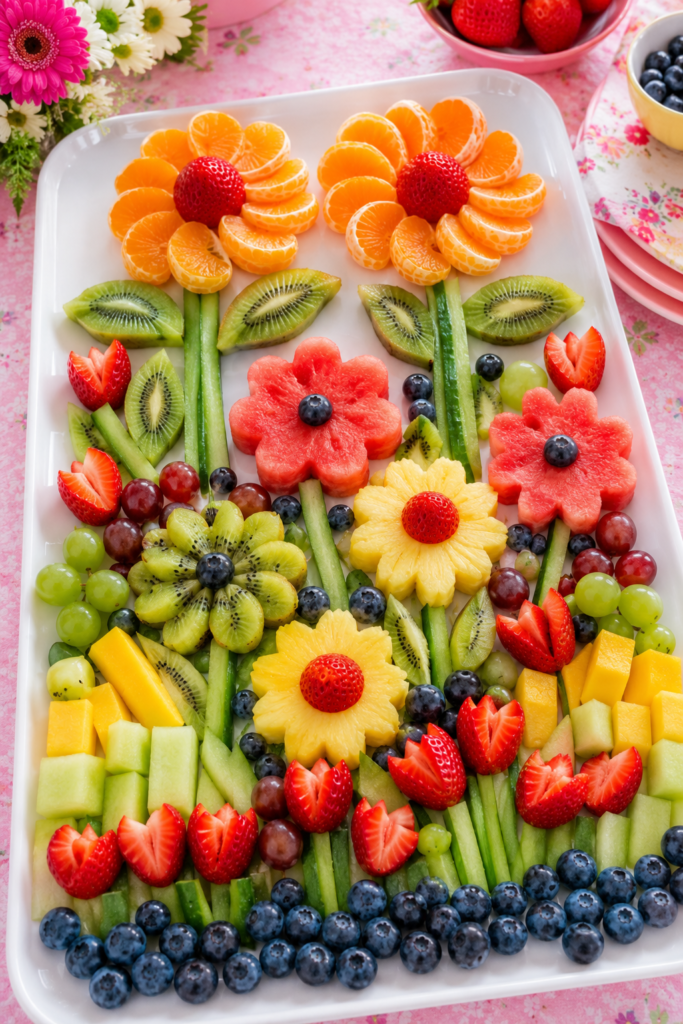
Flower fruit arrangements hit a specific sweet spot: they’re beautiful enough that kids feel special, simple enough that they can help make them, and familiar enough that they don’t feel intimidating to eat.
The basic flower: use a small round cutter (or a paring knife) to cut a circle from a strawberry or watermelon slice as the flower center. Arrange thin slices of a different fruit in a petal pattern around it. Mandarin segments make perfect petals. Thin cantaloupe slices curve beautifully. Halved grapes work in a pinch.
Arrange multiple flowers on a green base: kale leaves, sliced cucumber rounds, or green apple fans all suggest grass or leaves and complete the garden scene.
Here’s the insight that separates a good flower platter from a great one: include one or two flowers that kids can clearly see how they were made, and have extra materials available so kids can make their own. A “make your own flower” station next to a completed flower platter gets children invested in the display in a way that passive presentation never achieves.
This approach works particularly well for spring birthdays, garden-themed parties, and Mother’s Day brunches where kids want to contribute something beautiful.
One confession about my early attempts at this: I used to spend 40 minutes making elaborate flowers that fell apart the moment someone took a petal. The fix is simple. Use a toothpick through the center of each petal and into the center circle. It holds the shape and gives kids something to grab onto when they’re ready to eat a petal.
Idea 6: Caterpillar and Animal Fruit Designs
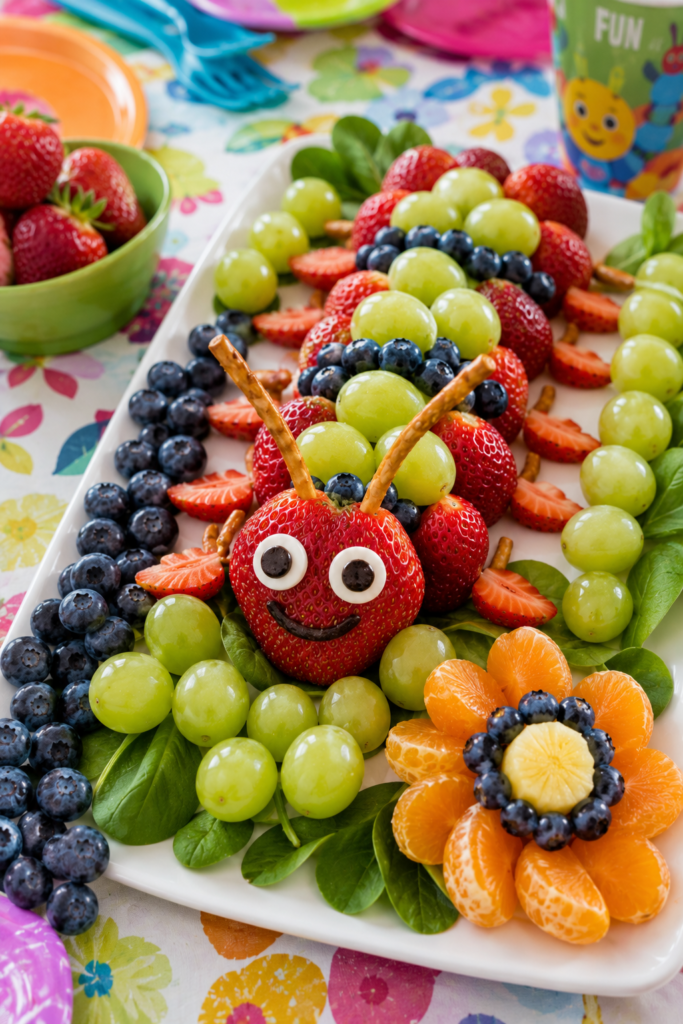
Animal-shaped fruit designs tap directly into the storytelling part of a child’s brain. They don’t just see food. They see a character. And you don’t eat a character without a moment of joyful, theatrical ceremony.
A caterpillar is the most forgiving and most beloved. Start with a large strawberry or grape for the head. Add two blueberry eyes using toothpick stubs. Then create the body using alternating green and red grapes on a curving skewer or simply arranged in an S-curve on the platter. Add antennae from thin pretzel sticks. Done. The whole thing takes eight minutes and generates genuine gasps from children five and under.
For older kids, try a fruit snail: a cinnamon roll-shaped spiral of thin apple slices with a strawberry head. Or a fruit shark: a halved watermelon with the flesh cut into teeth along one cut edge, filled with fruit salad in the “mouth.”
The watermelon shark, specifically, is worth committing to at least once. I’ve served it at seven different kids’ events and it has never once failed to create a crowd. Children will queue up to take photos with it. They will eat from the “shark’s mouth” with dramatic screaming. It transforms a fruit platter into entertainment.
The time investment is real. A watermelon shark takes 25 to 35 minutes to carve properly. There’s a learning curve on the teeth. I ruined my first one by cutting too deep and collapsing the structure. The fix: score your cut lines lightly before committing, and keep your teeth cuts to about one inch deep maximum.
Idea 7: Fruit and Cheese Combo Boards Designed for Kids
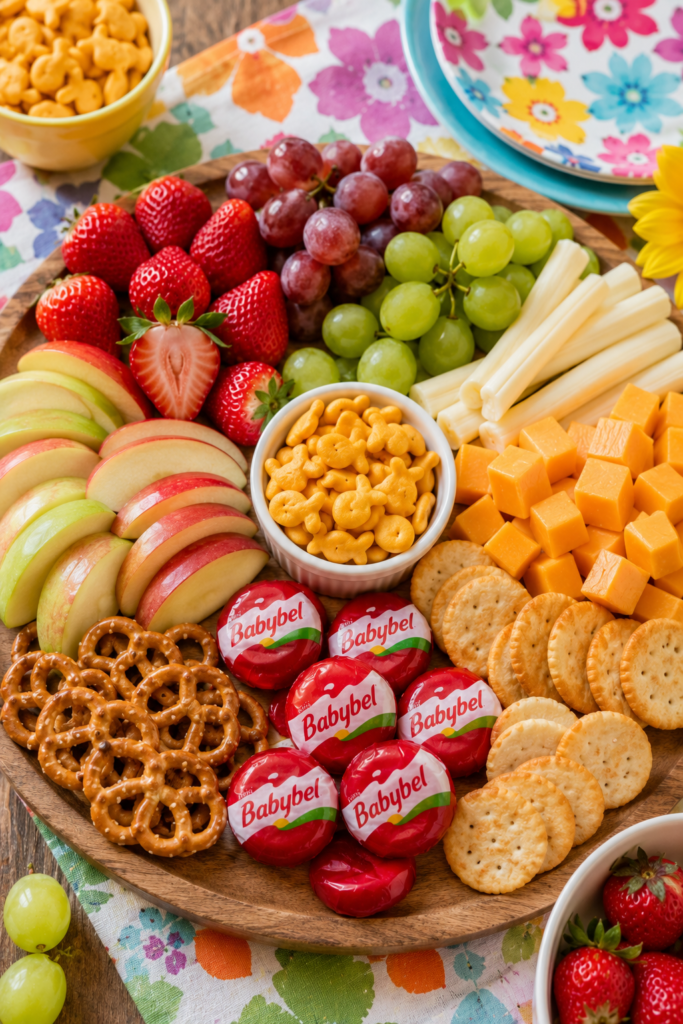
Adults get charcuterie boards. Kids deserve their own version: a fruit and mild cheese board built around familiar flavors and finger-friendly portions.
The difference between a kids’ version and an adult cheese board is significant. Kids want mild, creamy cheeses: string cheese torn into strands, mild cheddar cut into small cubes, cream cheese rolled into balls and dusted with crushed graham crackers, or baby Babybel wheels (the wax seal removal is its own entertainment). Avoid sharp cheddars, blue cheeses, or anything with a strong smell.
Pair these cheeses with fruits that complement them naturally: strawberries with cream cheese, apple slices with mild cheddar, grapes with string cheese, melon with cream cheese balls. Add a few neutral crackers (Ritz or Wheat Thins work well) and some small pretzels.
The presentation principle that makes this work for kids: sections, not scattering. Children feel overwhelmed by a scattered board. Use small paper cups, little ramekins, or fold pieces of parchment paper into dividers so each element has its own clearly defined zone.
This approach works beautifully for playdates and smaller gatherings (10 kids or fewer). It scales awkwardly for large parties because cheese safety requires keeping the board chilled, which is harder to manage at scale outdoors.
Budget note: a kids’ cheese and fruit board for 10 children runs about $20 to $30 depending on cheese selection. String cheese and mild cheddar keep costs down significantly.
Idea 8: Frozen Fruit Pops and Ice Cream Alternatives
Frozen fruit arrangements aren’t just crowd-pleasers. They solve one of the most frustrating realities of outdoor summer parties: fruit that wilts, browns, and weeps in the heat.
The simplest version requires no recipe at all. Freeze whole grapes for 24 hours. Place them in a bowl. Serve. Frozen grapes are one of the most unexpectedly popular kids’ snacks in existence. They taste like sorbet. They stay cold for 45 minutes outside. Children will eat bowl after bowl. Every parent I’ve shared this trick with has eventually become slightly evangelical about it.
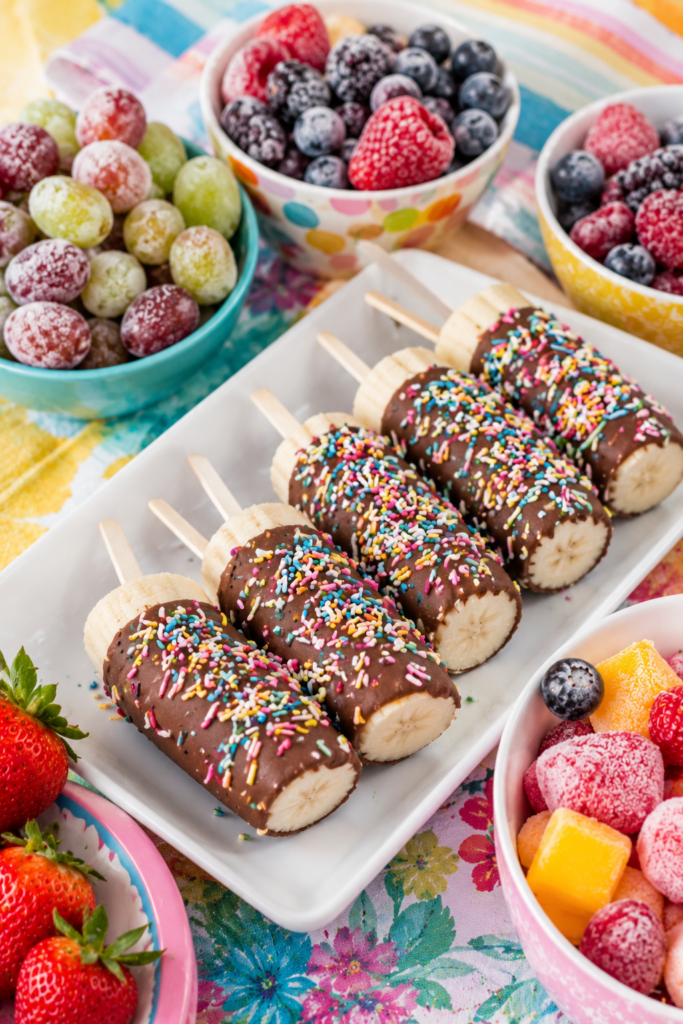
One step up: frozen banana pops. Cut bananas in half, insert a popsicle stick, dip in melted chocolate (about two cups of chocolate chips melted with one tablespoon of coconut oil creates a shell that sets in two minutes in the freezer), roll in toppings like crushed graham crackers or rainbow sprinkles, freeze for two hours. These can be made 48 hours ahead and kept frozen until five minutes before serving.
For a no-cook, high-visual-impact option: freeze mixed berries and mango chunks flat on a parchment-lined baking sheet, then pile them into a bowl at serving time. They thaw just enough within 15 minutes to be perfectly cold without being icy, and they maintain their shape without the sloppiness of room-temperature cut fruit.
The only real failure mode here is freezer burn on fruit kept more than 48 hours. Store frozen fruit pops in an airtight container and keep any unused portions covered with parchment directly against the surface.
Idea 9: Themed Fruit Platters for Specific Parties
A themed fruit platter isn’t just decoration. It’s a signal to every child at the party that the food was made specifically for this day, this occasion, and them.
The concept is simple: adapt your fruit platter to match the party theme using color, shape, and arrangement. Here are the most reliable themes with specific execution details.
For an ocean or mermaid theme: use a blue-tinted coconut jello base (blue food coloring in coconut milk gelatin), arrange fish-shaped melon cutouts on top, add “seaweed” from strips of kiwi, and scatter blueberries as bubbles. The blue base is genuinely striking and kids find it almost magic that jello can be part of a fruit platter.
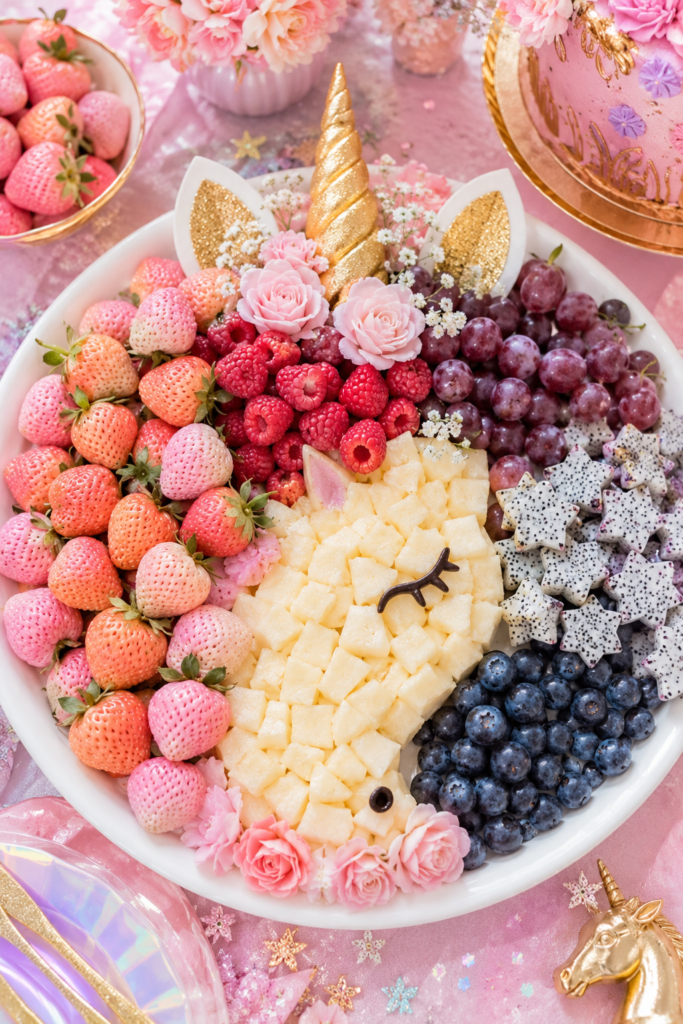
For a unicorn theme: use a pastel color progression from pink through lavender to white. Strawberries blend into raspberries, which blend into purple grapes, which blend into white dragon fruit or peeled lychee. Add a cone of rolled parchment paper as the horn, wrapped in gold ribbon. This takes about 20 minutes to arrange and photographs beautifully.
For a superhero theme: arrange fruit in your child’s chosen hero’s colors. For Spider-Man: red strawberries and watermelon with black grape “webs.” For Hulk: green honeydew, kiwi, and green grapes with watermelon rind cut into lightning bolt shapes. For Captain America: red strawberries, white banana slices, and blueberries in a rough star or shield arrangement.
The honest challenge with themed platters is over-commitment. I’ve watched parents spend three hours on a themed fruit display that got demolished in four minutes. Set yourself a time limit of 30 minutes for themed arrangements. After that, you’re in diminishing returns territory.
Idea 10: Fruit Towers and Vertical Displays
Vertical fruit displays solve a practical problem and create a visual spectacle simultaneously. They take up less table space than spread platters, they’re easier for multiple kids to access at once, and they’re genuinely impressive without requiring artistic skill.
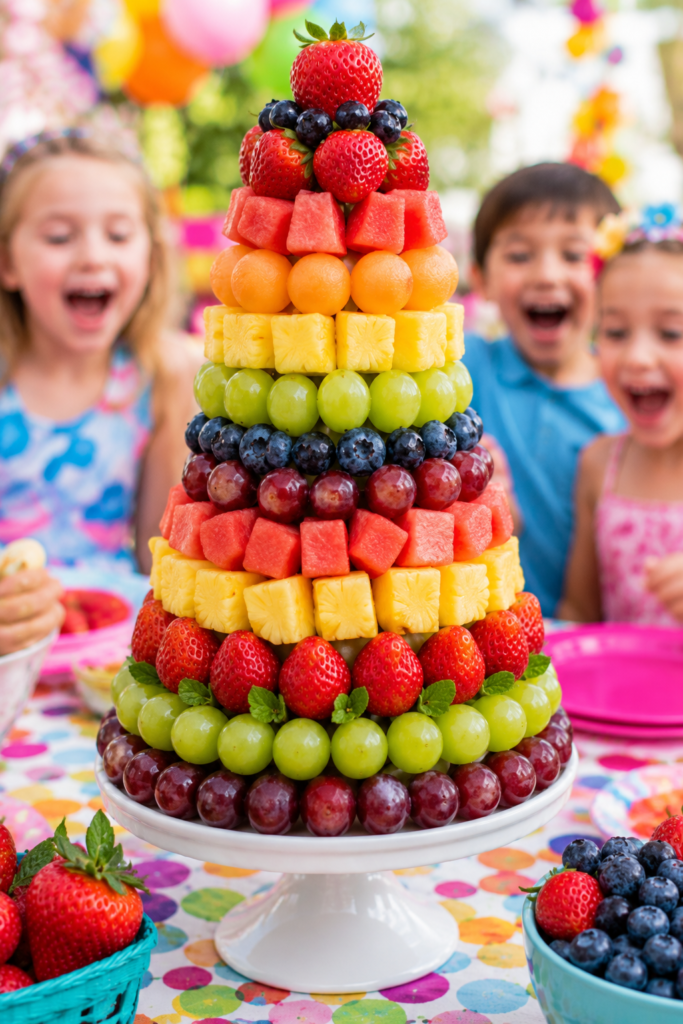
The most buildable version: a styrofoam cone (craft store, about $3 to $5) covered in toothpicks. Impale fruit chunks onto the toothpicks, starting from the bottom and working up, overlapping slightly as you go. Use alternating colors deliberately. This creates what’s essentially a fruit Christmas tree, and it works year-round because kids think towers are inherently exciting regardless of season.
The structural principle matters. Use firmer fruits for the lower third: melon chunks, pineapple, large strawberries. Reserve softer fruits like raspberries and blackberries for the top where gravity is less of a concern. A tower built bottom-heavy stays upright through the entire party.
For a simpler version without the styrofoam cone: stack fruits in a wine glass or clear vase, heaviest at the bottom. Layer watermelon chunks, then pineapple, then strawberries, then blueberries poured over the top. The visual layering effect through the clear glass is beautiful and requires zero construction skills.
You can also create individual mini-towers for each child using small plastic cups or dessert glasses. Each child’s personal tower becomes a source of pride and makes the fruit feel like a real dessert rather than a grudging healthy option.
How Long Do These Platters Actually Last?
Most cut fruit remains safe and appealing for two hours at room temperature and up to four hours refrigerated. This is the food safety baseline that most party planning guides quietly ignore.
The fruits that hold longest at room temperature: whole grapes, strawberries with hulls on (slice them only at serving time), pineapple chunks (their acidity slows oxidation), melons cut into large pieces rather than small cubes, and blueberries.
The fruits that deteriorate fastest: sliced bananas (20 to 30 minutes before browning), cut apples without lemon juice (30 minutes), and cut kiwi (begins weeping liquid within an hour).
The lemon juice trick is worth knowing precisely: one tablespoon of fresh lemon juice stirred into a bowl of cut apples or pears prevents browning for two to three hours. It adds a very faint tartness that most kids either don’t notice or actually prefer.
What Fruits Are Best for Kids’ Platters?
Strawberries remain the single most reliable kids’ fruit for platters. They’re visually appealing, familiar, not messy, firm enough to hold shape, and almost universally accepted. Grapes (halved for children under four for choking safety) are the second-most reliable choice. Watermelon in chunks or shapes is the crowd spectacle. Pineapple divides opinion more than any other fruit but the kids who love it really love it.
Fruits to introduce strategically rather than prominently: kiwi (the texture surprises some kids), mango (strong flavor not every child loves), and dragon fruit (beautiful but very mild, which confuses kids who expect something exotic to taste exotic).
Frequently Asked Questions
How do I keep fruit from browning on a platter? Keep cut fruit refrigerated until 20 minutes before serving. Toss apple and pear slices in lemon juice. Leave strawberry hulls on until slicing. For events longer than two hours, prep a fresh second wave of fruit to add partway through.
What’s the best fruit for a toddler fruit platter? Soft, pre-cut fruits in small, manageable pieces: banana slices, quartered strawberries, seedless grapes halved lengthwise, blueberries halved, and soft melon cubes. Avoid anything that requires significant chewing or comes in pieces larger than one inch.
How much fruit do I need per child? Plan for about half a cup of cut fruit per child for a snack, one full cup if it’s meant to be a significant part of the meal. For 20 kids, that’s roughly 10 to 20 cups of prepared fruit, which typically comes from two to three pounds of whole fruit after peeling and cutting.
Can I make fruit platters the night before? Yes, with conditions. Whole grapes, pineapple chunks, melon chunks, and blueberries can be prepped and stored covered in the refrigerator overnight. Strawberries should be hulled and halved the morning of. Never pre-cut bananas or apples the night before.
What dipping sauces work best for kids? Vanilla yogurt and honey is the crowd-pleaser. Chocolate hummus is the surprising hit. Caramel sauce (use cautiously, it’s very sweet) works for special occasions. Cream cheese blended with a little honey and vanilla extract is underrated and works beautifully.
How do I make a fruit platter for a child with fruit allergies? Strawberry and kiwi allergies are the most common. Always ask parents about allergies before deciding on your fruit selection. When in doubt, grapes, pineapple, watermelon, and banana cover a wide range without the most common allergens.
What’s the easiest impressive fruit platter for beginners? The rainbow skewer station (Idea 1). It requires no artistic skill, minimal prep time, and the kids do most of the “presentation” work themselves. It reliably impresses without demanding anything of the planner except organization.
The Mindset Shift That Changes Everything
After years of making fruit platter for kids, I’ve arrived at one guiding principle that supersedes every technique and trick in this article: stop making fruit platters that parents admire and start making ones that children love.
Those are genuinely different goals. Parents admire precision, artistry, and restraint. Children love participation, humor, scale, and surprise. A slightly lopsided fruit caterpillar that a five-year-old helped build will get eaten down to the last grape. A perfect, untouched professional arrangement will end up in the compost bin.
Give kids agency over what they eat, wrap the fruit in a story or a game, make the act of eating feel like an event rather than a requirement, and you will rarely end a party with a full platter.
The best fruit platter you can make is the one your kids are already excited about before it hits the table.