
14 Salads That Go With Steak Dinner (And Make the Whole Meal Unforgettable)
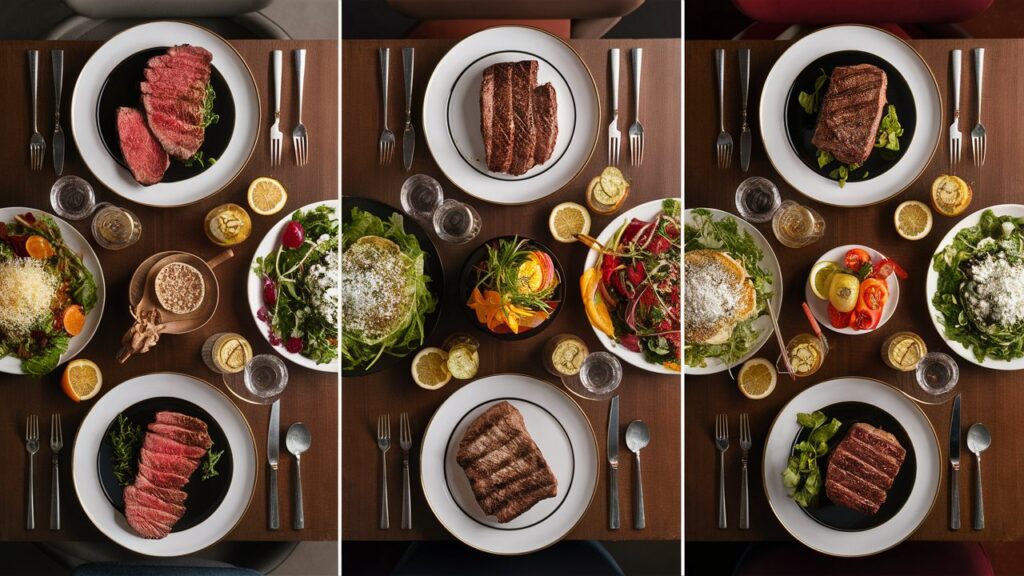
Most people treat the salad as an afterthought when they are cooking steak. They toss some romaine in a bowl, pour on whatever dressing is in the fridge, and call it a day. I used to do the same thing. Then a dinner party in 2021 changed everything.
I had spent three hours reverse-searing a two-inch ribeye to a perfect 130 degrees internal temperature. The steak was incredible. But the sad iceberg wedge I threw together in five minutes nearly killed the whole experience. My friend Maria, who ran a catering company in Austin for years, looked at me across the table and said: “The salad is supposed to celebrate the steak, not apologize for it.”
That comment stuck with me. Over the past few years, I have tested dozens of salad combinations at home dinners, backyard cookouts, and holiday meals. I have learned that the right salad does something remarkable. It cuts through the richness of the beef, refreshes your palate between bites, and adds textures and flavors that make every forkful of steak taste even better than the last.
Here is what most steak-night articles get wrong. They list generic salads without explaining why each one works with beef specifically. Flavor pairing is a real discipline, and the relationship between fat, acid, bitterness, and umami matters enormously when you are building a steak dinner menu.
This guide covers 14 salads that go with steak dinner. You will find classic steakhouse options, surprising international pairings, lighter choices for summer grilling season, and a few contrarian picks that most home cooks overlook completely. I will also tell you which salads pair with which cuts, because a delicate arugula salad that works perfectly with filet mignon might feel underpowered next to a bone-in ribeye.
Why Does Salad Choice Actually Matter at a Steak Dinner?
The right salad creates balance. Steak is rich, fatty, and intensely savory. A well-chosen salad introduces acid, bitterness, or brightness that resets your palate and makes each bite of beef taste cleaner and more satisfying.
Here is the science behind this in plain terms. Fat coats your taste buds. That is why the first bite of a marbled ribeye tastes extraordinary and the tenth bite starts to feel heavy. Acid, particularly from citrus or vinegar-based dressings, temporarily clears that fat coating. Bitter greens like arugula and radicchio do the same thing through a different mechanism, using compounds called polyphenols. Crunchy textures from croutons, nuts, or raw vegetables add contrast that prevents sensory fatigue.
The mistake most people make is choosing a creamy, heavy salad to go with a fatty steak. A Caesar salad loaded with extra dressing and a mountain of Parmesan actually compounds the richness problem. There is a time and place for Caesar with steak, but it requires a lighter hand than most restaurants use.
The other mistake is serving a salad that is too acidic. A heavily dressed shallot vinaigrette salad can actually make a good steak taste metallic. Balance is everything.
1. Classic Wedge Salad: The Steakhouse Standard That Earned Its Reputation
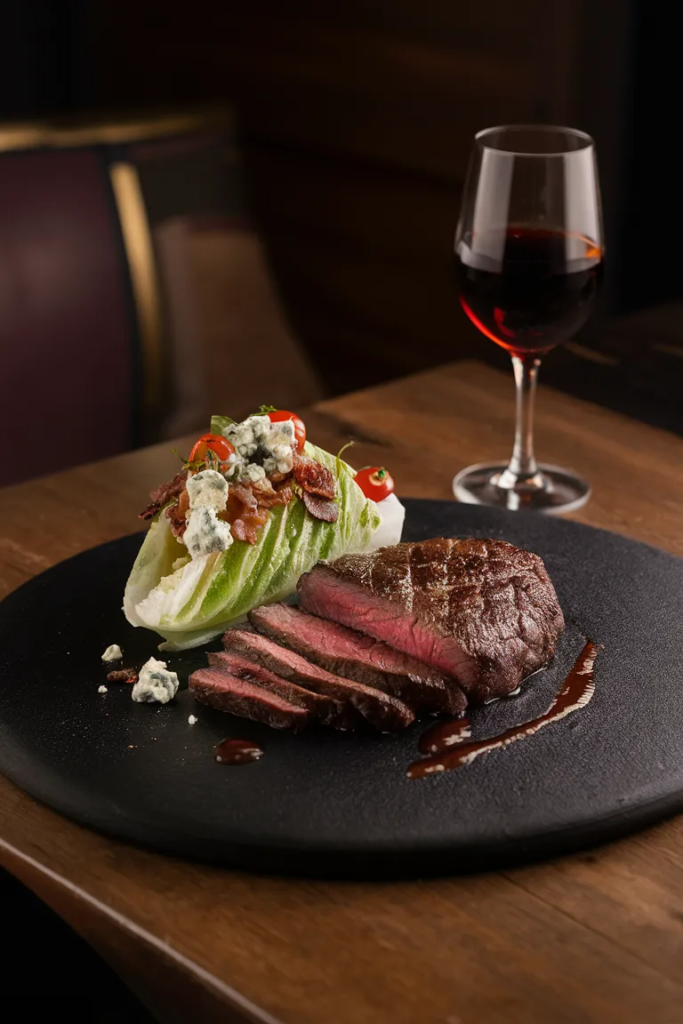
The wedge salad pairs with steak because blue cheese provides umami that complements beef’s savoriness, crisp iceberg offers cooling texture contrast, and the combination of tangy dressing and smoky bacon bridges the gap between side dish and main event.
Iceberg lettuce gets dismissed constantly by food writers, and I understand why. Nutritionally, it is closer to flavored water than to actual vegetables. But at a steak dinner, its job is not nutrition. Its job is crunch and cooling freshness, and at that job, iceberg is undefeated.
The key to a great wedge salad is not the lettuce. It is the blue cheese. I have used mass-market blue cheese crumbles from grocery stores and I have used proper Roquefort from a specialty cheese shop. The difference is significant. A real Maytag blue cheese or Point Reyes Original Blue has a complex funkiness that mirrors the umami depth of a well-seared steak. The grocery store version tastes like salty chalk by comparison.
Bacon matters too. Cook it yourself from thick-cut strips rather than using the pre-cooked bagged version. The rendered fat from real bacon adds a smokiness that connects the salad to the grilled or seared steak in a satisfying way.
Best paired with: Ribeye, New York strip, T-bone. The boldness of the blue cheese holds up to fattier cuts.
Avoid with: Delicate cuts like filet mignon, where the blue cheese can overpower the subtle beef flavor.
Make it better: Add halved cherry tomatoes for acid and a light drizzle of good olive oil over the whole thing. Some people add pickled red onions, which I think is a genuinely excellent idea.
2. Arugula Salad with Shaved Parmesan and Lemon: Italy’s Gift to Steak Night
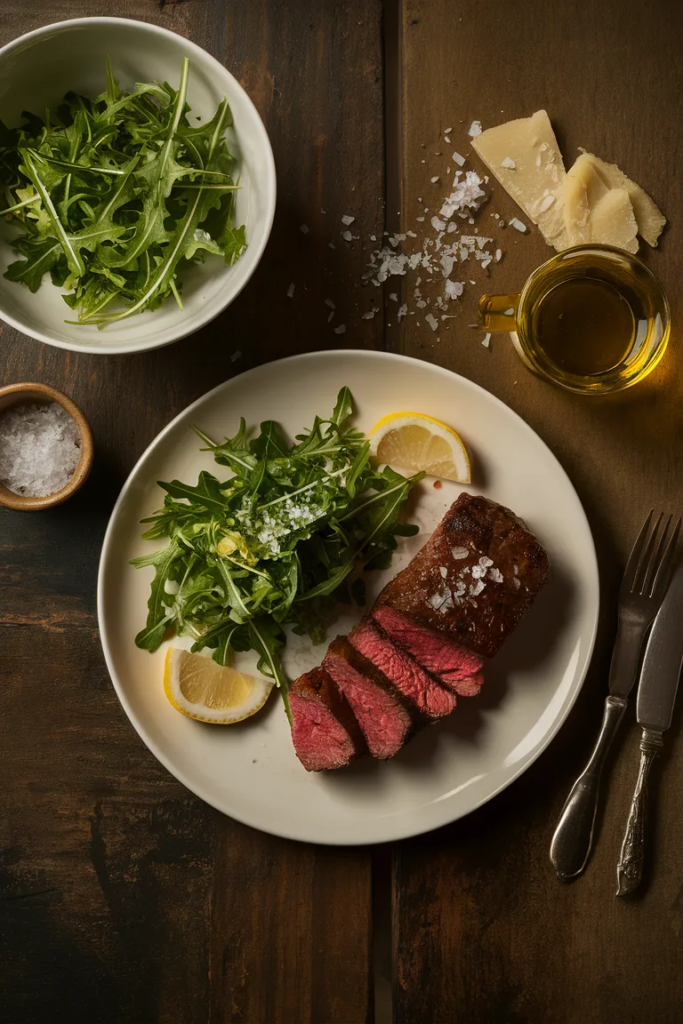
Peppery arugula with lemon dressing is arguably the most elegant salad you can serve with steak. The bitterness of the arugula and the bright acid of lemon cut through beef fat without competing with the meat’s flavor. This is why every upscale Italian steakhouse in the country serves a version of it.
I first encountered this combination at a bistecca alla Fiorentina dinner in a tiny Florence trattoria in 2019. The restaurant served nothing else with the massive T-bone except a pile of dressed arugula and a wedge of lemon on the side. It was one of the most satisfying meals I have ever eaten. The simplicity was deliberate. They did not want anything competing with the beef. They wanted something that made the beef taste better.
At home, I use a 50-50 mix of baby arugula and mature arugula. Baby arugula is milder and more tender. Mature arugula has more bitterness and pepper. The combination gives you complexity without overwhelming people who find pure arugula too aggressive.
The dressing is just three things: really good extra-virgin olive oil, fresh lemon juice, and flaky sea salt. Do not reach for the lemon juice bottle. Squeeze it fresh. The difference in brightness is remarkable.
Shaved Parmesan adds another layer of umami that mirrors the maillard reaction crust on a well-seared steak. Use a vegetable peeler to create wide shards rather than grating it. The textural difference matters.
Best paired with: Filet mignon, hanger steak, skirt steak. Works beautifully with leaner cuts where you want the beef flavor to shine.
Pro tip: Dress the arugula right before serving. Arugula wilts fast under acid, and a wilted arugula salad is a sad thing.
3. Caesar Salad: How to Do It Right So It Actually Works With Steak
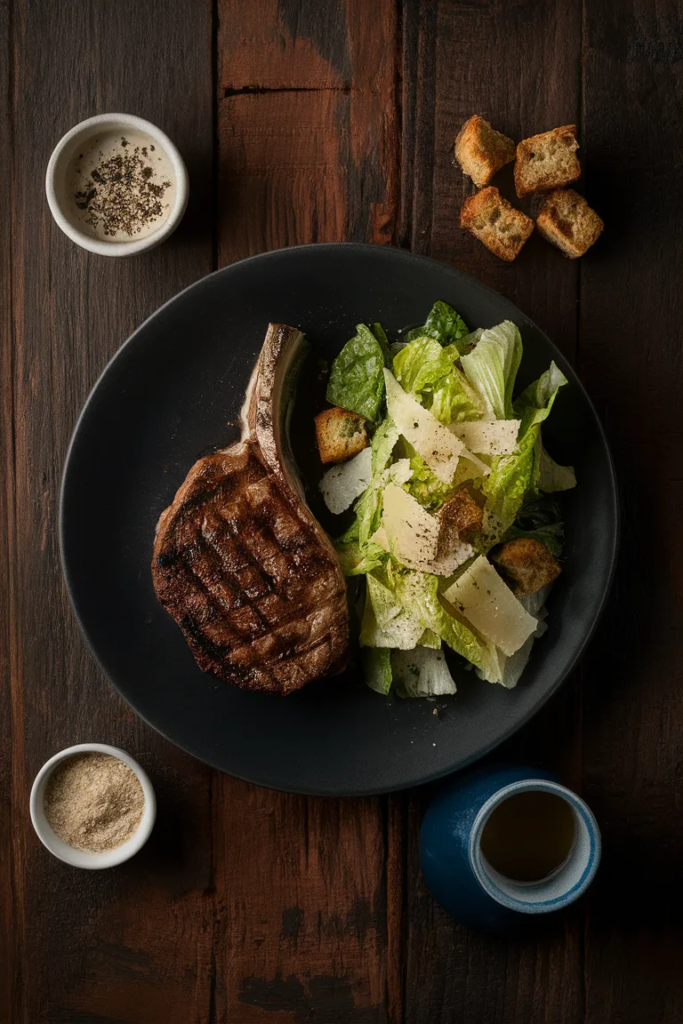
A properly made Caesar salad works with steak when it is served with restraint. The anchovy-based dressing provides umami reinforcement for the beef, and the romaine provides crunch. The problem is that most people drown their Caesar in dressing, which creates a competing richness that works against the steak.
Here is my honest opinion about Caesar salad at a steak dinner: it is perfectly fine but rarely spectacular. It is the safe choice. What makes it special is technique.
The ratio is everything. You want just enough dressing to lightly coat each leaf, not pool at the bottom of the bowl. I use about one and a half tablespoons of dressing per two cups of romaine. That sounds like almost nothing, and it feels like almost nothing when you are making it. But when you taste it, it is right.
Make your own croutons. Cube day-old sourdough into one-inch pieces, toss them in olive oil and garlic powder, and roast them at 400 degrees for twelve minutes until golden. Store-bought croutons taste like compressed cardboard. Homemade croutons taste like bread. These are different things.
The anchovy question divides people. Traditional Caesar dressing uses anchovy paste or whole anchovies. If someone at your table has a fish allergy or a strong aversion, Worcestershire sauce provides a similar umami depth without the fish flavor. It is not identical, but it works.
Best paired with: Sirloin, flat iron steak, any medium-grade cut where you want the salad to complement without challenging the beef.
4. Spinach Salad with Warm Bacon Dressing: The Underrated Classic
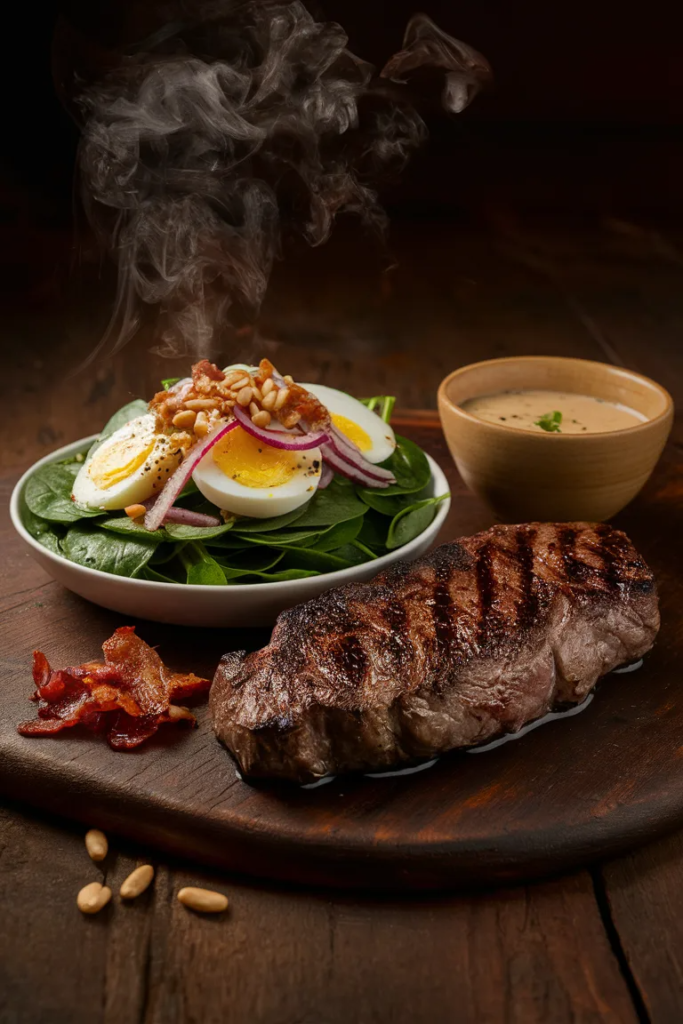
Spinach salad with warm bacon dressing is one of the most underappreciated steak companions in American cooking. The warm dressing slightly wilts the spinach, creating a tender but not soggy texture, and the combination of bacon fat, vinegar, and a touch of sugar creates a sweet-sour-smoky profile that pairs remarkably well with grilled beef.
My grandmother made this salad every time she cooked steak for a crowd, and for years I dismissed it as an old-fashioned throwback. I was wrong. The warm bacon dressing technique creates something that a cold vinaigrette cannot: fat-soluble flavor compounds from the bacon that actually bond with the spinach rather than sitting on top of it.
The traditional version adds sliced hard-boiled eggs and sliced red onion. Some versions include mushrooms. I prefer mine with thinly sliced red onion, a handful of toasted pine nuts, and the eggs. The eggs add protein and a creamy richness that rounds out the sharpness of the dressing.
The dressing recipe is simple but requires attention. Render your bacon, remove the strips, and sauté minced shallots in the bacon fat for two minutes. Add a splash of apple cider vinegar, a teaspoon of Dijon mustard, and half a teaspoon of honey. Whisk it together while it is still hot, then pour immediately over your spinach. Crumble the bacon on top.
Best paired with: Skirt steak, flank steak, grilled strip steak. The smokiness of the dressing connects beautifully with anything cooked over an open flame or charcoal.
5. Greek Salad: The Freshness Factor on a Hot Summer Night
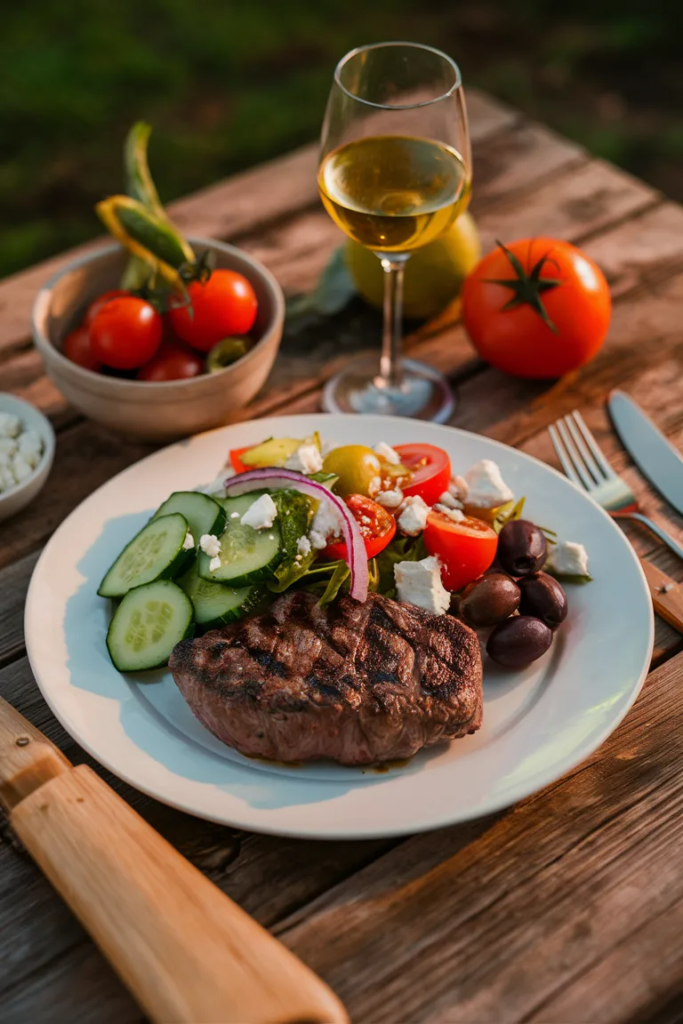
A classic Greek salad brings together cucumber, tomato, kalamata olives, red onion, and feta cheese in a way that provides cooling freshness, briny counterpoints, and just enough fat from the feta to feel satisfying without being heavy. On a summer evening next to a grilled steak, it is hard to beat.
The contrarian view here: Greek salad is far better with steak than most steakhouse menus would lead you to believe. It is almost never on a traditional steakhouse menu, but the flavor logic is sound. The brininess of olives and feta mirrors the salt crust on a well-seasoned steak. The cucumber and tomato provide pure water and acid that refresh the palate.
Quality of ingredients is critical. Use ripe summer tomatoes, never the pale mealy ones from winter. Use actual Kalamata olives from a jar or olive bar, not the canned black olives that taste like nothing. And please use real Greek or Bulgarian feta made from sheep’s milk. The pre-crumbled domestic feta in the green container is dramatically inferior.
Do not add lettuce. A proper Greek salad, called horiatiki in Greece, does not contain lettuce. It is a chunky vegetable and cheese salad. This makes it sturdier and more heat-tolerant at a summer cookout.
Best paired with: Lamb chops (if you are mixing things up), grilled sirloin, burgers made from steak-quality beef.
6. Roasted Beet Salad with Goat Cheese and Candied Walnuts
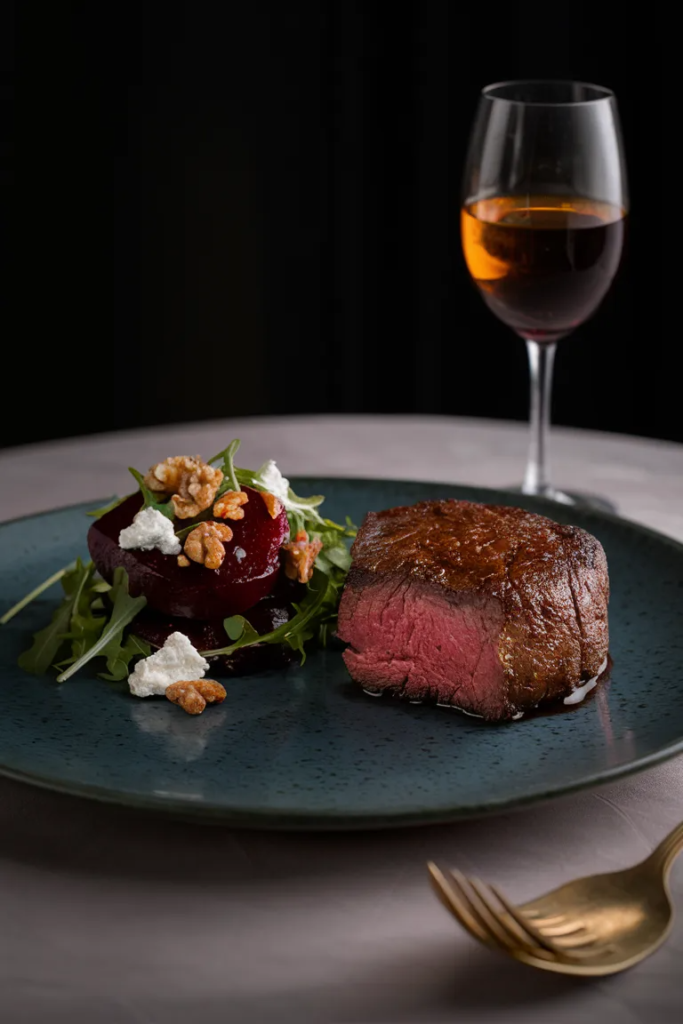
Roasted beet salad pairs with steak because beets share an earthy, mineral quality with beef that creates a sense of resonance between dish and side. The goat cheese adds tangy creaminess, and candied walnuts provide sweetness and crunch that prevent the combination from feeling too heavy.
This is the salad that surprises people most at dinner parties. I served it at a holiday steak dinner three years ago and three different guests asked for the recipe before the evening ended. It looks impressive, it tastes complex, and it is almost entirely make-ahead friendly, which matters enormously when you are also managing the steak.
Roast your beets ahead of time. Wrap them individually in foil with a drizzle of olive oil and salt, then roast at 400 degrees for 45 to 60 minutes depending on size. Let them cool, then rub off the skins with a paper towel. The skin slides right off. Slice them into wedges and refrigerate until needed. They keep for four days in the refrigerator.
The dressing is typically a sherry vinegar or balsamic vinaigrette. I prefer sherry vinegar because it has a nuttiness that complements both the beets and the walnuts. Mix it with good olive oil, a teaspoon of honey, and a pinch of salt.
For the greens, arugula works beautifully here, as does butter lettuce. Avoid strongly flavored greens that might fight with the beets.
Best paired with: Filet mignon, beef tenderloin roast, any elegant steak dinner where presentation matters.
7. Caprese Salad: Simple Genius That Works Every Time
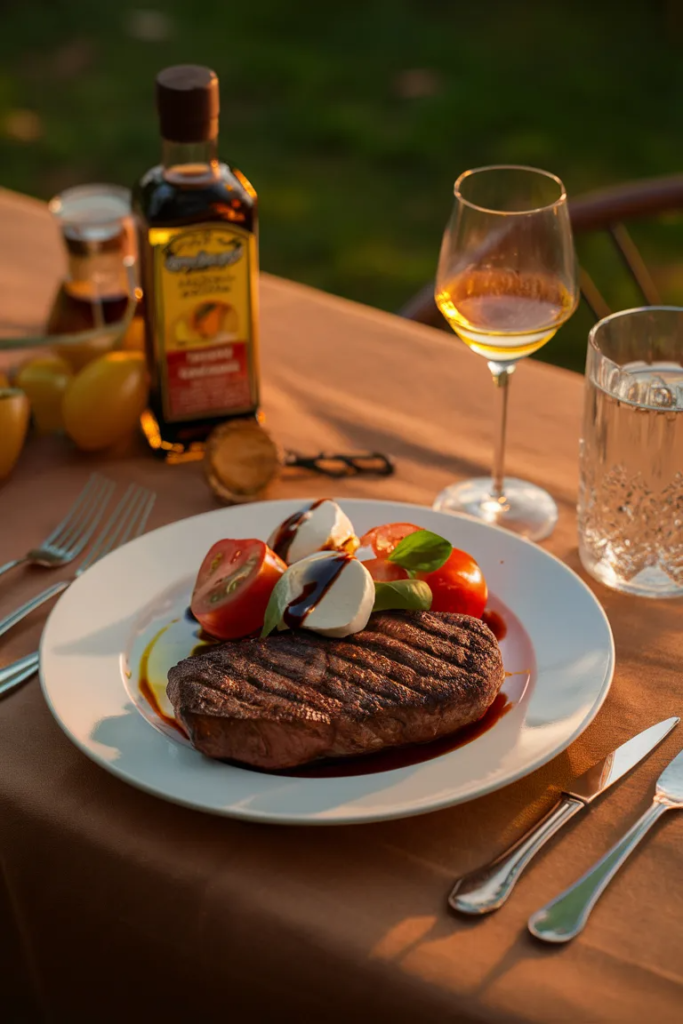
Caprese salad with fresh mozzarella, ripe tomatoes, and basil is a masterclass in simplicity. The acid from the tomato cuts through beef fat, fresh mozzarella provides cooling creaminess, and basil adds herbal brightness that makes the whole plate feel alive. This is not a salad in the traditional sense, but its role at a steak dinner is identical.
Here is what most people get wrong about caprese: they make it with cold mozzarella straight from the refrigerator. Cold mozzarella is rubbery and bland. Fresh mozzarella that has been sitting at room temperature for 30 minutes is creamy, yielding, and milky in a way that transforms the dish.
Tomato quality is even more important here than in the Greek salad. Without lettuce to provide bulk, the tomato is doing most of the work. Use peak-season heirloom tomatoes if you can find them. A mix of colors, red, orange, and purple, makes the plate look spectacular with very little effort.
The finishing touch that elevates a basic caprese into something memorable is a drizzle of aged balsamic vinegar, not the cheap stuff, but a proper aceto balsamico that has been aged for at least 12 years. It is thick, sweet, and complex in a way that cheap balsamic simply is not. A small bottle costs around $20 to $30 and lasts for months. It is worth it.
Best paired with: Any summer steak dinner, grilled picanha, Brazilian-style churrasco.
8. Wedge Salad with Gorgonzola and Balsamic: The Italian Steakhouse Version
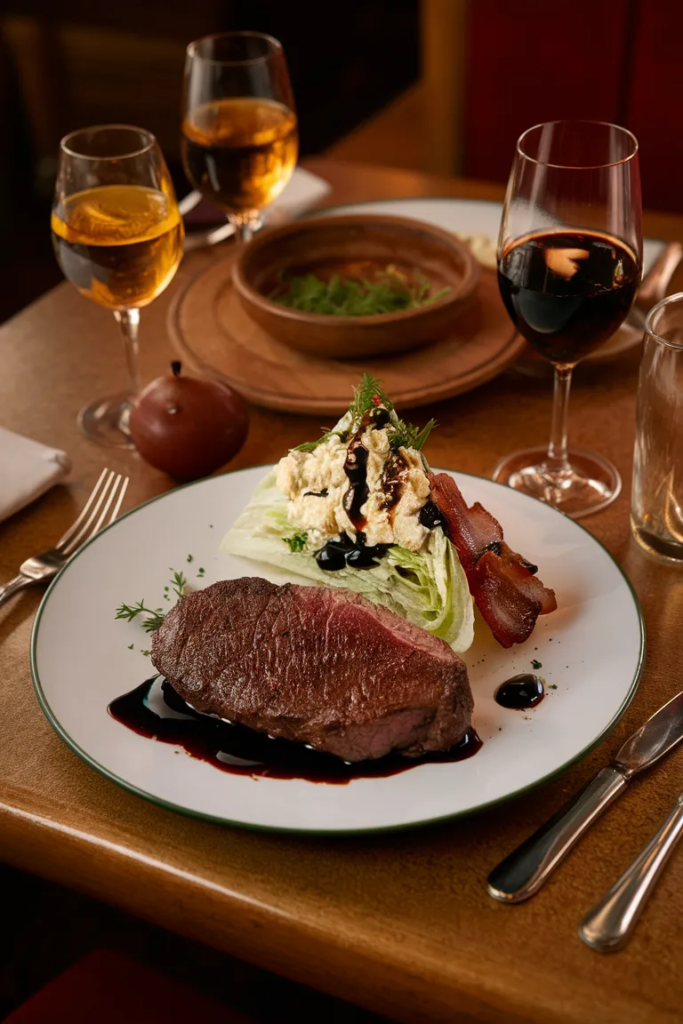
This is a variation on the classic wedge that deserves its own entry because the flavor profile is meaningfully different. Gorgonzola dolce, the mild creamy variety, is less assertive than American blue cheese. Combined with aged balsamic instead of the standard ranch base, it creates a more sophisticated wedge that works equally well as a course at a dinner party or a casual weeknight steak dinner.
Best paired with: Porterhouse, T-bone, any large format steak where you want a bold side.
9. Kale Caesar: When You Want More Structure and Nutrition
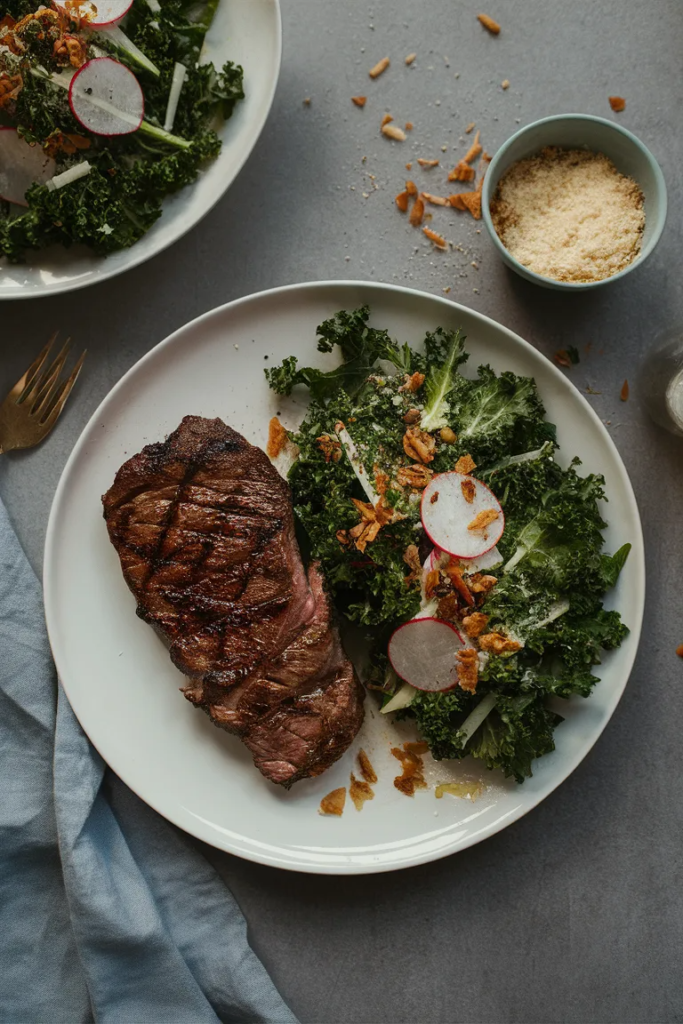
Kale stands up to dressing in a way that romaine does not. Massaging the dressing into the kale with your hands for two full minutes is not optional, it is the technique that transforms tough, bitter kale into something tender and rich. A kale Caesar provides more fiber, more nutrients, and more substance than the classic version.
The massaging step feels strange the first time you do it. But the physical action of working the acid from the lemon juice and the fat from the dressing into the cell walls of the kale breaks them down and creates a texture that is genuinely different from simply tossing the salad. Do it for two full minutes. Set a timer.
For texture contrast, I add shaved radishes and toasted pepitas to my kale Caesar. The radishes add peppery crunch, and the pepitas add a nutty richness that plays well against the anchovy-garlic dressing.
Best paired with: Leaner cuts like flank steak or skirt steak. Also excellent with grilled chicken if you are mixing proteins at a gathering.
10. Iceberg Lettuce with Russian Dressing: The Old-School Steakhouse Move
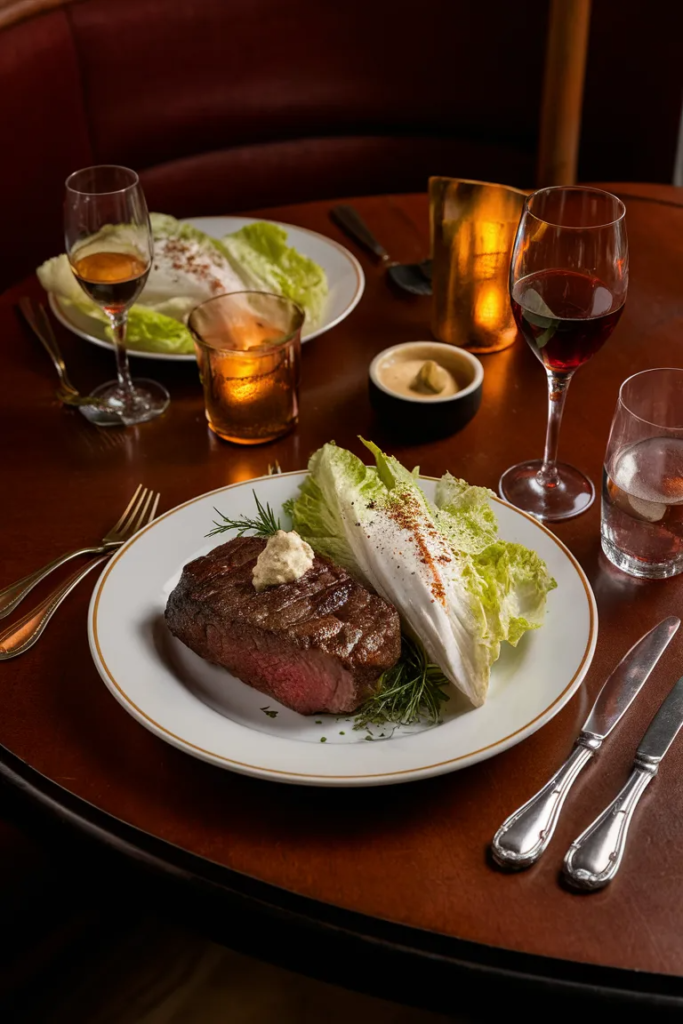
Russian dressing is Thousand Island’s more interesting older sibling. It contains the same mayonnaise and ketchup base but adds horseradish, hot sauce, and Worcestershire sauce. Those additions create a dressing with real heat and complexity that pairs brilliantly with beef.
This is a deeply unfashionable combination in 2026, which is exactly why I like recommending it. Horseradish is a traditional steak accompaniment for good reason. Its spicy, sinus-clearing heat cuts through beef fat faster than almost anything else. Building that into the salad dressing means every bite of salad primes your palate for the next bite of steak.
Best paired with: Prime rib, standing rib roast, any old-school American steak dinner.
11. Shaved Fennel and Orange Salad: The Unexpected Game Changer
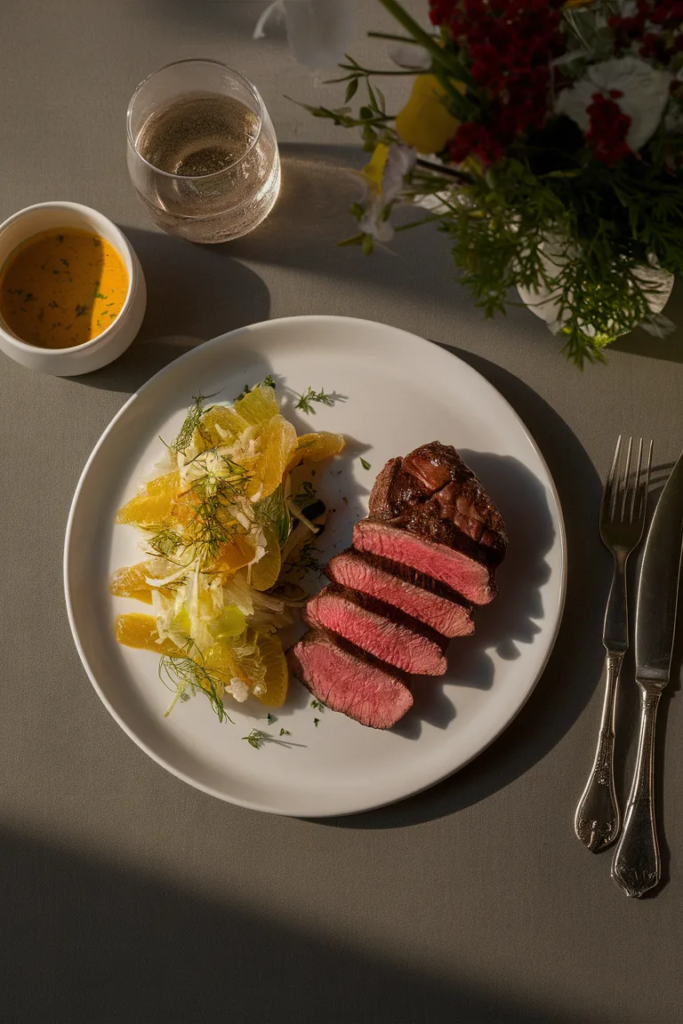
Shaved fennel with orange segments and a citrus vinaigrette is the most underserved pairing in steak-side-salad history. The anise notes in fennel create a flavor bridge with beef’s umami, while the orange segments provide explosive brightness that resets the palate completely.
Fennel has a mild licorice flavor that sounds polarizing but actually mellows dramatically when sliced paper-thin and dressed with acid. Use a mandoline if you have one. Slice the fennel as thinly as possible, then immediately dress it with lemon juice to prevent browning.
The orange adds both acid and sweetness in a ratio that no single-source dressing can easily replicate. Use blood oranges in winter for a more complex, slightly berry-forward flavor. Use navel oranges in spring and summer.
This salad also holds beautifully for 20 to 30 minutes after dressing, which is useful if you are managing a steak dinner with multiple moving parts.
Best paired with: Duck breast (if mixing proteins), sirloin, any autumn or winter steak dinner.
12. Chopped Antipasto Salad: The Crowd-Pleasing Italian Option
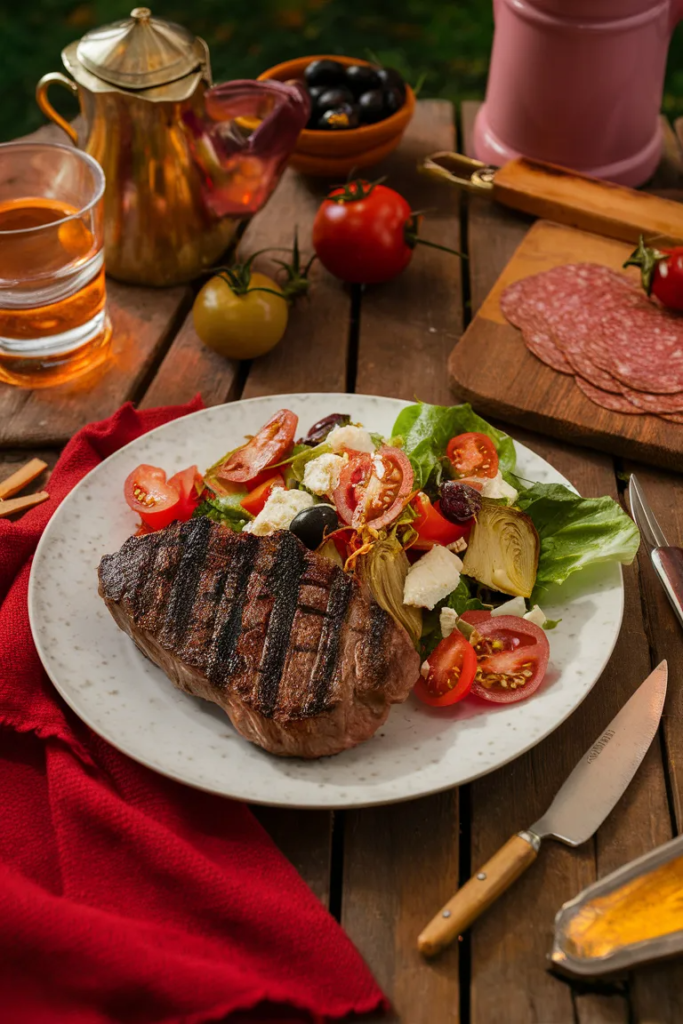
A chopped antipasto salad brings together salami, pepperoncini, artichoke hearts, olives, cherry tomatoes, and provolone cheese over a bed of romaine. It is hearty, flexible, and deeply satisfying. The cured meats add a salt and fat layer that some people find too rich, but at a steak dinner where you are already committed to richness, it fits.
The dressing is typically a red wine vinaigrette with Italian herbs. Make it sharp. The salami and cheese already provide plenty of fat, so you want the dressing to lean acid.
Best paired with: A backyard cookout with strip steaks or burgers. This is not a refined dinner party salad. It is a generous, casual, crowd-feeding salad, and it fills that role beautifully.
13. Romaine Hearts with Anchovy Vinaigrette and Soft-Boiled Eggs: The Bistro Move
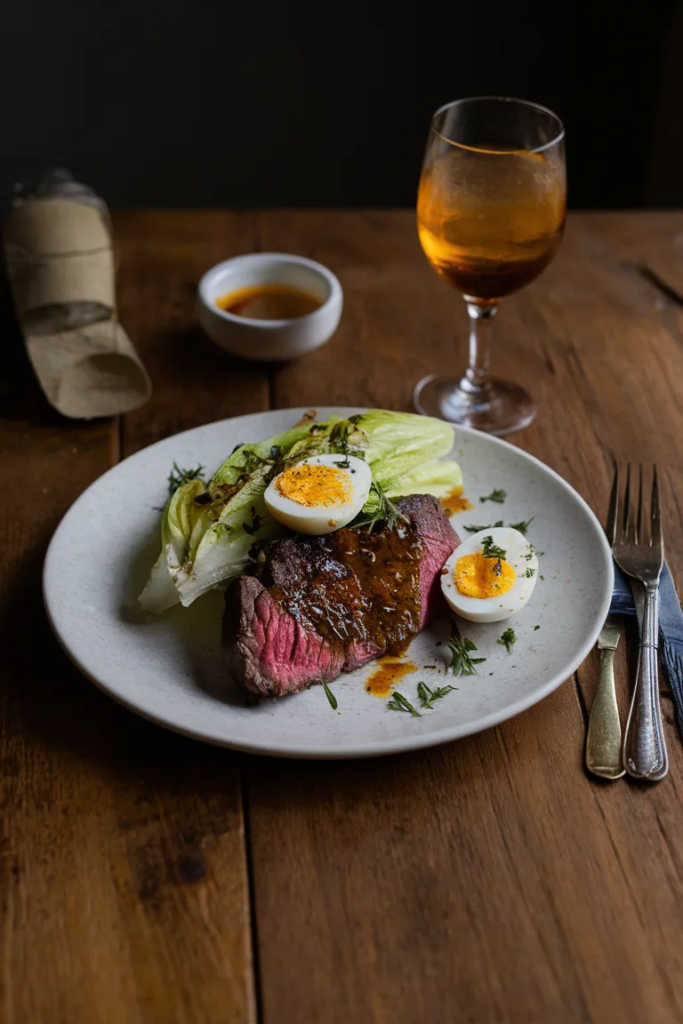
This salad splits the difference between a classic Caesar and a French bistro salad. The anchovy vinaigrette is lighter and more acidic than Caesar dressing because it skips the Parmesan and uses less mayonnaise. Adding a jammy soft-boiled egg to each plate turns this into something genuinely special.
Soft-boil your eggs for exactly six and a half minutes, then transfer them to an ice bath for two minutes. Peel them carefully. When you cut them open over the salad, the yolk should be slightly liquid in the center. That soft yolk acts as an additional dressing component, coating the lettuce and anchovy vinaigrette into something richer and more cohesive.
Best paired with: Hanger steak, flat iron steak, any bistro-style steak dinner.
14. Simple Green Salad with Dijon Vinaigrette: The French Approach That Never Fails
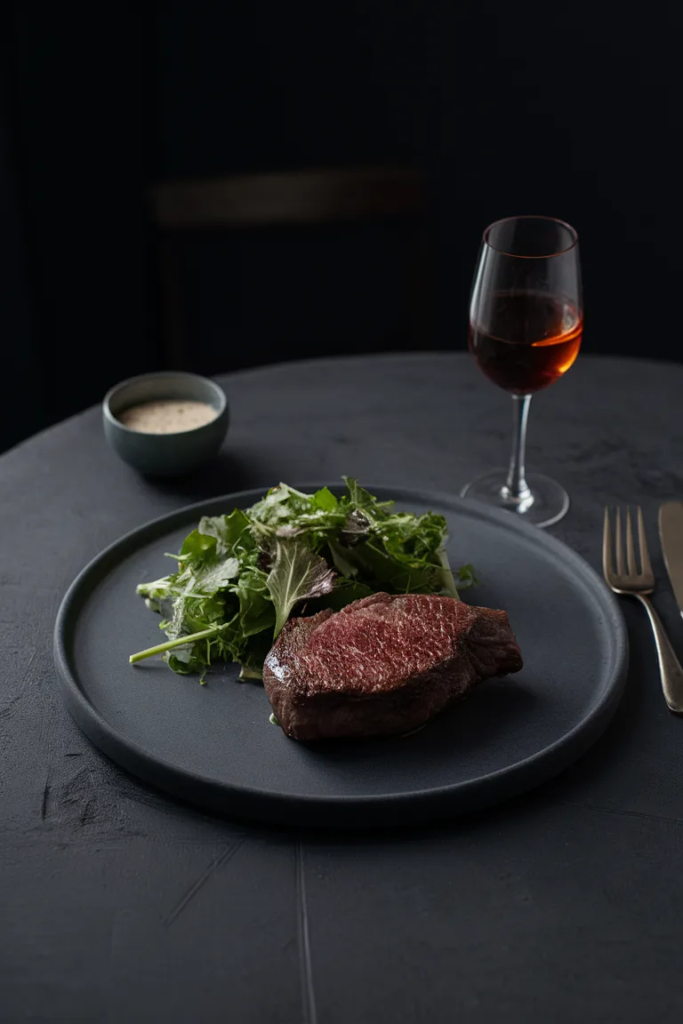
The French serve a simple green salad with every meal, and they have been right about this for centuries. Mixed greens, a properly made Dijon vinaigrette, and nothing else. No croutons, no cheese, no toppings. Just clean, acid-forward greens that reset the palate between bites of everything else on the table.
The Dijon vinaigrette ratio that works every time: one part good Dijon mustard, one part red wine vinegar, three parts good olive oil, a pinch of salt and sugar. Whisk the mustard, vinegar, salt, and sugar together first. Then stream in the oil while whisking. The mustard acts as an emulsifier, keeping the dressing cohesive rather than separated.
This is the salad I serve when I want nothing to compete with an exceptional steak. When I have spent real money on a USDA Prime dry-aged ribeye, I do not want a distracting salad. I want something that keeps my palate clean and fresh so I can taste the beef.
Best paired with: Any exceptional steak where the beef itself is the focus. Dry-aged cuts, premium Wagyu, anything where the quality of the beef should be the centerpiece of the experience.
Quick Reference: Which Salad Goes With Which Steak Cut
| Steak Cut | Best Salad Pairing | Why It Works |
|---|---|---|
| Ribeye | Wedge with blue cheese | Bold cheese matches bold fat |
| Filet Mignon | Arugula with lemon and Parmesan | Delicate and elegant |
| New York Strip | Caesar (light hand) | Classic combination |
| Skirt Steak | Spinach with warm bacon dressing | Smoky mirrors smoky |
| Flank Steak | Chopped antipasto | Hearty cut needs hearty side |
| T-Bone or Porterhouse | Wedge with Gorgonzola | Big steak, big side |
| Hanger Steak | Romaine with anchovy vinaigrette | Bistro pairs with bistro |
| Sirloin | Greek salad | Balanced flavors for a weeknight cut |
| Prime Rib | Iceberg with Russian dressing | Old-school and right |
| Dry-Aged or Premium | Simple Dijon green salad | Let the beef speak |
Common Mistakes to Avoid When Pairing Salad With Steak
Overdressing the salad. This is the single most common error. A salad that is swimming in dressing competes with the steak instead of complementing it. Dress your salad just to the point where every leaf has a light coating.
Serving the salad at the wrong temperature. A warm salad next to a hot steak feels monotonous. A properly cold or room-temperature salad provides contrast. Chill your salad plates if you want to be precise about this.
Adding too many components. A salad with seven toppings is exhausting alongside a steak. Pick two or three additions that work together and stick with them.
Using bottled dressing. Commercial dressings contain preservatives, stabilizers, and levels of sweetness that are calibrated for standalone salad eating, not for pairing with beef. Making dressing takes four minutes and the difference is significant.
Frequently Asked Questions
What is the most classic salad served with steak? The wedge salad with blue cheese dressing has been the American steakhouse standard since the 1950s. It works because the umami of blue cheese complements beef’s savory depth.
Can I make these salads ahead of time? Most components can be prepped ahead. Roasted beets last four days refrigerated. Dressings last one week. However, dress the salad only right before serving to prevent wilting.
What dressing goes best with steak overall? Acid-forward dressings work best: lemon vinaigrette, red wine vinaigrette, or a light Dijon mustard dressing. Creamy dressings can work but require a lighter hand to avoid competing with the beef’s richness.
Is Caesar salad good with steak? Yes, with restraint. A lightly dressed Caesar works beautifully. A heavily dressed Caesar adds competing richness that can overwhelm your palate.
What salad goes with steak at a dinner party? Roasted beet salad with goat cheese and candied walnuts is the best dinner party choice because it is sophisticated, largely make-ahead, and reliably impresses guests who have never had it.
Can I serve a warm salad with steak? Spinach salad with warm bacon dressing is the primary exception that works beautifully. Beyond that, cold or room-temperature salads provide better contrast to the hot steak.
The Bottom Line on Salads and Steak
Here is the perspective I have arrived at after years of cooking steak dinners: the salad is not a side dish you should default to out of habit. It is a deliberate flavor tool that, when chosen thoughtfully, makes a good steak dinner into a great one.
The single most useful principle is this. Acid is your friend at a steak dinner. A dressing built on lemon juice, good vinegar, or both will serve you better almost every time than a rich, creamy dressing that adds to the fat load already on the plate.
My personal default for a weeknight steak dinner has become the arugula salad with lemon and Parmesan. It takes eight minutes to make, it works with every cut I cook, and it has impressed every person who has eaten it at my table. For a dinner party, the beet and goat cheese salad wins every time.
Start there and build from the list above based on your cut and your occasion. The steak will thank you for it.
What salad do you usually serve with steak? I am genuinely curious whether anyone has found a combination I have not tried yet. Leave it in the comments below and I will test it.