
22 Red Themed Cake Ideas That Will Stop Every Guest in Their Tracks
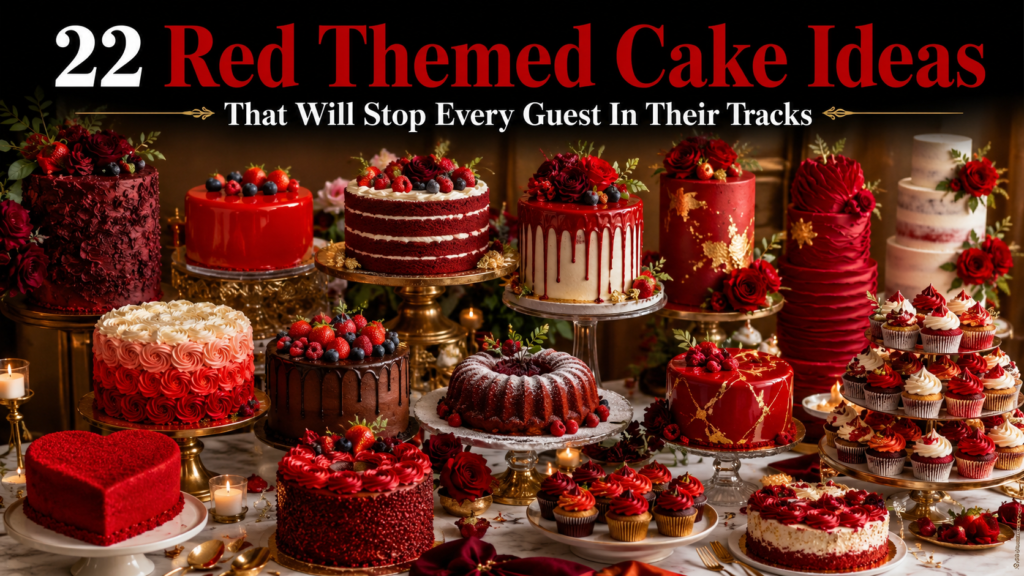
Red is not a safe color choice. It’s a statement. When you commit to a red themed cake, you’re telling your guests that this celebration means business — and that someone in the room has excellent taste.
I’ve spent years obsessing over celebration cakes, both professionally and as the person in my friend group who always ends up in charge of the dessert table. I’ve baked red velvet disasters that turned orange in the oven (more on that shortly), decorated mirror glaze cakes that cracked under pressure, and watched a dramatic crimson drip cake reduce a room of adults to awed silence. Red cakes are high-risk, high-reward territory. When they work, nothing else compares.
Here’s what most red cake roundups get wrong: they treat “red” as a single aesthetic. But red encompasses a whole emotional spectrum — from romantic blush-tinged roses to dramatic near-black burgundy, from fire-engine party vibrancy to deep oxblood sophistication. Choosing the right shade and style for your occasion is half the battle. This guide covers all 22 variations, explains the design logic behind each, and gives you the practical details that other articles skip entirely.
Whether you’re planning a Valentine’s Day celebration, a Christmas gathering, a sweet sixteen, a wedding, or simply want to make a Tuesday feel significant, these red themed cake ideas will give you exactly what you need.
What Makes a Red Themed Cake Actually Work?
Before diving into specific ideas, let’s talk about what separates a stunning red cake from a garish one. The answer almost always comes down to contrast and intentionality.
Red cakes fail when every element competes for attention. They succeed when the red serves a clear purpose — as a background that makes white decorations pop, as an accent against a neutral base, or as a monochromatic statement where texture carries the visual interest.
The second factor most people underestimate is shade selection. “Red” food coloring from a standard grocery store produces a flat, somewhat artificial tone. Gel food coloring brands like AmeriColor Super Red or Chefmaster Liqua-Gel give you far more control and depth. For naturally dyed cakes, beetroot powder creates a softer, more rustic crimson that behaves beautifully in natural light photography.
Now, into the ideas.
1. Classic Red Velvet Layer Cake
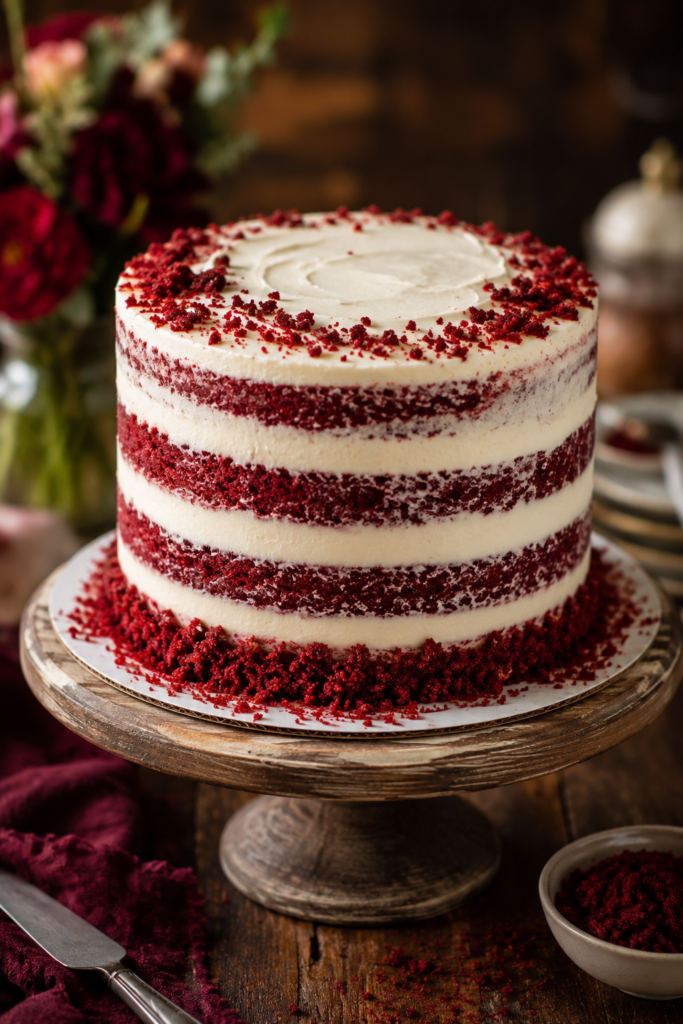
The red velvet is the entry point for most people, and the most misunderstood cake in the red repertoire.
A true red velvet is not just “chocolate cake dyed red.” The chemical reaction between the cocoa powder, buttermilk, and vinegar originally created a subtle reddish-brown — what we now call red velvet got its current fire-engine color from added dye. The cream cheese frosting is non-negotiable. Anything else, and you’ve made a different cake.
My consistent recommendation: use Wilton No-Taste Red gel color (about one tablespoon per batch) and allow the batter to rest for 10 minutes before baking. This resting period deepens the color development noticeably. Layer it with three or four tiers, use a smooth cream cheese buttercream, and finish with a gentle crumb coat that lets hints of red show through — this “naked cake” approach works beautifully for rustic weddings and autumn celebrations.
Common mistake: using liquid red food coloring. You’ll need so much of it to achieve the right color that it affects the batter’s consistency. Gel coloring every time.
2. Red Mirror Glaze Cake
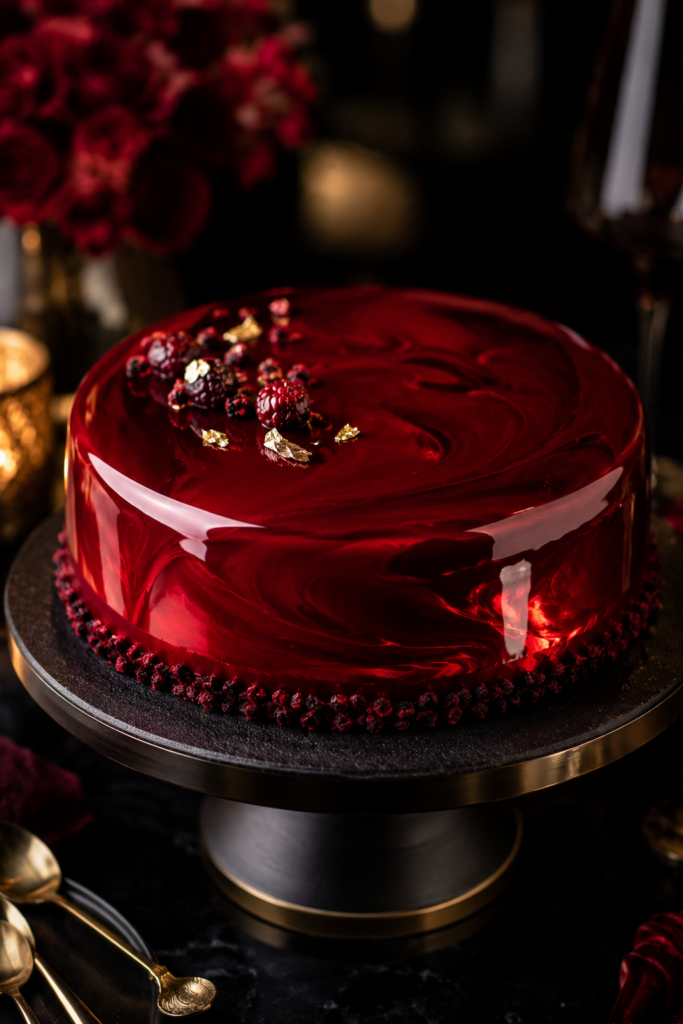
This is the one people photograph before they eat. A mirror glaze cake — covered in that liquid, reflective surface that shows actual reflections — in deep red or crimson produces a genuinely theatrical result.
The glaze itself uses white chocolate, condensed milk, gelatin, glucose syrup, and red gel coloring. Temperature control is everything. The glaze needs to be between 32°C and 35°C (90°F to 95°F) when poured. Too hot and it runs completely off. Too cool and it sets unevenly. I ruined three cakes learning this before understanding that a digital instant-read thermometer is the only way to get consistent results.
For red specifically, you can layer different red shades — a base coat of darker burgundy followed by a pour of brighter crimson — to create a depth effect that looks almost like liquid fire.
Best occasions: New Year’s Eve parties, milestone birthdays, any event where the cake is a centerpiece rather than just dessert.
3. Red Ombre Layer Cake
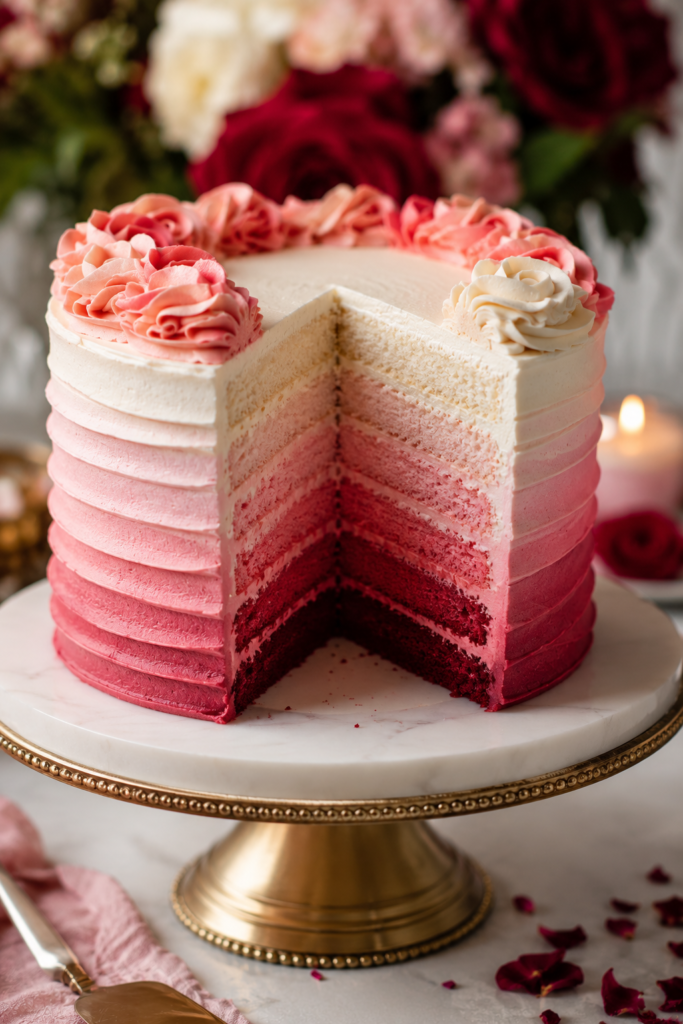
An ombre cake transitions gradually from one shade to another. For a red-themed version, you have several beautiful options: white fading into blush fading into full red, or conversely, a deep burgundy darkening to near-black at the base.
The technique requires the same batter divided into three or four portions, each tinted progressively deeper. Bake separately, then stack with buttercream between layers so when the cake is sliced, the gradient effect reveals itself from the inside out. The exterior can be left as a smooth buttercream ombre — applying lighter frosting at the top and darker at the bottom — or the interior surprise can be the reveal.
This works exceptionally well for Valentine’s Day because the red-to-white gradient carries obvious romantic symbolism without being heavy-handed about it. It also photographs brilliantly when sliced.
4. Velvet Red Drip Cake
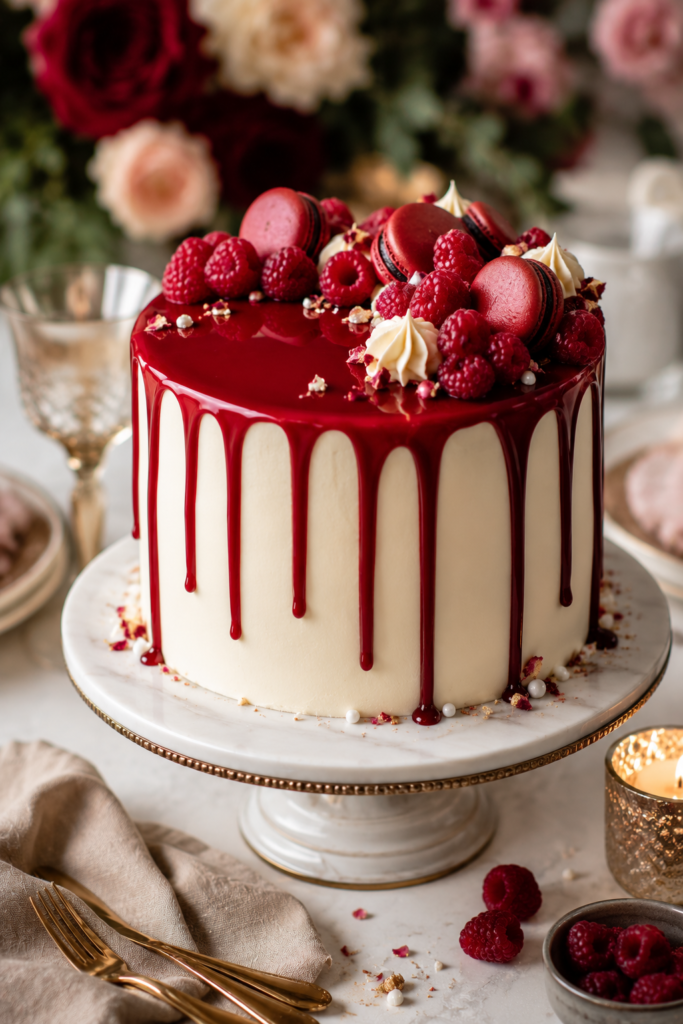
The drip cake format — a smooth frosted base with decorative drips running down the sides — suits red particularly well because the contrast between white frosting and red ganache drips is so visually clean.
Make the red drip ganache by heating heavy cream and pouring it over white chocolate, then adding red gel color once the mixture is smooth. The ratio matters: too much cream and the drips run all the way to the cake board; too little and they barely move. A 1:1 ratio by weight (equal parts cream and white chocolate) gives manageable drips with medium flow.
Top this with fresh raspberries, red macarons, or red candy decorations to reinforce the color theme without making it feel forced.
5. Red Floral Buttercream Cake
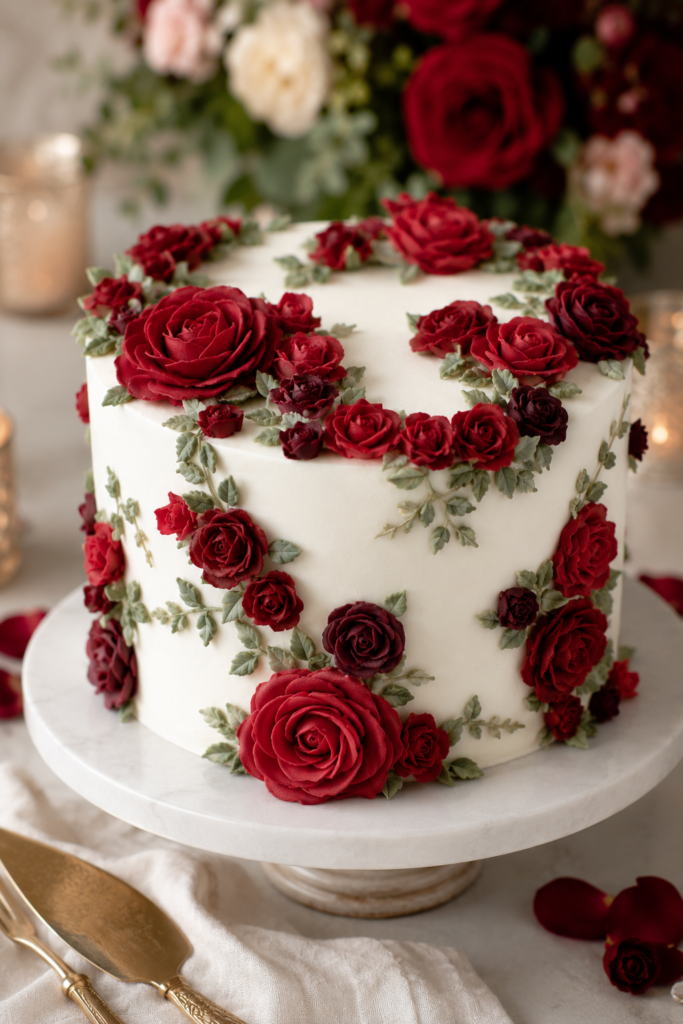
Buttercream flowers have a moment in the baking world right now, and red florals on a white or ivory cake create a look that is simultaneously romantic and dramatic.
Using a Wilton 1M or 2D piping tip, you can create full roses in red buttercream. For a more delicate look, combine deep red large roses with smaller blush-toned accent flowers and greenery piped in sage. The color contrast between the blooms and the white cake base does the heavy lifting aesthetically.
This style works for weddings, anniversaries, Mother’s Day, and any feminine celebration where the tone is elegant rather than playful. The flowers can be piped directly onto a chilled cake or made ahead on parchment and refrigerated until needed.
6. Red Velvet Naked Cake
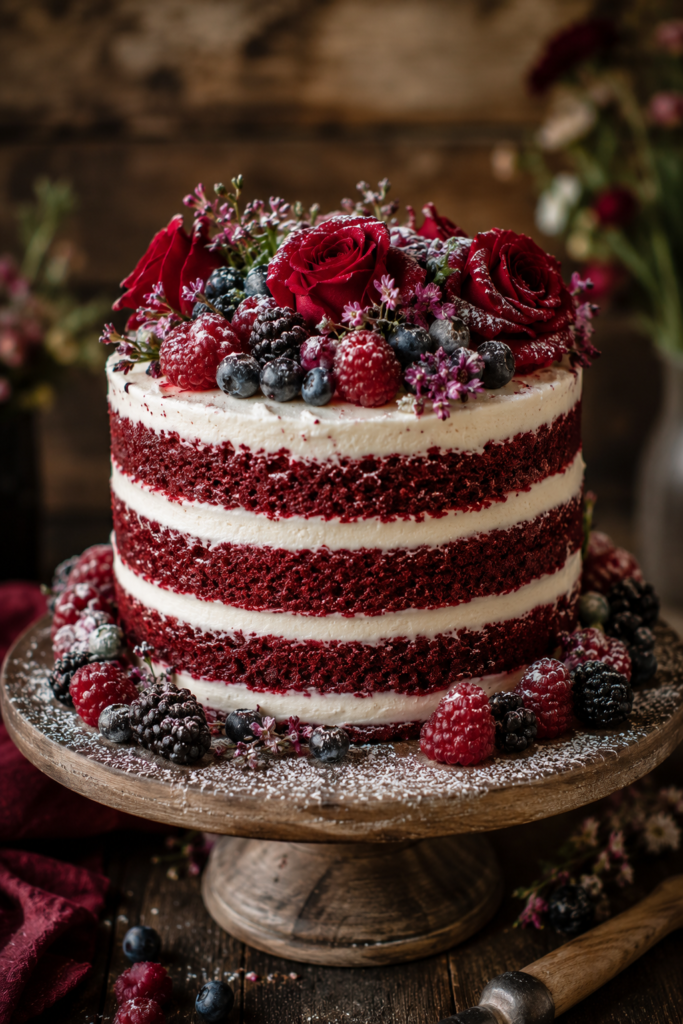
The naked cake style — minimal frosting deliberately showing the cake layers between the tiers — became enormously popular for rustic weddings around 2018 and hasn’t disappeared because it genuinely works.
For a red themed version, the exposed red velvet layers against the white cream cheese frosting creates a striped visual effect that is sophisticated without being elaborate. Decorate the top simply: fresh flowers in complementary shades, a handful of fresh berries, or simply a dusting of powdered sugar.
This is one of the most forgiving styles for home bakers because imperfect frosting application is part of the aesthetic. You don’t need professional finishing skills to achieve a result that looks intentional and beautiful.
7. Red Macaron Tower (Croquembouche-Style)
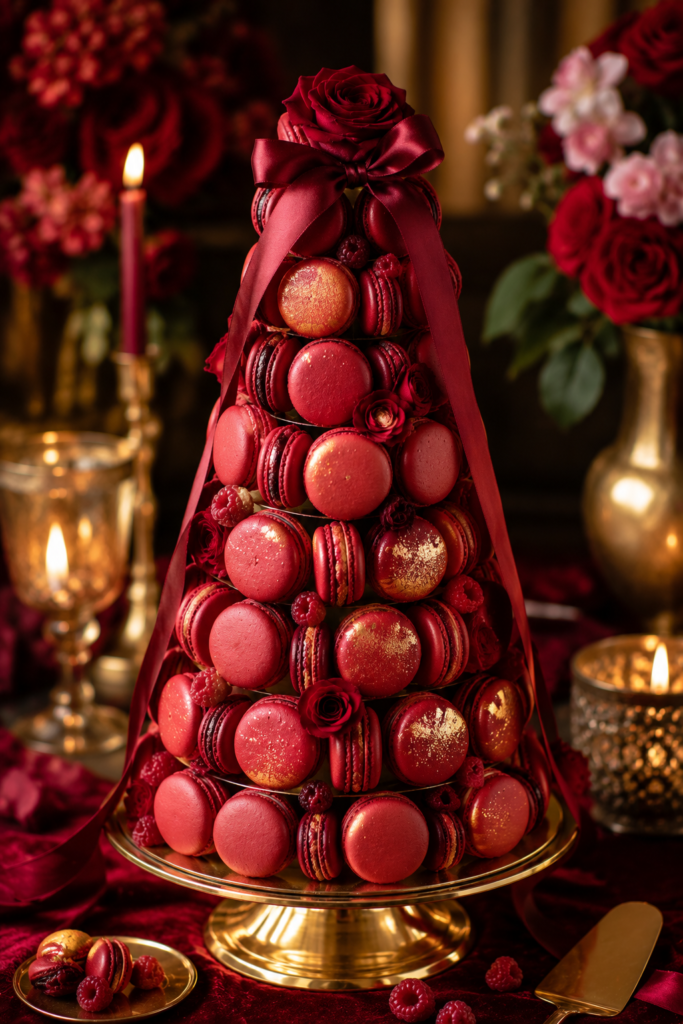
Not technically a cake in the traditional sense, but a tower of red macarons — shells tinted with red gel color and filled with raspberry buttercream or red velvet filling — functions as a showstopping centerpiece that serves the same celebratory role.
The shells require gel coloring added to the Italian meringue before folding in the almond flour mixture. Red macarons can be challenging because red dye sometimes fades during baking, so start with a slightly deeper color than you want the finished product to be.
Stack on a cone-shaped foam base for the tower structure. For a dramatic effect, combine deep red shells with gold-dusted shells and tie the tower with a satin ribbon. This suits elegant evening events, bridal showers, and any setting where individual serving pieces are more practical than a sliced cake.
8. Dark Chocolate and Red Berry Cake
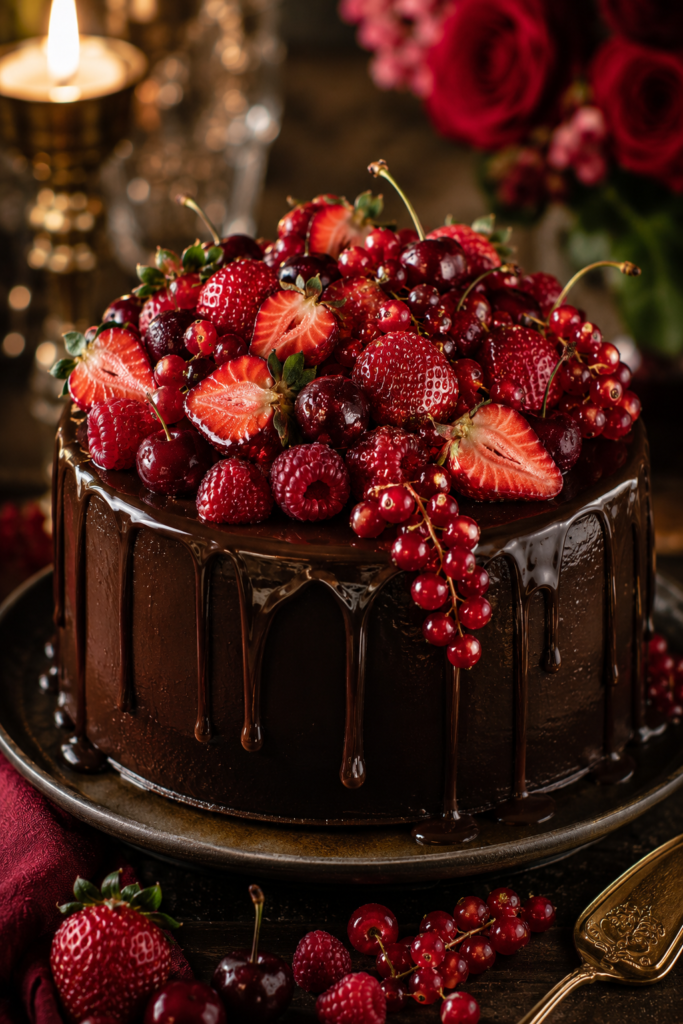
Here’s a perspective shift: red doesn’t have to be the frosting. A dark, near-black chocolate ganache cake decorated with fresh red berries — raspberries, strawberries, red currants — achieves a red theme through the fruit while the chocolate provides dramatic contrast.
The visual effect is stunning. Deep mahogany chocolate cake with jewel-bright red berries piled generously on top reads as both luxurious and seasonal. In summer, you’ll have maximum berry variety. In winter, red currants alone create a spare, elegant aesthetic that suits the season.
This approach also solves a practical problem: some guests find heavily dyed cakes concerning. A natural red theme from fruit bypasses that entirely while delivering equal visual impact.
9. Red Velvet Cheesecake Hybrid
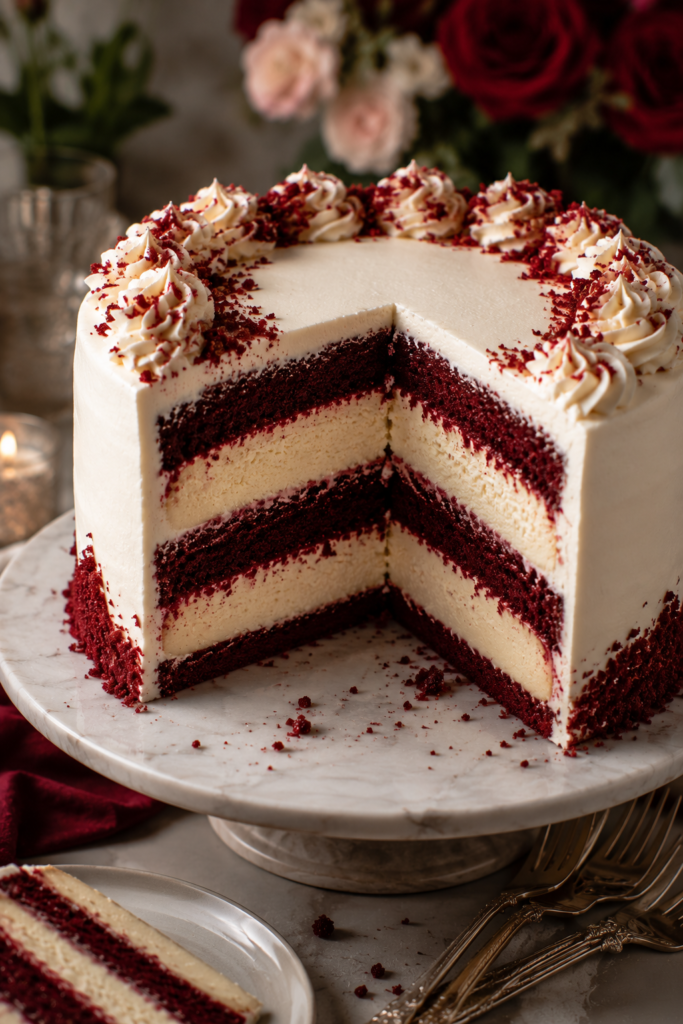
Two beloved desserts in one structure. The base is a classic red velvet cake layer, topped with New York-style cheesecake filling, then finished with cream cheese frosting. When sliced, you see the distinct red and white layers side by side.
This hybrid became popular at specialty bakeries around 2019-2020 because it offers something novel while using familiar flavor profiles. It’s particularly good for Thanksgiving or Christmas gatherings where you want red coloring but also want a dessert that feels more indulgent than a standard cake.
Baking the cheesecake layer separately (in a water bath to prevent cracking) before assembling is the technique that makes this work consistently.
10. Red Velvet Bundt Cake with White Glaze
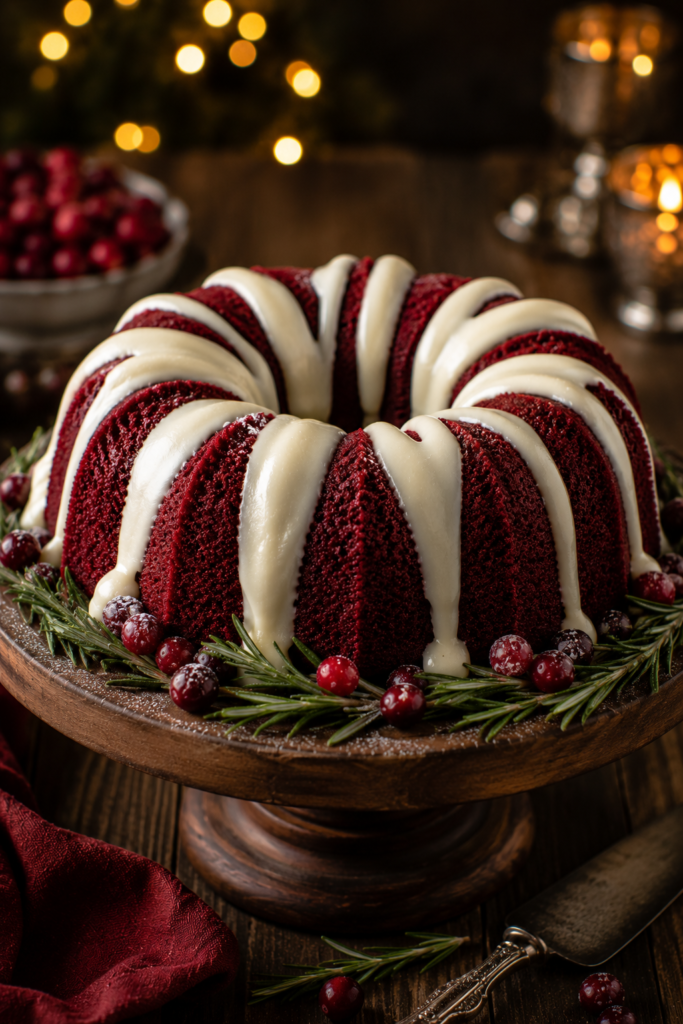
The Bundt format is criminally underused for elegant entertaining. A red velvet Bundt — with its architectural ridges and depth — becomes a showpiece when glazed with a simple white cream cheese drizzle that pools in the grooves.
No layering, no elaborate decoration. The glaze does everything. For a Christmas table particularly, a deep red Bundt cake on a cake stand with a cluster of rosemary sprigs and cranberries around the base takes about ten minutes to assemble and looks like you planned it for weeks.
Nordic Ware makes Bundt pans in dramatic shapes — the Cathedral pan and the Vaulted Cake pan create structures that elevate this concept further. Prices range from about $25 to $45 depending on complexity.
11. Red Geode Cake
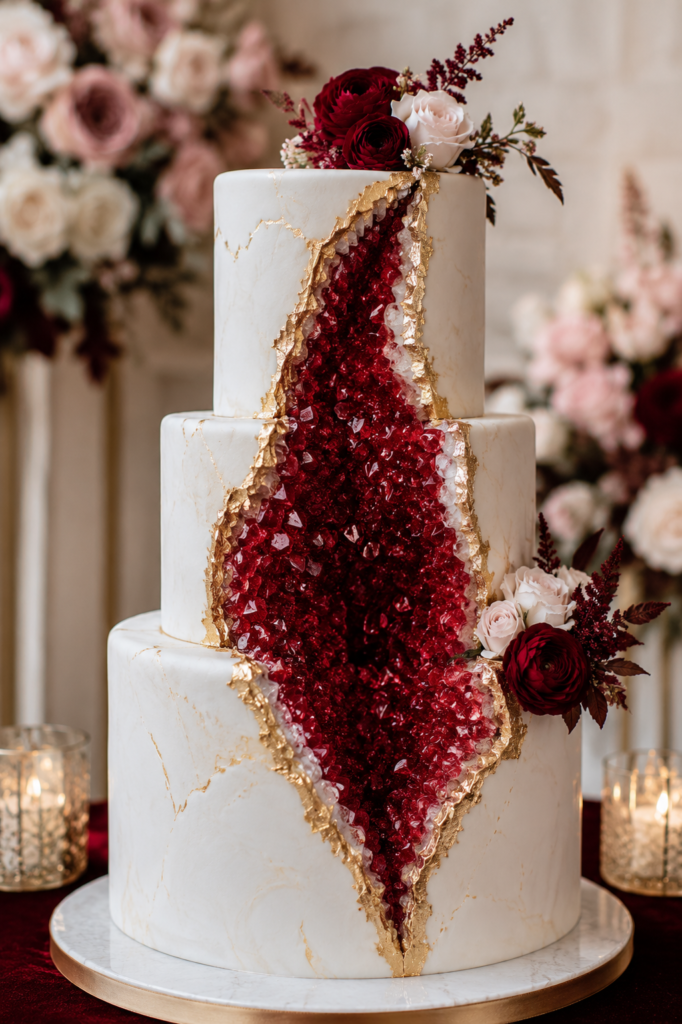
Geode cakes — featuring crystalline structures that look like sliced gemstones embedded in the cake — have been a premium wedding cake trend for several years. In a red themed version, the geode uses red rock candy crystals (or isomalt dyed red) set into a carved-out cavity in the cake’s side.
The surrounding exterior is typically smooth fondant or buttercream in a complementary neutral — white, ivory, or gold. The effect is genuinely extraordinary. The crystals catch light and the red color in the “geode cavity” creates the impression of a ruby or garnet embedded in the cake.
This is an advanced technique. The isomalt work requires specialized equipment including silicone molds and a digital thermometer. Plan for a two-day process: cake baking and initial decoration on day one, crystal work on day two.
12. Red Christmas Cake with Holly and Gold Accents
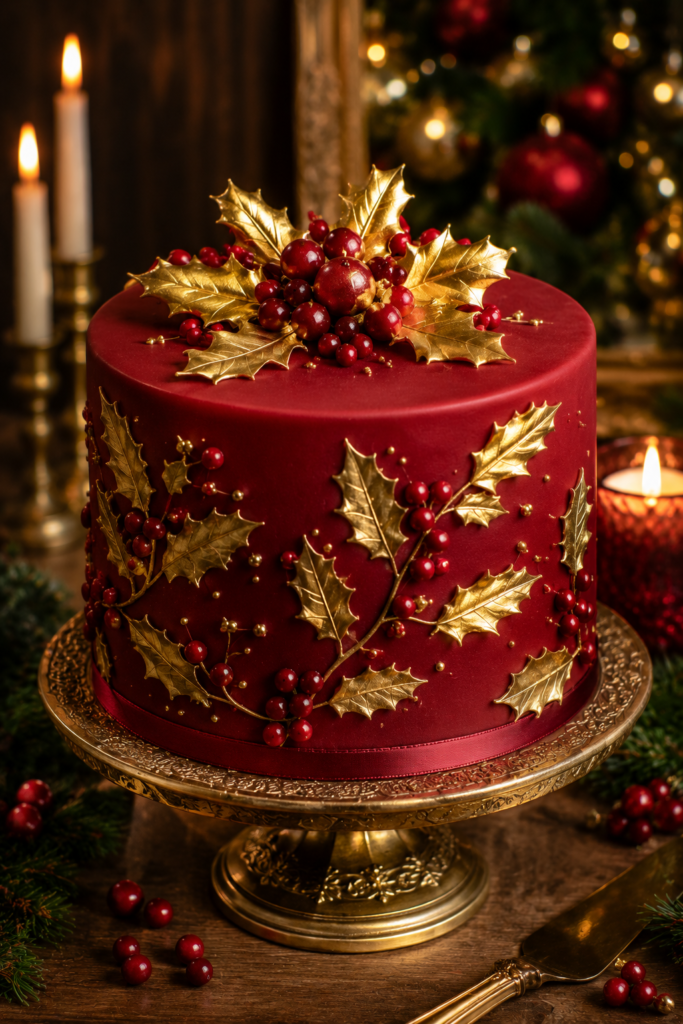
Traditional Christmas fruitcakes are typically dark and dense. Turning the concept toward a red themed exterior while keeping or replacing the traditional interior creates something that bridges heritage baking and contemporary aesthetics.
A marzipan-covered cake in deep red fondant, with hand-sculpted gold fondant holly leaves and bright red berries, is classically festive without being predictable. The gold accents prevent the red from feeling heavy or overwhelming.
For a more modern Christmas cake, ditch the fruitcake interior and fill with spiced red velvet layers instead. The spice notes — cinnamon, nutmeg, clove — complement red velvet’s cocoa base beautifully and suit December serving perfectly.
13. Valentine’s Heart-Shaped Red Cake
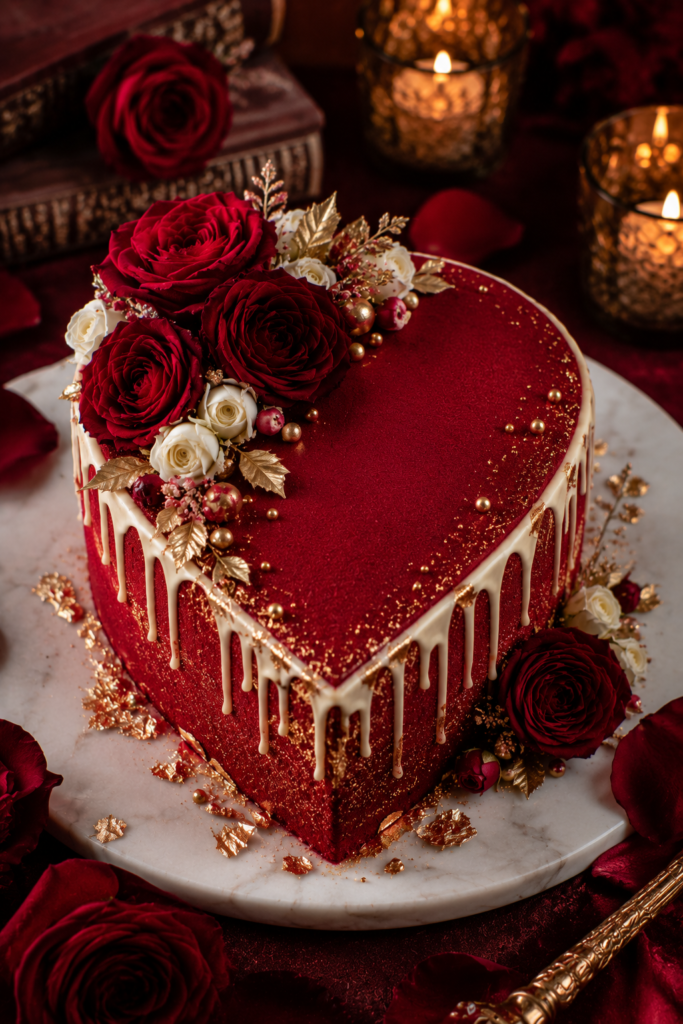
Heart-shaped cakes have a reputation for being predictable. Done well, they’re anything but. The key is treatment of the edges and decoration.
A two-tier heart cake in smooth red velvet with white chocolate ganache drips and gold leaf accents pushes the format into something genuinely sophisticated. Alternatively, a single-tier heart covered in red buttercream rosettes — small, tightly piped flowers covering the entire surface — looks like a piece of textile art.
For home bakers: you don’t need a heart-shaped pan. Bake one round layer and one square layer of the same diameter. Cut the round layer in half. Place the square layer rotated 45 degrees (like a diamond), then position each half-circle against two adjacent sides of the diamond. The result is a heart.
14. Red and Gold Metallic Cake
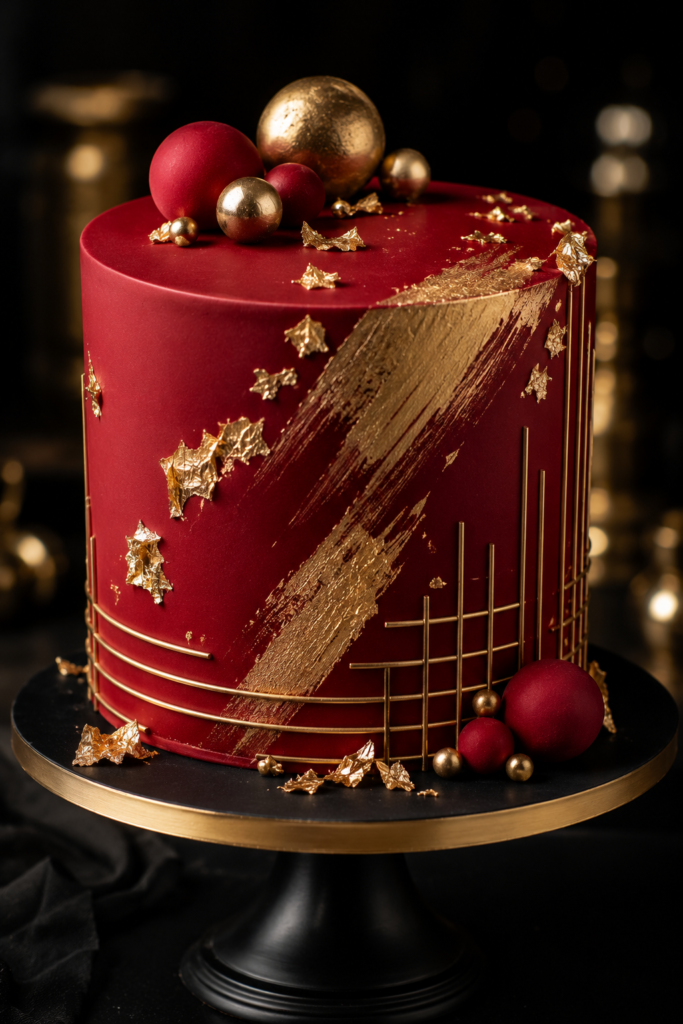
Metallic accents elevate red cakes dramatically. Gold is the classic pairing — it reads simultaneously as luxury and celebration — but rose gold and copper also work beautifully depending on your event’s palette.
Achieve metallic effects through several methods. Edible gold leaf (available from Squires Kitchen or Wilton, typically £8-15 per booklet) is the most impactful and easiest to apply to smooth fondant surfaces. Edible gold paint — mixed from gold luster dust and a small amount of clear alcohol — lets you hand-paint details. Airbrushed metallic sheen over buttercream creates a more diffused, gradient metallic effect.
A red fondant cake with gold geometric brushstrokes suits corporate celebrations and New Year’s parties. Red velvet with copper drips and rose gold macarons hits the right note for autumn weddings.
15. Red Velvet Cupcake Tower
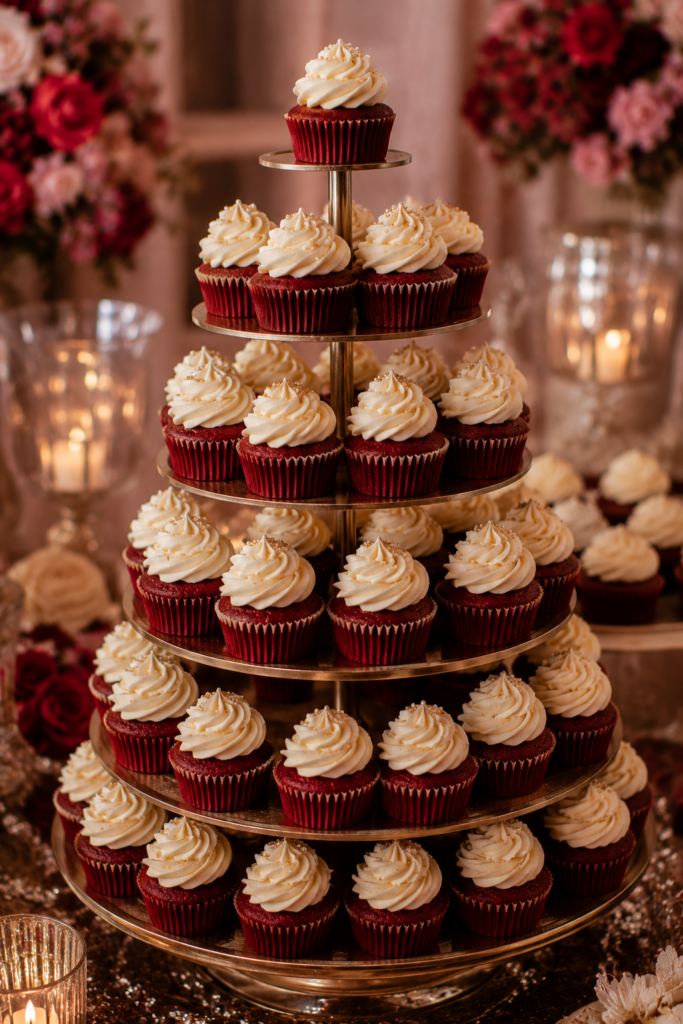
Sometimes the occasion calls for individual servings rather than a sliced cake. A cupcake tower using red velvet cupcakes — topped with cream cheese frosting piped in rose or swirl formation and decorated with small red sugar pearls — delivers red themed impact with serving practicality.
For maximum visual effect, vary the frosting height across cupcakes rather than making every one identical. Graduated heights create a more organic, abundant look when assembled on a tiered stand.
This format suits children’s birthday parties, office celebrations, and any event where a single-serving approach simplifies things. The cupcakes can be baked two days ahead and frosted on the day for the freshest result.
16. Red Velvet and Champagne Cake
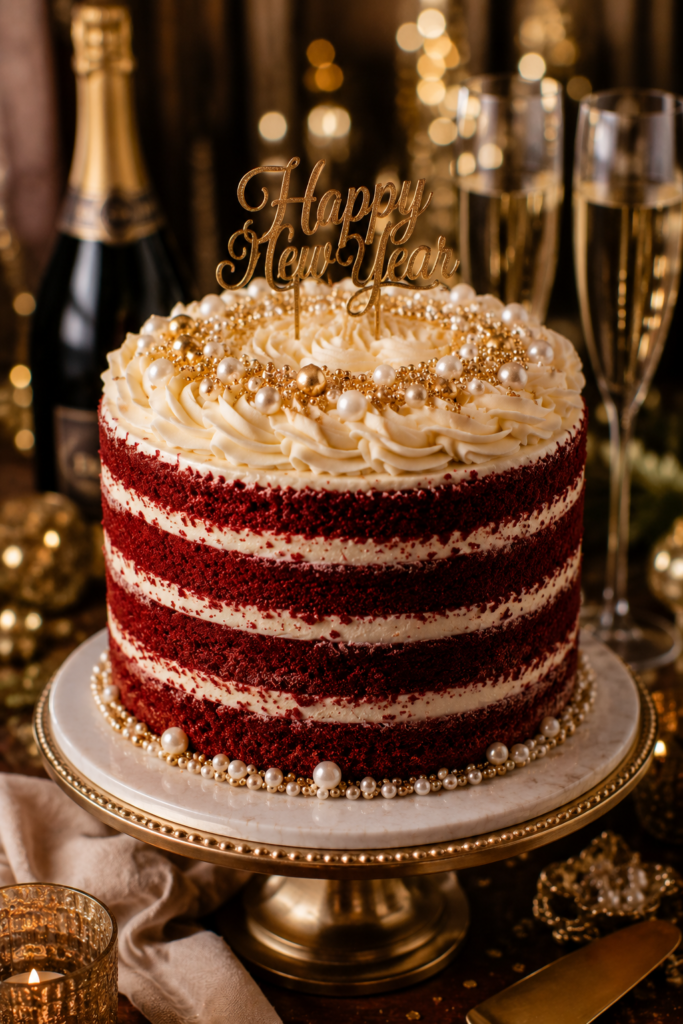
For adult celebrations, pairing red velvet layers with a champagne buttercream creates a cake that feels properly grown-up. The champagne frosting uses actual reduced champagne stirred into a standard buttercream base — the alcohol cooks out during reduction, but the flavor and slight effervescence remain.
Decorate with gold sugar sprinkles, small edible pearls, and a simple “Happy New Year” or anniversary message in gold calligraphy. This cake works for milestone anniversaries, New Year’s Eve, retirement parties, and any occasion that warrants a touch of actual luxury.
The champagne for the frosting doesn’t need to be expensive. A decent Prosecco or Cava works equally well in the reduction. Save the good champagne for drinking.
17. Red Velvet Roll Cake (Roulade)
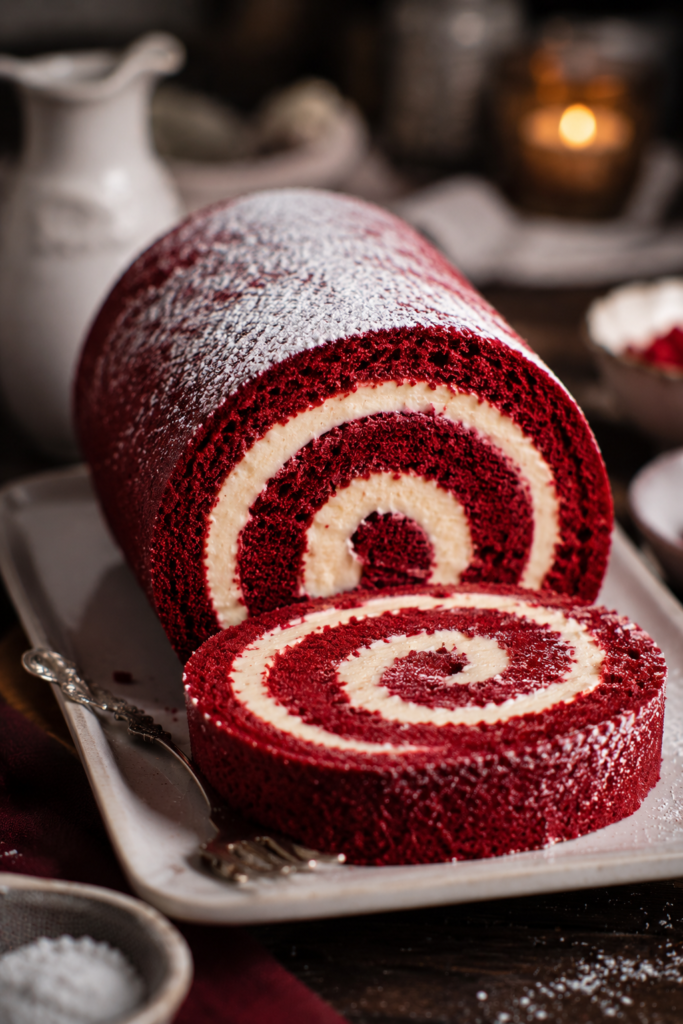
The Swiss roll format — a thin sheet cake rolled around a cream filling — becomes visually striking in red velvet. When sliced, the spiral of red cake and white cream cheese filling creates a pinwheel cross-section that’s both beautiful and different from anything else on a dessert table.
The key technique challenge is rolling the warm cake without cracking it. Roll it immediately out of the oven while still flexible, with a clean kitchen towel dusted with powdered sugar. Unroll when cool, add the filling, then re-roll. The whole process takes about 45 minutes from oven to finished roll.
This is a particularly good choice for Christmas buffets and holiday gatherings because it slices cleanly, serves easily, and photographs excellently.
18. Red Velvet Trifle (Deconstructed Cake)
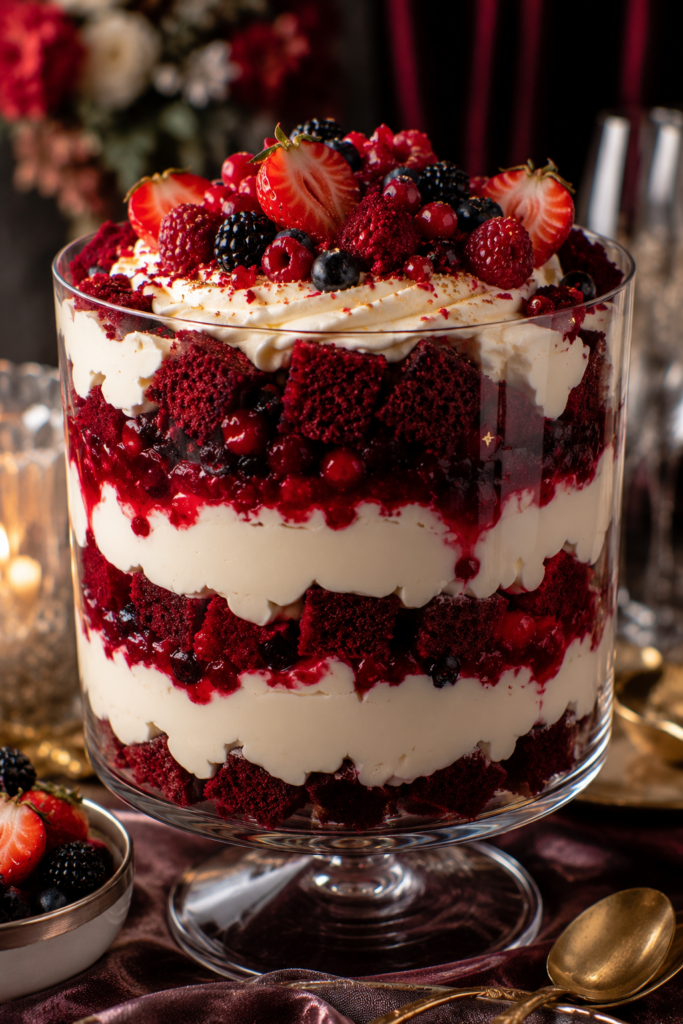
Technically not a traditional layered cake, but a trifle built from red velvet cake cubes, cream cheese mousse, fresh berries, and a red berry compote layered in a glass vessel achieves the same flavor profile with completely different visual impact.
The advantage of the trifle format is that it actually looks better than a standard cake when assembled correctly — the alternating layers of red cake, white cream, and bright berry compote create a striking vertical pattern visible through the glass. A large glass trifle bowl (Kilner makes excellent options around £20-25) makes the assembly process simple.
This is also more forgiving of imperfect cake baking, since any crumbling or uneven layers simply add to the rustic, abundant aesthetic.
19. Painted Red Watercolor Cake
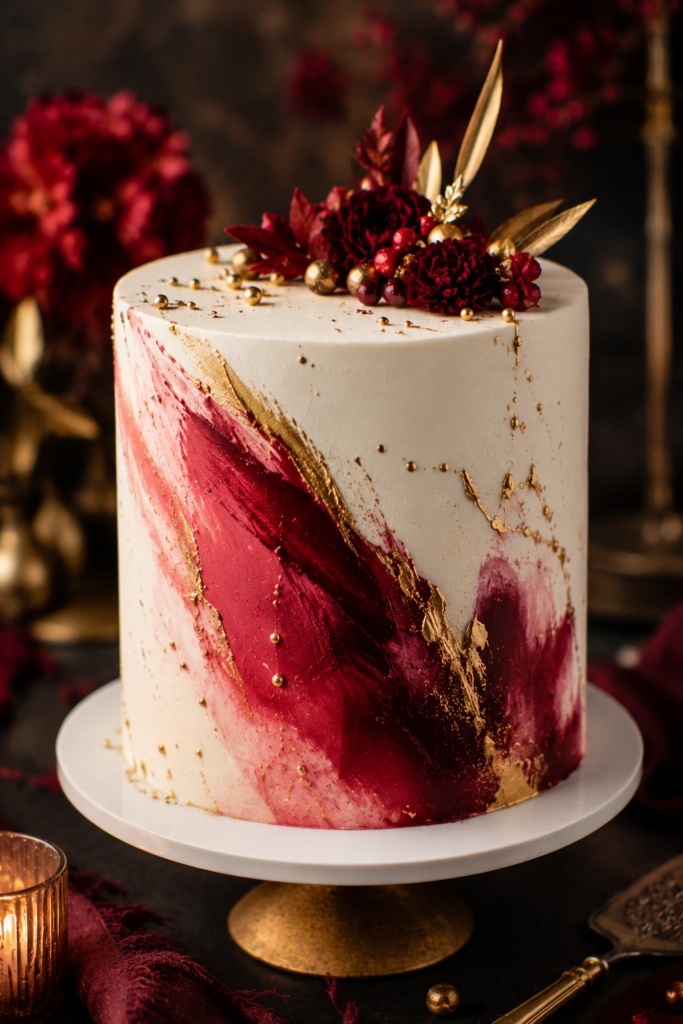
The watercolor cake technique uses watered-down gel food coloring or diluted edible dust applied to a smooth white buttercream or fondant surface with a soft brush to create a fluid, painterly effect.
A red watercolor cake — using varying dilutions of crimson, scarlet, and burgundy applied in overlapping strokes — looks like an abstract painting. Add actual gold brushstrokes over the color for depth. The result is unique every time by nature of the technique, which is genuinely exciting for bakers who want something that cannot be exactly replicated.
This style suits artistic personalities, creative celebrations, gallery openings, and any occasion where conventional decoration feels too predictable.
20. Red Fondant Sculpted Cake
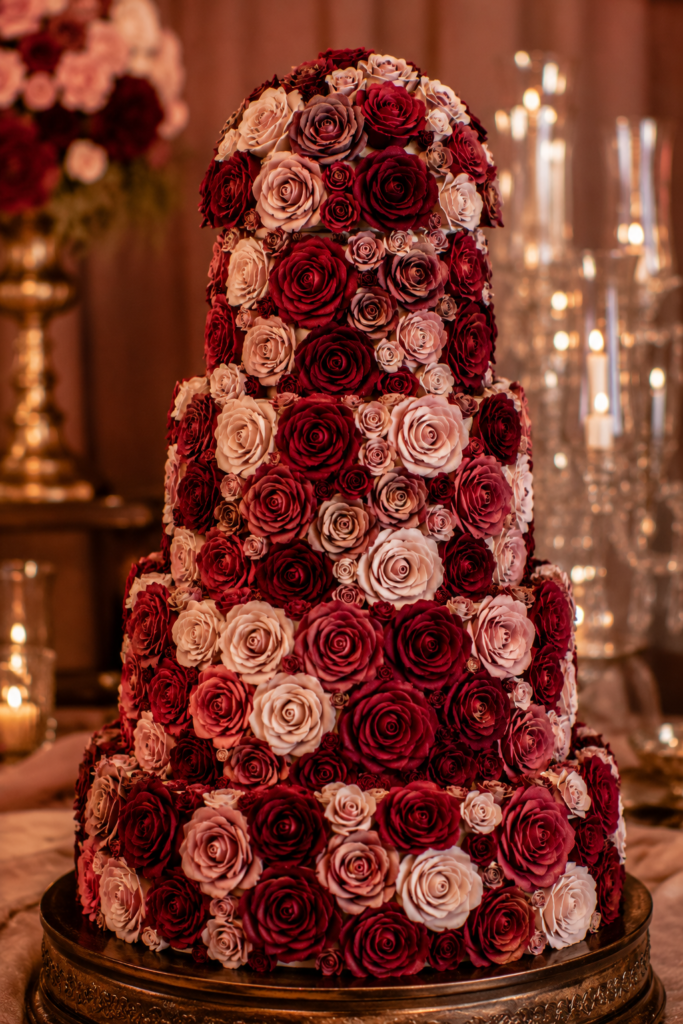
For advanced bakers and professional cake designers, fondant sculpting takes red themed cakes into pure art territory. A red rose cake — the entire exterior covered in hand-sculpted fondant roses in varying shades from blush to deep burgundy — is one of the most recognized luxury cake aesthetics.
The roses are made using fondant rolled thin, cut into circles of varying sizes, and assembled petal by petal using a ball tool on a foam pad. A single large cake might require 150 to 200 individual roses for full coverage. At professional bakeries, fondant rose cakes in this style typically range from $400 to $800+ depending on size.
For home bakers, partial coverage — roses clustered at the base of the cake or cascading from one corner — achieves similar drama with significantly less time investment.
21. Red Velvet Cake Pops
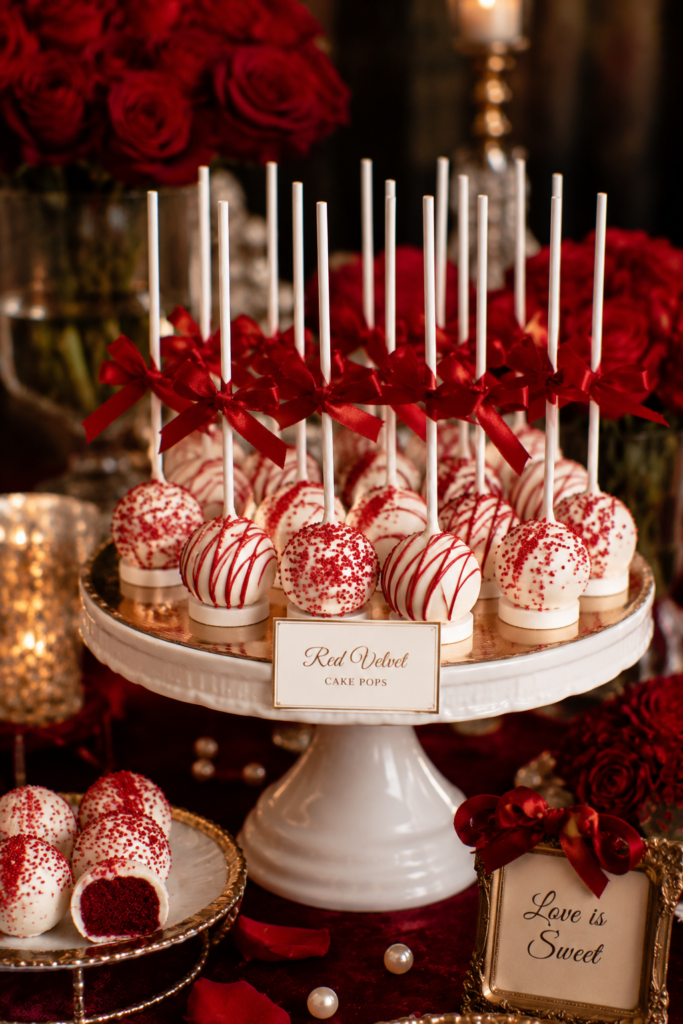
Cake pops are the entry point for anyone intimidated by full cake decoration. Red velvet cake mixed with cream cheese frosting, rolled into balls, chilled, and dipped in white chocolate creates individual red-centered treats that reinforce any red theme.
The white chocolate exterior can be decorated with red drizzle, red sprinkles, or kept plain to let the contrast between white exterior and red interior speak for itself when bitten. Displayed on a foam block with red ribbon accents, a collection of cake pops becomes a decoration as much as a dessert.
Brands like Wilton make cake pop dipping chocolate that sets more smoothly than standard baking chocolate, which is worth the slight price premium when you’re making quantities for an event.
22. Red Velvet Cheeseboard Cake
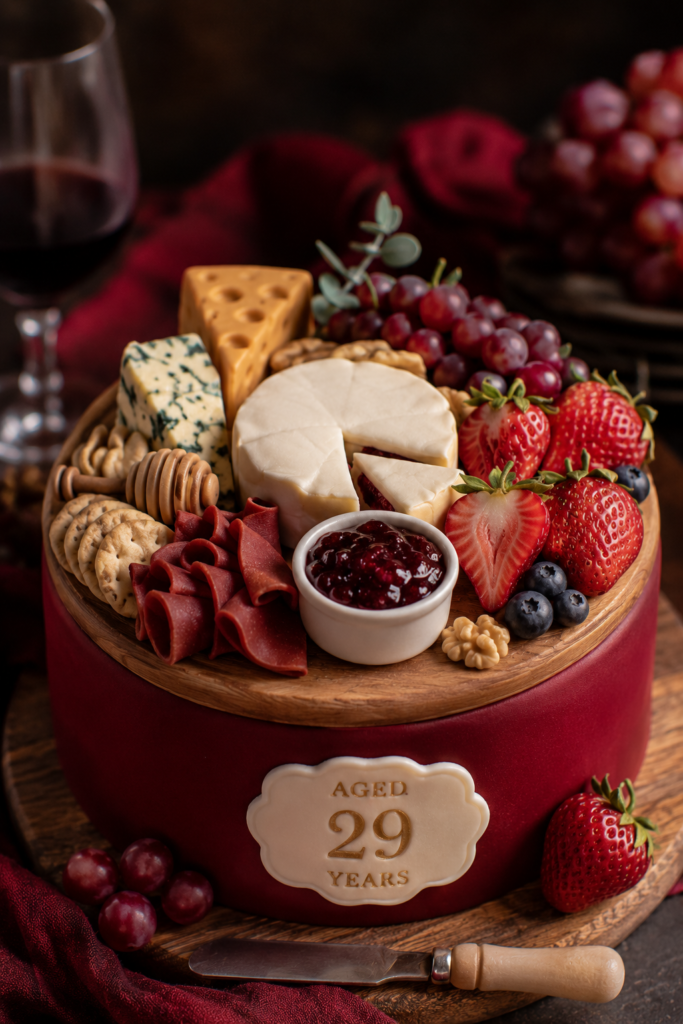
The most unexpected entry on this list. A cheeseboard cake presents a standard layer cake decorated to look like an elaborate charcuterie board — complete with fondant “crackers,” sugar “grapes,” and decorative elements that mimic the cheese board aesthetic.
For a red themed version, use red velvet as the base and lean into red elements: fondant strawberries, red grape clusters made from small fondant balls, red “jam” pools made from colored gel. The effect is simultaneously playful and impressive, and it genuinely surprises people who haven’t seen the format before.
This is particularly popular at food-focused gatherings, bridal showers with foodie themes, and any event where the unexpected reaction is the goal.
Frequently Asked Questions About Red Themed Cakes
How do I get a truly deep red color in cake batter without using excessive dye?
Use Americolor Super Red gel, which has higher pigmentation than standard grocery store versions. Start with one to two teaspoons per batch and adjust. Adding a small amount of cocoa powder (one tablespoon) deepens the color without making it taste chocolatey. The most important step people skip: allow the batter to rest for 10 minutes before baking. Color develops during this rest period.
Why does my red velvet cake turn brown when baked?
This usually means too much heat or too little acid. Red velvet relies on the reaction between cocoa, buttermilk, and vinegar to maintain color. If your oven runs hot (above 350°F/175°C) the dye breaks down. Also check your cocoa: Dutch-process cocoa will turn the cake brown. Use natural (non-Dutch process) cocoa only.
What frosting works best on red themed cakes?
Cream cheese buttercream is traditional with red velvet and provides excellent color contrast. For non-red velvet bases, vanilla Swiss meringue buttercream holds its white color better than American buttercream (which can yellow slightly). White chocolate ganache also works beautifully and has excellent structural stability for tiered cakes.
Can I make a red themed cake ahead of time?
Unfrosted layers freeze beautifully for up to three months, well-wrapped. Frosted cakes can be refrigerated for three to four days. Red velvet specifically tends to deepen in color after 24 hours in the refrigerator, which is actually an advantage — make it a day ahead for the richest color.
What natural alternatives to red food dye exist?
Beetroot powder is the most effective natural option, producing a warm ruby-red to deep crimson depending on quantity. You’ll typically need two to four tablespoons per batch. The color is less vibrant than synthetic dye but more complex and beautiful in natural light. Raspberry powder can add a pinkish-red tint. Neither holds up as vibrantly at high temperatures as synthetic gel coloring.
How do I prevent red buttercream from bleeding into white?
Chilling is your best tool. Apply a thin crumb coat of white frosting and freeze for 20 minutes before the final coat. This creates a barrier layer. When piping red buttercream decorations onto white, work quickly and chill immediately afterward. Red dye is particularly prone to bleeding because it requires higher concentrations.
Conclusion
Red themed cakes are worth the extra attention they demand. Whether you go with the accessible simplicity of a naked red velvet, the theatrical drama of a mirror glaze, or the quiet sophistication of a chocolate berry cake with natural red accents, committing to a red palette signals intention and care in a way that no other color quite replicates.
The single piece of advice I’d give anyone starting their red cake journey: invest in professional-grade gel coloring. The difference between grocery store liquid dye and AmeriColor or Chefmaster gel is not subtle. It’s the difference between a cake that looks homemade in the wrong way and one that looks purposeful and polished.
Which of these 22 red themed cake ideas suits your next celebration? And here’s a question worth considering: have you ever baked a red cake that turned out completely differently than you expected — and ended up being better for it? That’s the real joy of this color. It rarely does exactly what you plan, and somehow the result is almost always memorable.