
15 Balanced Meals for an Aesthetic Dinner That’s as Nourishing as It Is Beautiful
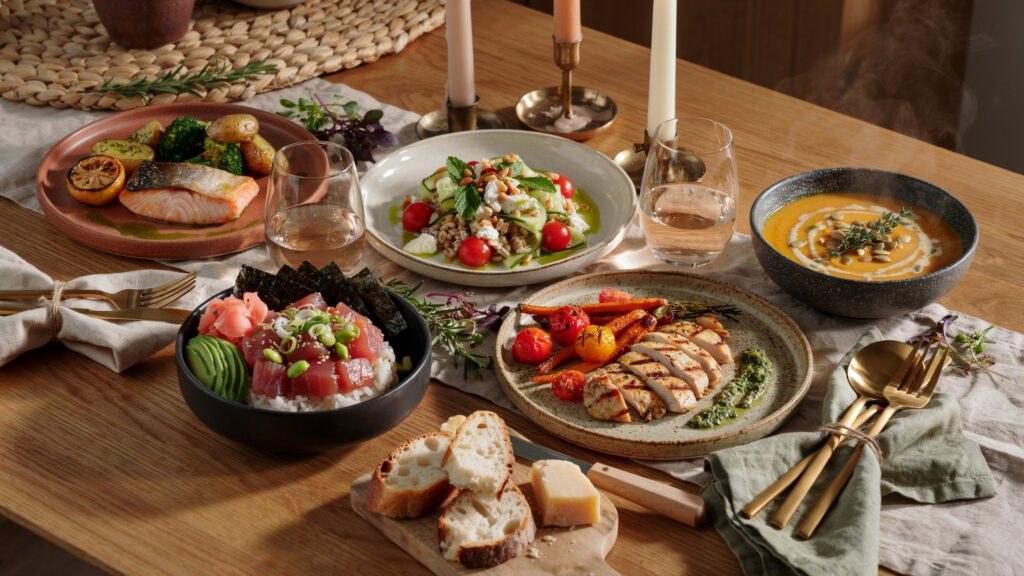
Most people think “aesthetic dinner” means tiny portions arranged on an oversized plate in a restaurant that costs too much. Or they assume it means hours of prep, a background in food photography, and lighting equipment most of us don’t own. Here’s what nobody tells you: the most visually stunning dinners are almost always the most nutritionally balanced ones. Color is nutrition. Texture is satisfaction. Contrast is both a design principle and a metabolic advantage.
I spent a long time believing those two things—beauty and balance—were in permanent tension. Then I started cooking seriously, testing recipes obsessively, and learning from registered dietitians who kept pointing me toward the same truth: a plate that hits the right macronutrient targets almost always looks incredible without trying.
This guide covers 15 balanced meals for aesthetic dinner nights that are genuinely weeknight-doable, macro-friendly, and stunning enough to post, share, or simply feel proud of before you eat.
What Makes a Dinner Both “Balanced” and “Aesthetic”?
A balanced dinner, nutritionally speaking, hits three targets simultaneously: a quality protein source (roughly 25 to 40 grams per serving), complex carbohydrates that provide sustained energy, and healthy fats that support hormone function and satiety. Add fiber-rich vegetables and you have something dietitians call a “complete plate.”
Here’s what’s interesting: that exact formula also produces the most visually dynamic plates. Lean proteins tend to be pale or neutral. Vegetables bring vivid oranges, deep greens, and rich purples. Whole grains add earthy warmth. Healthy fats introduce glossy finishes through olive oil, or creamy contrast through avocado. You’re essentially building a color palette every time you cook a properly balanced meal.
The aesthetic part isn’t about garnish. It’s about deliberate contrast: something bright against something dark, something crisp against something soft, something warm against something cool on the color wheel.
1. Harissa-Roasted Salmon with Saffron Cauliflower Rice and Wilted Spinach
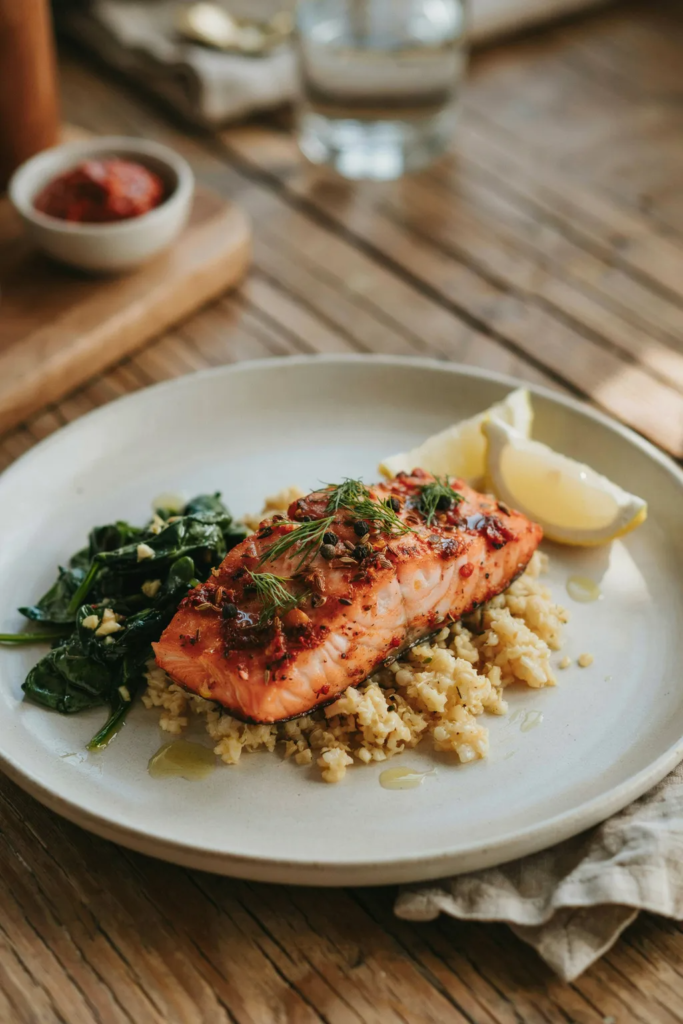
Few dinners photograph better than a coral-pink salmon fillet sitting over golden saffron rice with a pile of dark wilted greens alongside. The colors are striking. The nutrition is exceptional.
Salmon delivers around 34 grams of protein per 5-ounce fillet plus omega-3 fatty acids linked to reduced inflammation and improved cardiovascular markers. The harissa paste—a North African chili blend—adds capsaicin, which research from the American Journal of Clinical Nutrition (2020, n=563) associates with modest increases in metabolic rate.
How to build it: Coat salmon in 1 tablespoon harissa paste and roast at 425°F for 12 minutes. Steep a pinch of saffron threads in 2 tablespoons warm water, then stir into cauliflower rice while it sautés. Wilt spinach in a hot pan with one minced garlic clove and a squeeze of lemon. Plate the rice as a base, lean the salmon against it at an angle, and mound the spinach beside it. Drizzle with good olive oil.
Total prep and cook time: 25 minutes. Macros per serving: approximately 480 calories, 36g protein, 28g fat, 22g carbohydrates.
2. Bibimbap-Style Brown Rice Bowl with Soft Egg and Gochujang
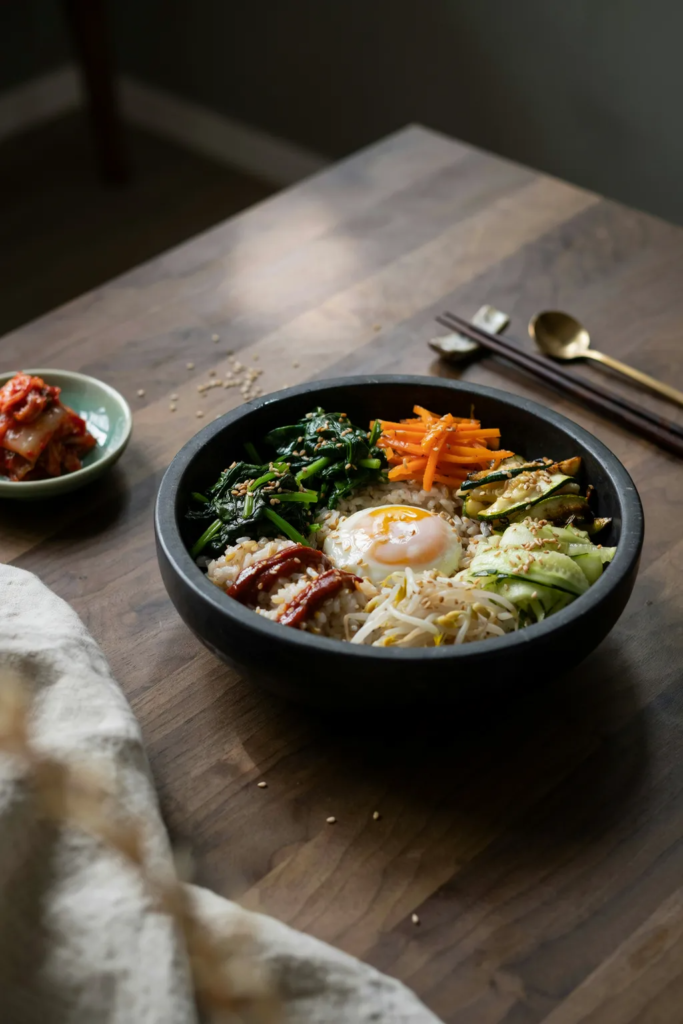
The Korean bibimbap bowl is possibly the most naturally aesthetic meal on the planet. Six or seven vegetables, each cooked separately and arranged in sections like a color wheel, topped with a soft egg that breaks into a golden yolk across everything. It’s visually dramatic before you add a single garnish.
Brown rice provides resistant starch and B vitamins. The vegetables—typically spinach, beansprouts, julienned carrot, sliced cucumber, and sautéed zucchini—contribute diverse phytonutrients. The egg adds complete protein and choline. Gochujang paste brings fermented probiotics and a depth of umami that makes the whole bowl satisfying without needing extra fat.
The arrangement is the aesthetic work here. Each ingredient gets its own section. You’re essentially plating a mandala. The egg goes dead center, and the gochujang dots around it. It takes about 35 minutes and costs roughly $4.50 per serving.
3. Turmeric-Spiced Chickpea and Sweet Potato Sheet Pan Dinner
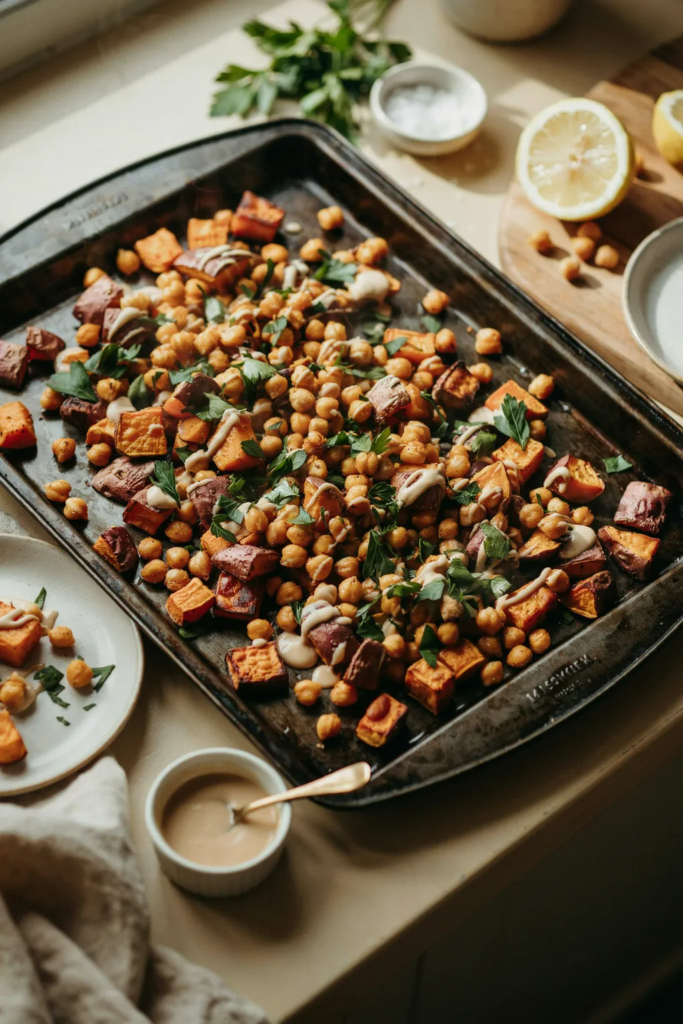
Sheet pan dinners have a reputation for being lazy cooking. This one earns that reputation while being legitimately beautiful. Roasted sweet potato goes caramel-orange. Chickpeas turn crispy and golden. A handful of fresh parsley and a dollop of lemony tahini turn what could be a beige disaster into something worth pausing over.
The nutritional story here is strong for plant-based eaters. Chickpeas deliver about 15 grams of protein per cup plus 12 grams of dietary fiber. Sweet potato provides beta-carotene (a precursor to vitamin A) and complex carbohydrates that digest slowly. Turmeric’s curcumin has been studied extensively for its anti-inflammatory properties, with a 2019 meta-analysis in the journal Nutrients finding significant reductions in inflammatory markers across multiple randomized trials.
Roast everything at 400°F for 30 minutes. Make the tahini dressing while the oven does the work. The total effort here is maybe 10 minutes of active cooking.
4. Grilled Chicken Thighs Over Charred Corn and Black Bean Salsa with Avocado Crema
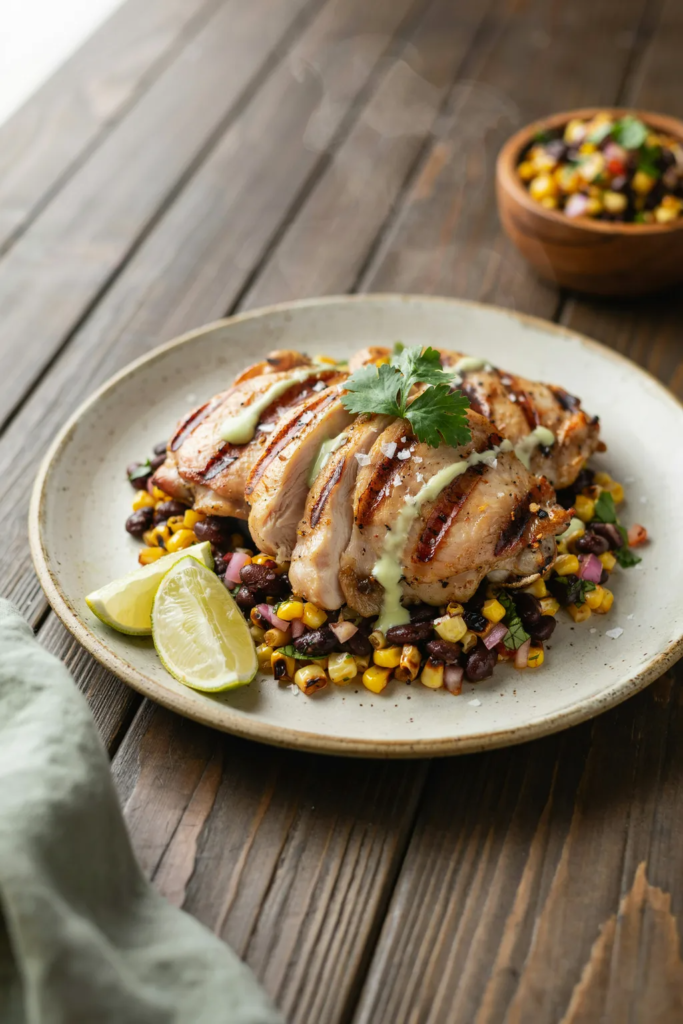
Chicken thighs are the most underrated protein for aesthetic dinner plating. They develop a gorgeous mahogany crust when grilled properly, something chicken breast never quite achieves. The charring isn’t just visual: Maillard reaction compounds created during high-heat cooking produce dozens of flavor molecules that make this dish taste far more complex than its ingredients suggest.
The corn and black bean salsa underneath brings vivid contrast: bright yellow, deep black, red tomato, green cilantro. The avocado crema—blended avocado, lime juice, and a splash of water—adds a pale green creaminess that ties everything together. Plate the salsa as the base. Slice the chicken and fan it across the top. Drizzle the crema. Add a wedge of lime.
Per serving: 38 grams of protein, healthy monounsaturated fats from avocado, fiber from beans, and zero refined carbohydrates.
5. Miso-Glazed Eggplant with Soba Noodles and Sesame Cucumber
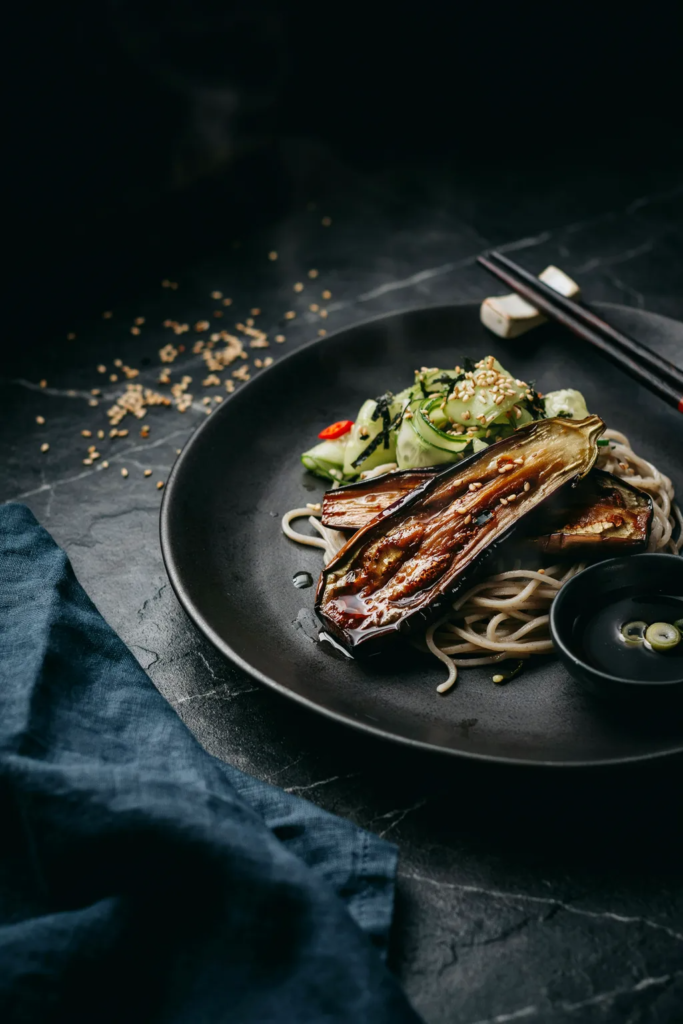
This meal converted several confirmed eggplant skeptics in my experience testing it. The miso glaze caramelizes under the broiler into something deeply savory and almost lacquered in appearance. Against the pale buckwheat soba noodles and the cool green cucumbers, it creates one of those plates where you genuinely pause before eating.
Eggplant is a low-calorie base with decent fiber and nasunin, an anthocyanin with antioxidant properties. Soba noodles, made from buckwheat, contain all eight essential amino acids—an unusual quality for a grain. The miso fermentation process produces beneficial bacteria and concentrated glutamates.
Brush eggplant halves with a mixture of white miso, mirin, and a touch of sesame oil. Broil 8 minutes until deeply caramelized. Serve over chilled soba. Dress cucumber ribbons in rice vinegar and toasted sesame seeds. Arrange everything with intention: noodles first, eggplant angled across, cucumber alongside, sesame seeds scattered last.
6. Za’atar Spiced Lamb Kofta with Tabbouleh and Labneh
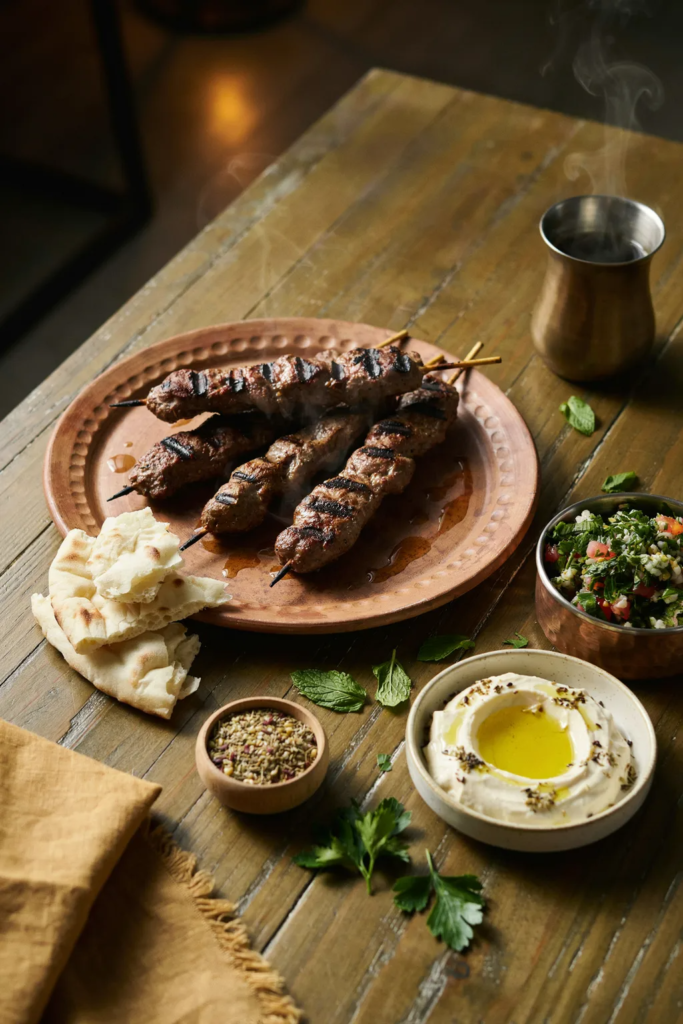
Here’s a controversial opinion about aesthetic dinner plating that most food bloggers won’t say: parsley, when used as a structural component rather than a garnish, changes everything. Tabbouleh—the Lebanese herb salad made predominantly of fresh parsley with bulgur wheat, tomato, and mint—is 70 percent herb. It looks dramatic. It tastes bright and herbal and acidic. It balances rich proteins perfectly.
Lamb kofta (spiced ground lamb formed into ovals and pan-seared) develops a deeply browned crust in about 8 minutes. Labneh, a strained yogurt common in Middle Eastern cooking, provides a thick white backdrop that makes everything else pop visually. It also delivers probiotics and protein.
Za’atar—a blend of wild thyme, sumac, sesame, and salt—is one of those spice mixtures that sounds exotic but is genuinely available at most grocery stores now. The sumac brings a brick-red visual accent and a lemony tartness. This plate is genuinely beautiful and takes 30 minutes.
7. Pan-Seared Scallops Over Pea and Mint Purée with Crispy Pancetta
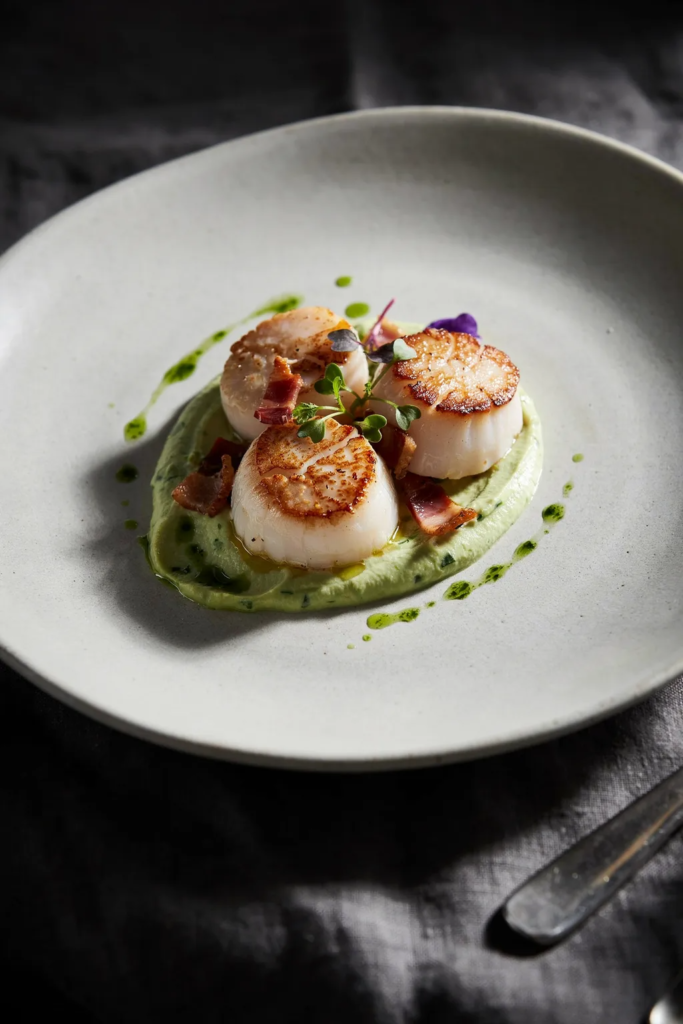
Scallops are the prestige option on this list. They’re expensive (typically $18 to $24 per pound for dry-packed sea scallops), but they cook in exactly 90 seconds per side and look extraordinary when seared correctly. The golden-brown crust against their white interior is a textural and visual masterpiece.
The pea purée provides the color drama here. Bright green, smooth, with mint running through it. Against the seared scallops and the ruby-red crispy pancetta crumbles, this is a restaurant-quality plate that takes about 20 minutes if you buy the right scallops.
The crucial technique: scallops must be completely dry before they hit the pan. Pat them thoroughly with paper towels. Use a cast-iron or stainless pan (never nonstick for searing) at the highest heat your stove can manage. Do not move them for 90 seconds. A perfect sear requires patience.
Nutritionally, scallops are one of the highest protein-to-calorie ratio seafoods: 17 grams of protein per 3 ounces at only 75 calories.
8. Roasted Beet and Lentil Salad with Goat Cheese and Candied Walnuts
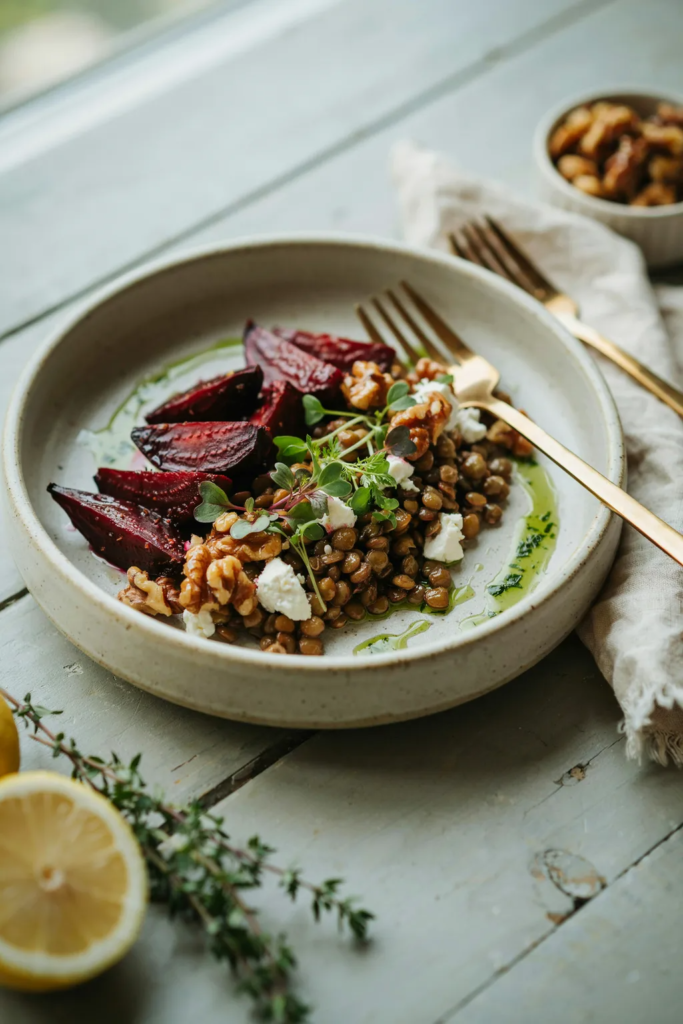
This is the meal I make when I want to impress someone with minimal effort and genuinely nutritious cooking. Roasted beets turn a deep crimson that looks almost jewel-like. French green lentils hold their shape and provide an earthy backdrop. Goat cheese crumbles in bright white contrast. Candied walnuts add crunch and a sweet counterpoint.
From a nutritional standpoint, this plate is exceptional. Lentils provide 18 grams of plant protein per cooked cup along with folate and iron. Beets contain nitrates that convert to nitric oxide in the body, a compound studied extensively for its role in improving blood flow and athletic performance. A 2021 review in the Journal of the International Society of Sports Nutrition found consistent improvements in exercise efficiency among athletes supplementing with dietary nitrates.
Dress everything with a sherry vinegar and Dijon emulsion. The acidity brightens the beet color. Plate the lentils first, layer the beets, scatter the goat cheese, and finish with the walnuts and a few microgreens.
9. Stuffed Bell Peppers with Quinoa, Turkey, and Sun-Dried Tomatoes
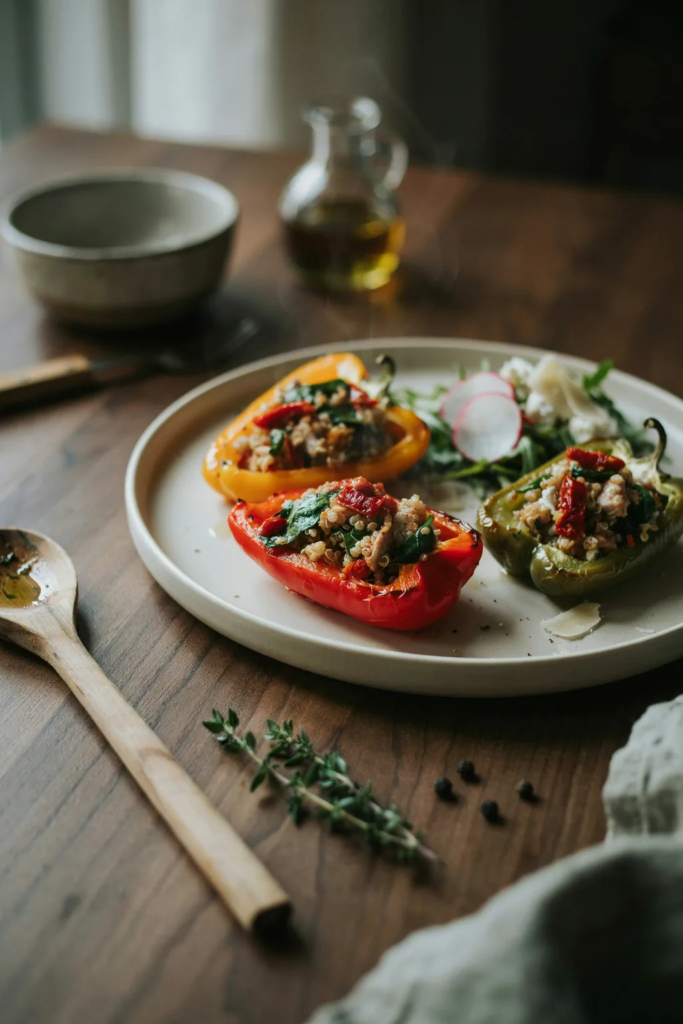
Stuffed bell peppers are an underrated aesthetic dinner choice because the vessel does half the visual work. A vibrant red, yellow, or orange pepper, cut and roasted until slightly blistered, is already striking before you’ve added the filling.
The filling here replaces the traditional white rice with quinoa, which provides a complete protein with all nine essential amino acids—something very few plant foods can claim. Combined with lean ground turkey (about 22 grams of protein per 3-ounce serving), sun-dried tomatoes, and a handful of wilted spinach, the filling is genuinely nutritious and deeply savory.
Roast the stuffed peppers at 375°F for 25 minutes. The tops brown slightly. The peppers soften and sweeten. Serve two halves on a plate with a handful of fresh arugula dressed in lemon and olive oil alongside. The arugula’s bitterness and the pepper’s sweetness create a contrast that makes the whole plate more satisfying.
10. Coconut Curry Lentil Soup with Naan and Raita
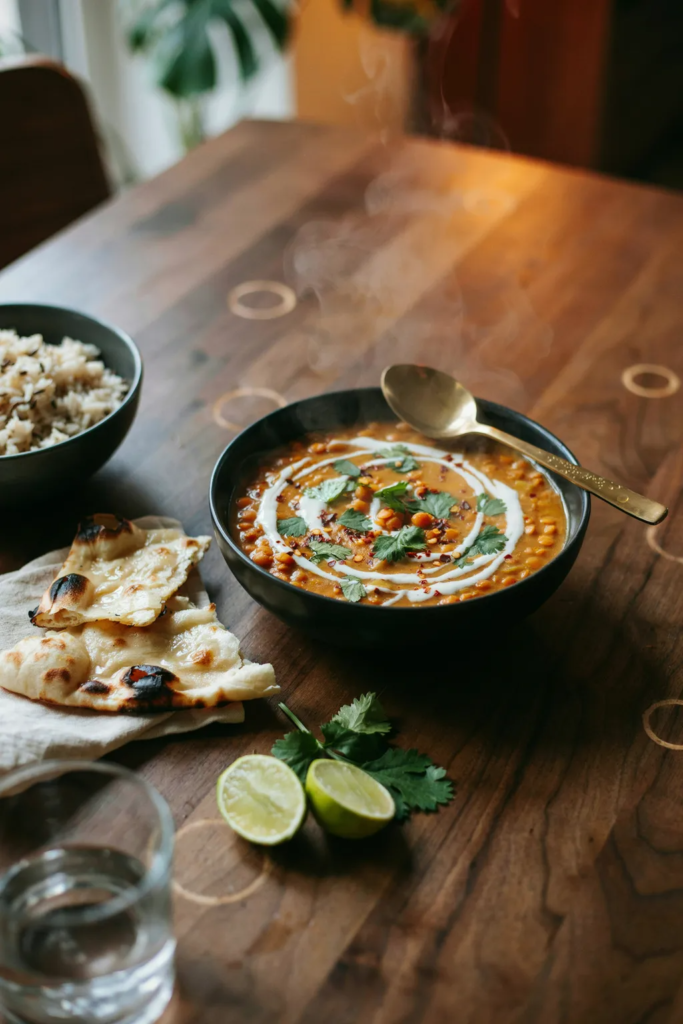
Soup as aesthetic dinner divides people. Some feel it lacks the visual drama of a plated meal. Those people haven’t ladled a deep-orange coconut lentil curry into a wide shallow bowl, streaked it with yogurt raita, scattered fresh cilantro and a pinch of Aleppo pepper across the top, and set a charred naan alongside.
The color depth here comes from a combination of red lentils (which turn golden-orange when cooked), full-fat coconut milk, tomatoes, and a spice blend heavy on turmeric and smoked paprika. The visual contrast elements are the white yogurt swirl, the green cilantro, and the dark Aleppo pepper flakes.
This is also one of the most affordable balanced dinners on this list. Total ingredients cost approximately $8 to $10 for four generous servings. Red lentils cook in 20 minutes and require no soaking. The entire soup takes 35 minutes from pantry to bowl.
11. Teriyaki Glazed Tofu with Edamame Fried Rice and Pickled Ginger
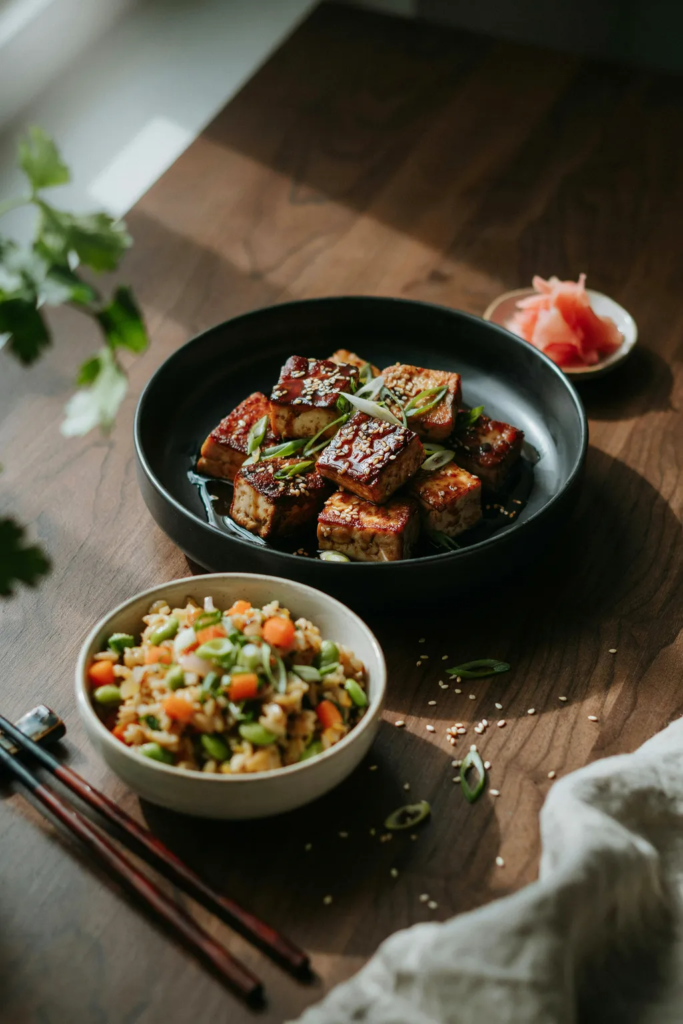
The case for tofu as an aesthetic dinner protein is stronger than most meat-eaters will admit. Properly pressed and pan-seared, extra-firm tofu develops a golden-brown exterior with a slight chew. Glazed with a homemade teriyaki sauce (soy sauce, mirin, rice vinegar, honey, and ginger), it caramelizes beautifully.
The edamame fried rice—made with day-old rice for the best texture—brings bright green pops against the amber-glazed tofu. Pickled ginger adds a pink accent and serves as a palate cleanser between bites, which is a technique borrowed from Japanese omakase tradition and works brilliantly at home.
Tofu’s protein content depends on firmness: extra-firm delivers around 9 grams per 3-ounce serving. Combined with edamame (11 grams per half cup), this is a complete plant-based protein dinner. For maximizing aesthetic impact, slice the tofu into rectangular planks rather than cubes. The larger surface area means more crust and a more dramatic plate.
12. Greek-Style Baked Cod with Olives, Tomatoes, and White Beans
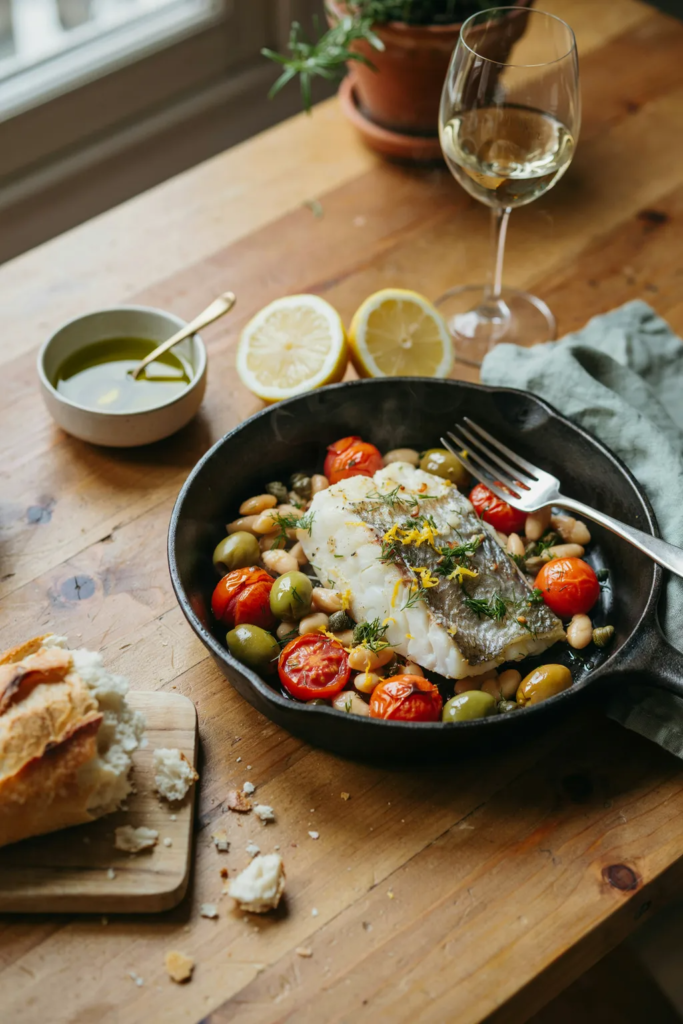
Mediterranean-style fish bakes are one of those techniques that require almost no skill but produce impressive results consistently. Cod is a lean white fish—low in fat, high in protein (20 grams per 3-ounce portion), and mild enough to absorb the flavors around it.
The visual interest in this dish comes entirely from the braising liquid: crushed tomatoes turn deep red during baking, olives add dark purple-black accents, capers bring tiny green notes, and white cannellini beans create a creamy white backdrop. The cod flakes into large pieces and sits partially submerged in this vivid sauce.
Bake in a wide oven-safe skillet at 400°F for 18 minutes. Top with fresh dill and lemon zest. The dill’s feathery texture against the chunky sauce adds visual softness. Serve directly from the pan at the table and let the presentation be the drama.
13. Chimichurri Skirt Steak with Charred Broccolini and White Bean Mash
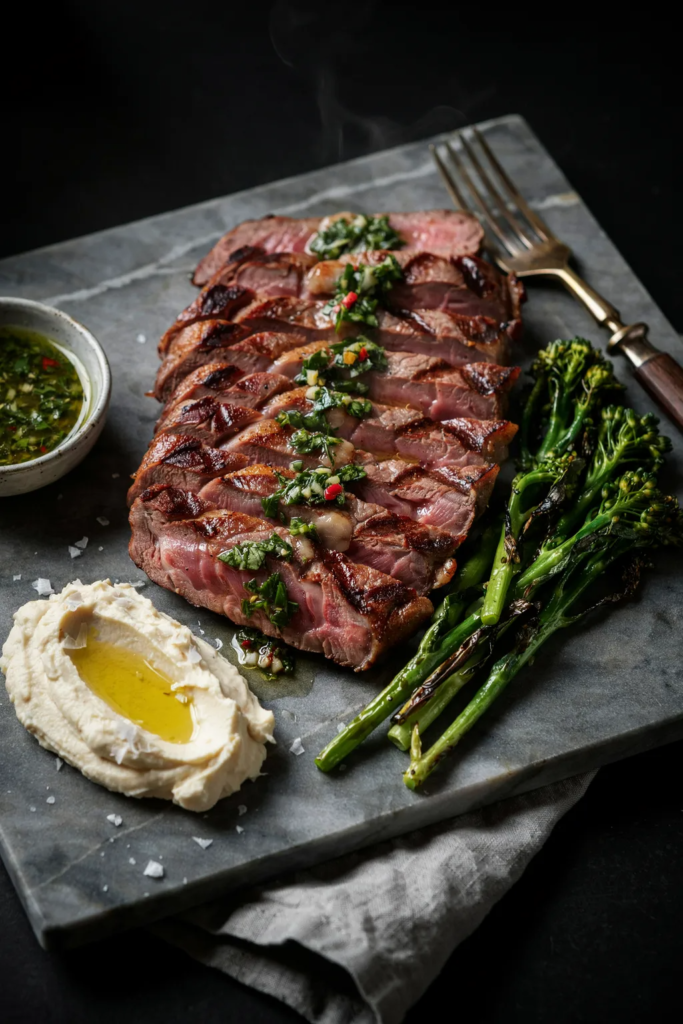
Chimichurri—the Argentinian herb sauce made from parsley, oregano, garlic, olive oil, and red wine vinegar—is one of the most visually striking sauces in global cuisine. Bright, electric green, with flecks of red pepper and garlic. Spooned over a sliced skirt steak with a deep brown crust, it creates an immediate visual contrast that makes the plate look expensive.
Skirt steak is a budget-friendly cut that cooks in 3 to 4 minutes per side over very high heat. It requires rest time after cooking—at least 5 minutes, preferably 8—before slicing against the grain. Skipping this step results in dry, chewy meat. This is the single most common mistake I’ve seen home cooks make with this cut.
White bean mash (cannellini beans blended with olive oil, garlic, and lemon) serves as the neutral, creamy base. Charred broccolini—just a few minutes under the broiler until the tips are dark and slightly crispy—brings a grassy bitterness that cuts the richness perfectly.
14. Butternut Squash Risotto with Crispy Sage and Toasted Pepitas
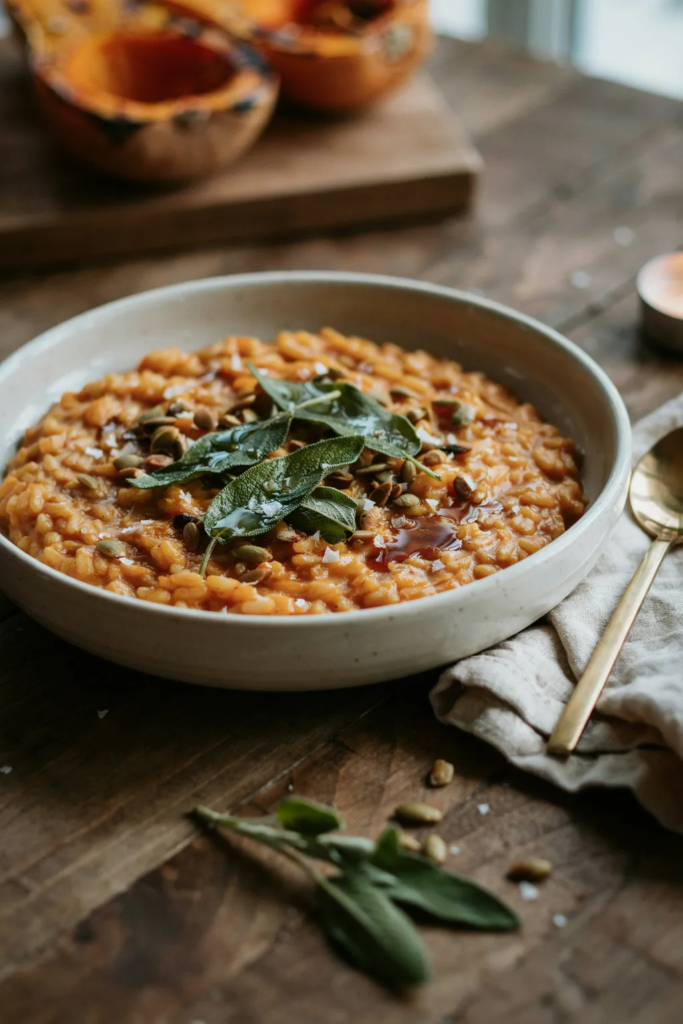
Risotto intimidates people. It shouldn’t. The technique—adding warm stock ladle by ladle while stirring constantly—takes about 22 minutes of active attention and produces something that looks like it came from a professional kitchen.
Butternut squash purée stirred into the risotto at the end gives the rice a vivid orange color that deepens as the dish sits. Crispy sage leaves fried in butter turn dark green and become paper-thin, adding visual texture and an earthy aroma that fills the kitchen. Toasted pepitas add crunch and a pale green contrast.
This is the most carbohydrate-forward meal on the list, which means it’s best for active individuals with higher energy needs. The fat content from parmesan and butter is significant but contributes to satiety. For a lighter version, substitute cauliflower rice for half the arborio and increase the squash proportion.
15. Poke Bowl with Sushi-Grade Tuna, Mango, Edamame, and Pickled Vegetables
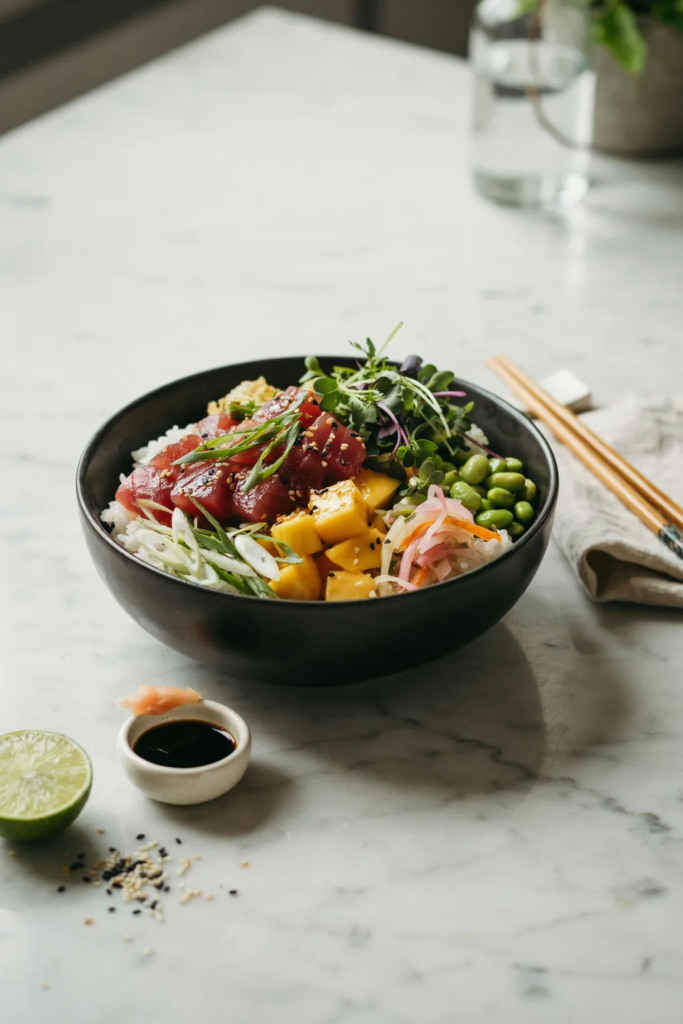
The poke bowl is perhaps the definitive aesthetic dinner of the past decade. Its popularity on social media isn’t coincidental: it’s built on deliberate visual architecture. Each component occupies its own section. Colors are vibrant. Textures range from silky raw fish to chewy edamame to crispy pickled vegetables.
The nutrition case for a well-built poke bowl is excellent. Sushi-grade tuna delivers 25 grams of protein per serving with high omega-3 content and very low saturated fat. Mango provides vitamin C and natural sweetness. Pickled vegetables add probiotics and acidity that aid digestion. Brown rice or cauliflower rice serves as the base.
The aesthetic principle here is sectioning: rather than mixing everything, each ingredient gets its own area of the bowl. This takes about 30 extra seconds of plating attention and transforms the visual impact completely. Finish with sesame oil, soy sauce, and a drizzle of sriracha mayo. Add microgreens or thinly sliced scallions last, because they’re delicate and wilt under dressing.
How Do You Plate These Meals to Look Genuinely Aesthetic?
The gap between “dinner that tastes good” and “dinner that looks incredible” is almost always just three techniques: contrast, height, and restraint.
Contrast means pairing a dark sauce with a light protein, a bright vegetable with a neutral grain, a smooth element with a crunchy one. Most of the meals on this list are built around this principle already.
Height means thinking dimensionally. Lean something against something else. Stack rather than spread. Let a protein rest at an angle against a grain base rather than sitting flat. This creates shadow and visual depth.
Restraint means leaving some of the plate empty. The instinct to fill every inch of space produces crowded, messy plates. White space (or plate space) is as important in food plating as it is in graphic design.
A useful tool here is a large white plate, 10 to 12 inches in diameter. It gives you room to compose and keeps the focus on the food color rather than competing with patterned tableware. Pairs of linen napkins, mismatched ceramics, and natural wood serving boards all add to the ambient aesthetic without requiring photography equipment.
What Should You Drink With an Aesthetic Balanced Dinner?
The drink completes the visual composition of a dinner table. A tall glass of sparkling water with cucumber slices and fresh mint adds to the aesthetic without adding sugar. Unsweetened iced hibiscus tea is a deep crimson that photographs beautifully and provides anthocyanins with documented blood pressure benefits (a 2010 study in the Journal of Nutrition, n=65, found significant reductions in systolic blood pressure among participants drinking three cups daily).
For wine, light-to-medium-bodied whites like Albariño or Grüner Veltliner complement the seafood and vegetable-forward meals on this list without overwhelming the delicate flavors. Natural wines, which have gained enormous cultural traction since roughly 2019, fit the aesthetic ethos of these meals and often come in stunning bottles worth displaying on the table.
Frequently Asked Questions About Balanced Aesthetic Dinners
Can I meal prep these dishes without losing the aesthetic quality? Most of these dishes survive 3 to 4 days in the refrigerator with the components stored separately. Plate fresh each evening. The act of assembly takes 2 to 3 minutes and makes a significant difference in visual quality. Do not combine sauce with protein in advance.
Are these meals suitable for weight management goals? All 15 are built around lean proteins, complex carbohydrates, and vegetables, which form the foundation of most evidence-based dietary approaches for weight management. Portion size matters more than the specific meals. A registered dietitian can help you calibrate servings to your specific goals.
How do I get that restaurant-style glossy finish on proteins? Rest your protein after cooking, then brush with a small amount of olive oil or butter just before plating. The fat reflects light and produces that polished appearance. For glazed proteins like the teriyaki tofu or miso eggplant, apply a final brush of the glaze during the last minute of cooking and increase heat briefly.
What’s the best camera setting for food photography of these meals? Natural side lighting from a window produces the most flattering results with no equipment required. Shoot from a 45-degree overhead angle rather than straight down. The shadow depth created by angled light adds dimension that flat overhead shots lack. Most modern smartphone cameras produce excellent food photos in portrait mode with natural light.
Can these be adapted for dietary restrictions? Most can. The salmon, scallops, cod, tuna, and shrimp dishes work for pescatarian diets. Items 3, 5, 8, 10, 11, and 14 are fully plant-based or easily made so. Gluten-containing elements (soba noodles, naan, bulgur) can be substituted: use rice noodles, gluten-free flatbread, or quinoa respectively.
The One Thing That Changes Everything
After all the technique, all the ingredient sourcing, all the plating considerations, here’s the genuine insider perspective: the most important factor in aesthetic dinner quality is your relationship with the meal itself.
Rushed cooking produces rushed plates. When you give yourself 35 minutes of uninterrupted kitchen time, the food reflects that attention. It’s not mystical; it’s simply that care translates into physical action. You taste as you season. You notice when the onions need more time. You plate with intention rather than hunger-induced speed.
The 15 meals in this guide are all achievable on weeknights. None requires more than 40 minutes. But they all reward the cook who shows up with some degree of presence, who treats the Tuesday dinner as worth doing well, not just getting done.
That shift—from eating to nourishing, from cooking to creating—is what separates a forgettable meal from one you remember. And that, more than any plating technique or ingredient, is what makes a dinner genuinely aesthetic.