
15 Food Art for Kids Crafts That Actually Work (A Parent’s Honest Guide)
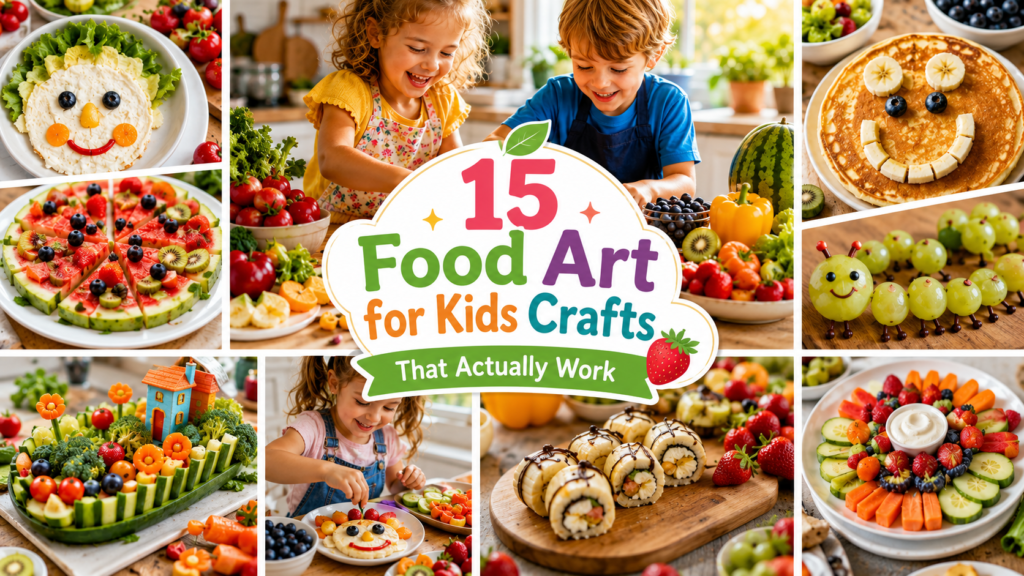
My kitchen looked like a crime scene. There was peanut butter on the ceiling, blueberries rolling under the refrigerator, and my seven-year-old was proudly presenting what she called “a rainbow hedgehog” made from a rice ball and pretzel sticks. I had expected a Pinterest-perfect moment. I got chaos, giggles, and honestly? One of the best afternoons we ever had together.
That’s the thing nobody tells you about food art for kids: the mess is the point. The learning is hidden inside the fun. And the finished product matters far less than the process of getting there.
After three years of running weekend “kitchen creativity hours” with my two kids (ages five and nine at the time of our first experiments), testing dozens of projects from simple fruit faces to elaborate vegetable mosaics, I’ve developed strong opinions about what actually works versus what looks beautiful on Instagram but ends in tears before the first grape is placed. This guide gives you fifteen food art crafts that are genuinely kid-friendly, developmentally appropriate, and yes, mostly edible when finished.
You’ll also discover which supplies are worth buying (and which are a waste of money), how to adapt projects for toddlers versus tweens, and the one mistake almost every parent makes when starting food art activities that turns a fun afternoon into a frustrating one.
What Is Food Art for Kids, and Why Does It Matter More Than You Think?
Food art for kids is the practice of using edible ingredients as creative materials, turning snack time into a hands-on learning experience that builds fine motor skills, encourages nutritional curiosity, and develops creative thinking. It sits at the intersection of play-based learning and nutrition education.
Research from the Journal of Nutrition Education and Behavior (2016 study, n=341 children ages 3-8) found that children who engaged in hands-on food preparation were significantly more likely to try new foods and rate them positively. Food art takes this a step further by giving kids creative ownership over their plate.
I’ve watched my daughter, who once refused anything green, gleefully arrange broccoli “trees” into a forest scene and then eat every single one. That’s not a parenting miracle. That’s just psychology. When kids build something, they invest in it.
Beyond nutrition, food art builds fine motor control through pinching, pressing, and placing small items. It develops spatial reasoning when children plan compositions. It teaches color theory in the most natural way possible. And it creates a positive emotional association with food that can last a lifetime.
Here’s the contrarian view most parenting blogs won’t share: the goal of food art is not to create beautiful Instagram content. The goal is engaged, curious, happy kids. The moment you start prioritizing the photo over the process, you’ve lost the point entirely.
What Supplies Do You Actually Need Before Starting?
You need very little. A cutting board, some toothpicks, and whatever is already in your refrigerator will handle 80% of these projects. The expensive specialty tools marketed for “bento art” are almost entirely optional.
I spent around forty dollars in early 2023 on Japanese bento cutters, flower-shaped vegetable stamps, and a set of food-safe markers. I used the markers constantly. The bento cutters collected dust after week two.
Here’s what genuinely earns its place in a food art toolkit:
Food-safe markers (Wilton makes a reliable set for around $8, available at most craft and grocery stores) are transformative. Kids can draw faces on hard-boiled eggs, write names on banana slices, and add detail that tiny fingers can’t manage with fruit pieces alone.
Toothpicks and skewers create structure. A grape kebab becomes an elaborate caterpillar with two minutes of assembly. Keep wooden toothpicks on hand always, and use longer bamboo skewers for older kids making more complex constructions.
Small cookie cutters work beautifully on watermelon, cantaloupe, cheese slices, and even sandwiches. A basic set of six shapes costs under five dollars and lasts for years.
Beyond that, use what you have. Cream cheese doubles as edible glue. Pretzel sticks become legs and antennae. Raisins, blueberries, and peas make perfect eyes. Shredded carrots become hair. The pantry is the art supply store.
The 15 Best Food Art Crafts for Kids (Organized by Difficulty)
Beginner Projects (Ages 3-6)
1. Fruit Face Plates
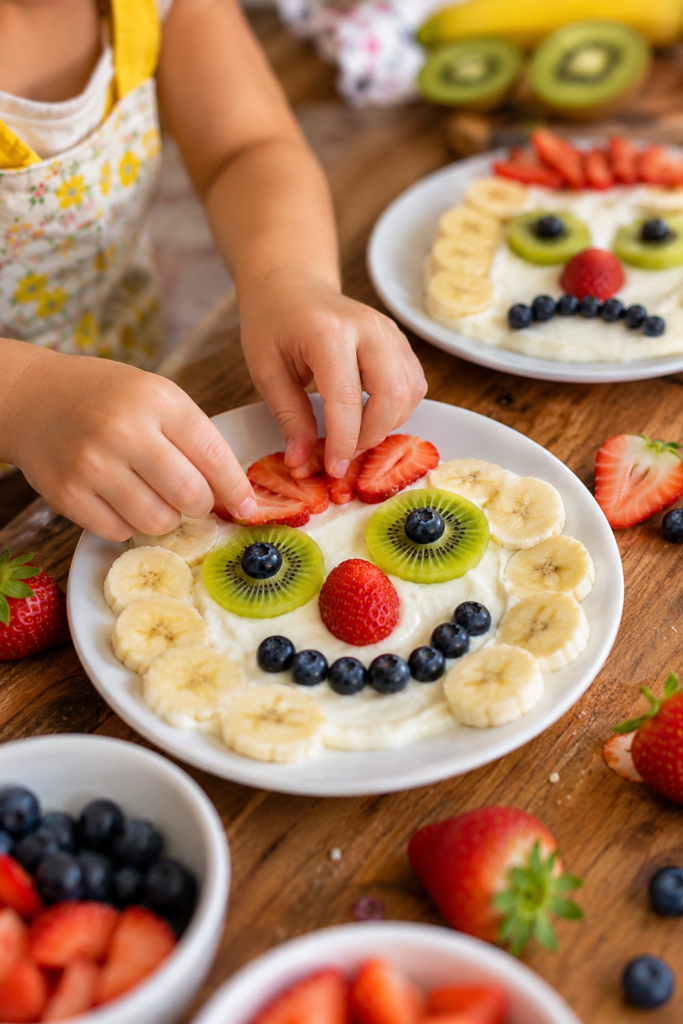
This is where most families should start, and not because it’s the easiest. It’s because it teaches the fundamental skill of all food art: intentional placement. A banana mouth, blueberry eyes, and strawberry cheeks on a plate covered in yogurt takes four minutes and produces genuine delight.
The key detail most guides miss: let the child choose the face’s emotion. My daughter once made seventeen “worried faces” in a row because she was processing anxiety about starting school. Food art became therapy. That’s not something I planned. It emerged from giving her full creative control.
2. Apple Stamp Painting on Toast
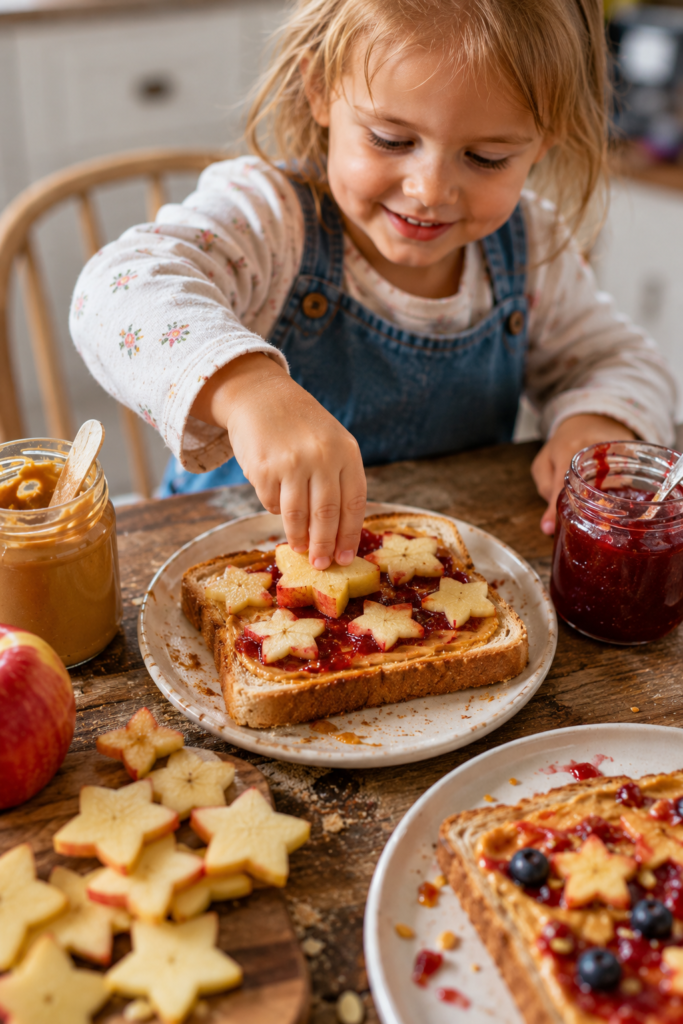
Cut an apple crosswise (horizontally) and you reveal a natural star shape from the seed core. Dip it in peanut butter, jam, or cream cheese and stamp it onto toast or rice cakes. Younger children love the repetition. The results look genuinely beautiful.
Use a firm apple variety like Fuji or Honeycrisp for cleaner stamps. Softer varieties like McIntosh collapse under pressure and produce muddy results. Learned that specific lesson after ruining a batch of toast with a mealy Cortland apple in October 2022.
3. Celery Stalk Roses
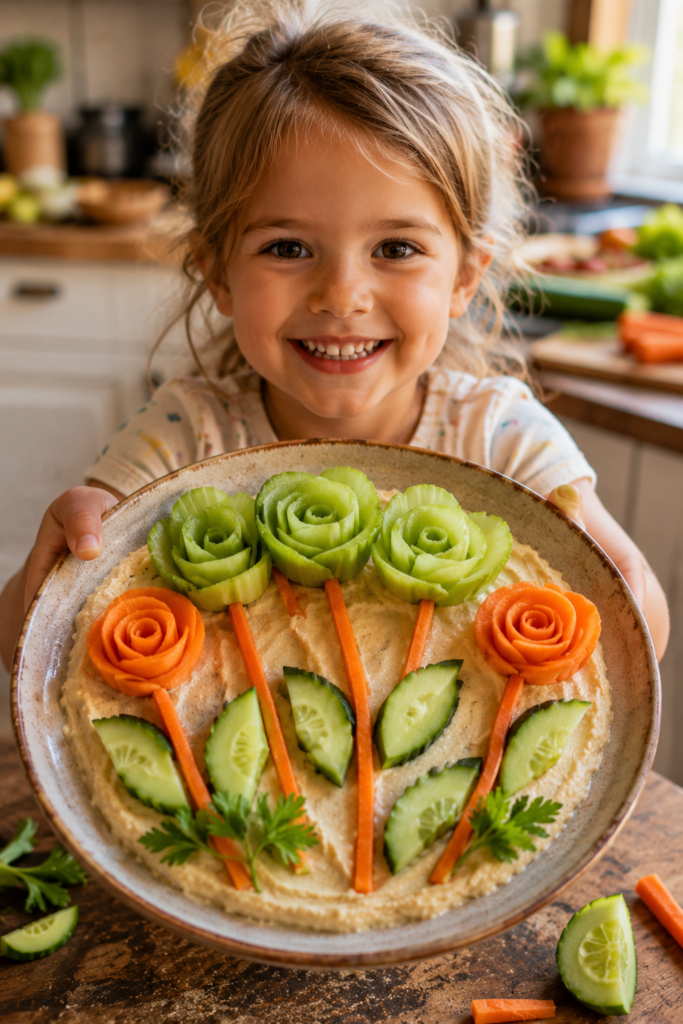
Slice celery stalks crosswise at about half an inch thickness and you get natural flower shapes. Arrange them on a plate of hummus with carrot sticks as stems and cucumber circles as leaves. This project introduces botanical thinking without any instruction required. Kids figure out what looks like flowers on their own.
4. Banana Sushi Rolls
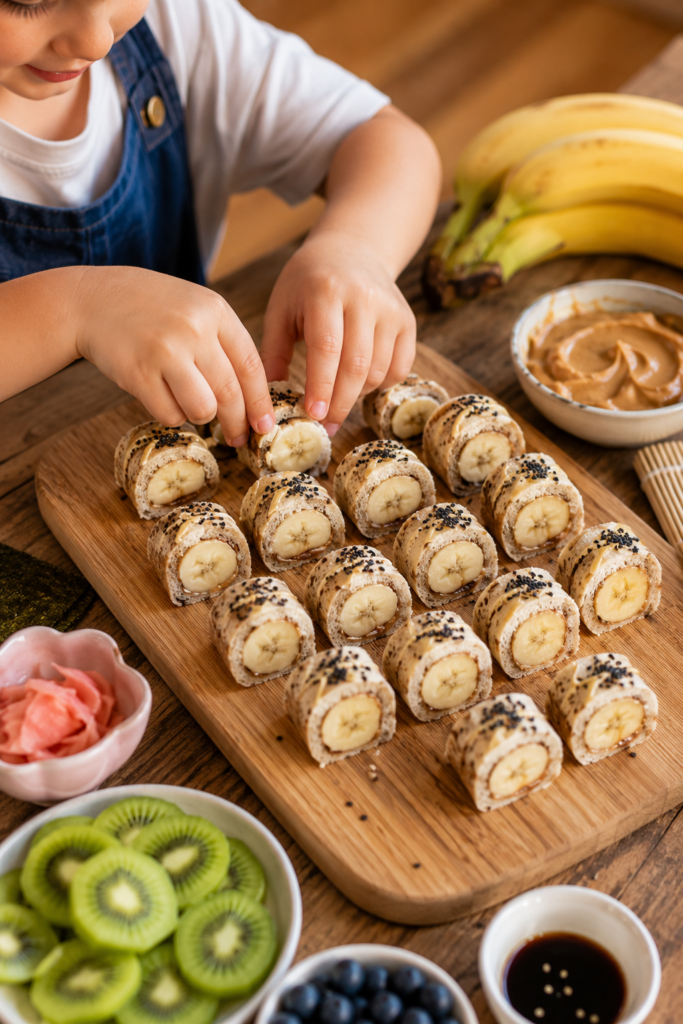
Spread a whole wheat tortilla with almond butter, peanut butter, or sunflower seed butter. Lay a peeled banana at one edge. Roll tightly. Slice into one-inch rounds. The cross-section looks exactly like sushi. Kids who are going through a Japanese food phase (my son went through an intense one at age eight) absolutely love the real-food reference.
5. Grape Caterpillars
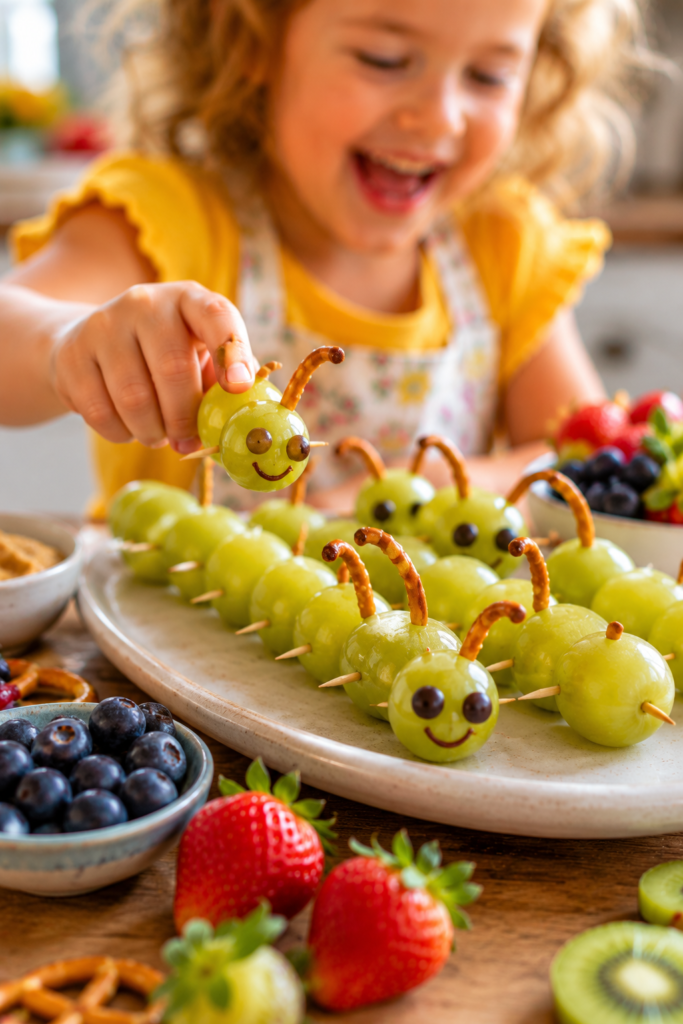
Thread green grapes onto a toothpick (with an adult handling the sharp end for younger kids), add two pretzel sticks for antennae at one end, press two mini chocolate chips into the front grape for eyes. Done in under three minutes. Eaten immediately after, which is the highest form of food art praise.
Intermediate Projects (Ages 6-9)
6. Vegetable Mosaic Portraits
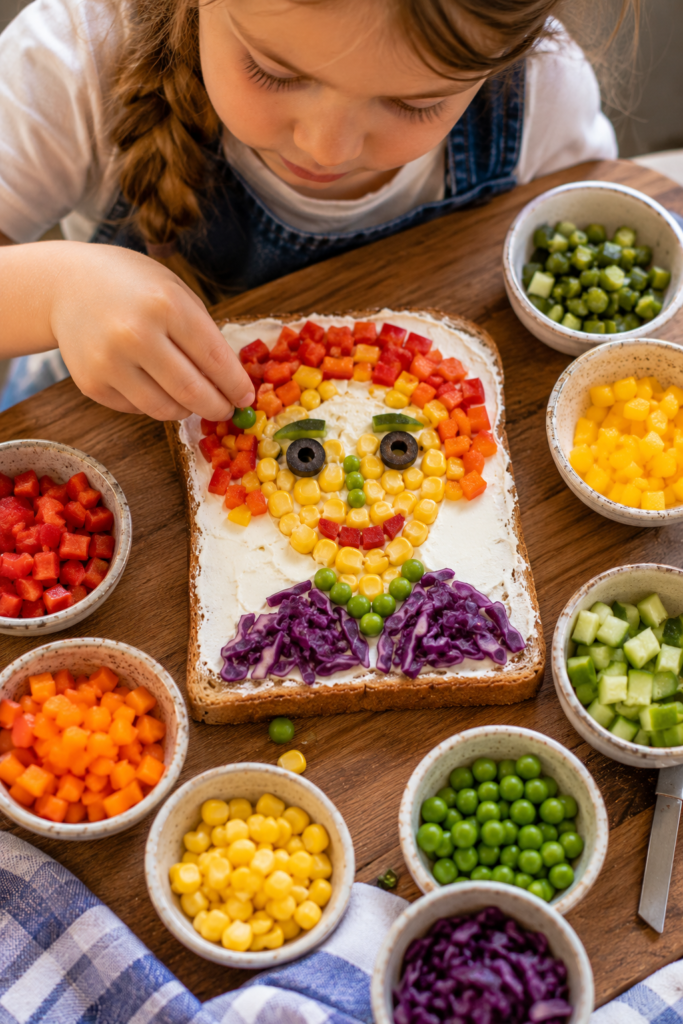
This is where food art starts requiring genuine planning and patience. Give kids a slice of bread or a rice cake as their canvas, spread with cream cheese as the “adhesive layer,” and set out small bowls of different colored vegetables: diced red pepper, corn kernels, peas, shredded purple cabbage, diced cucumber.
The child plans and executes a portrait, landscape, or abstract design. This project takes 20-40 minutes. It produces the most astonishing results I’ve ever seen from kid-made food art. My son once recreated our dog’s face in remarkable accuracy using corn for the yellow fur, peas for the eyes, and a diced beet for the nose.
Display these projects for at least five minutes before encouraging kids to eat them. The pride is real and worth honoring.
7. Watermelon Pizza
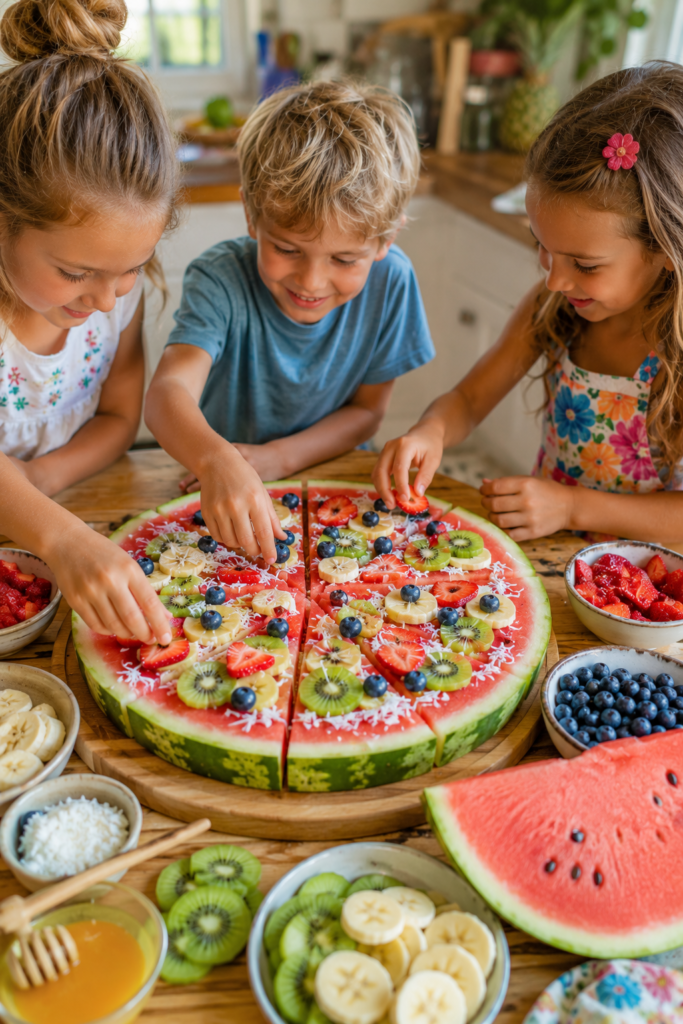
Slice a round of watermelon about an inch thick. Use a cookie cutter or knife to create a pizza shape if desired. Let kids “top” it with other fruit cut small to mimic pizza toppings. Sliced strawberries become pepperoni. Blueberries become olives. Shredded coconut becomes cheese.
This project connects food art to cultural food knowledge. It generates conversation about real pizza, ingredient choices, and why things look the way they look. Those conversations are worth more than the craft itself.
8. Sandwich Stained Glass Windows
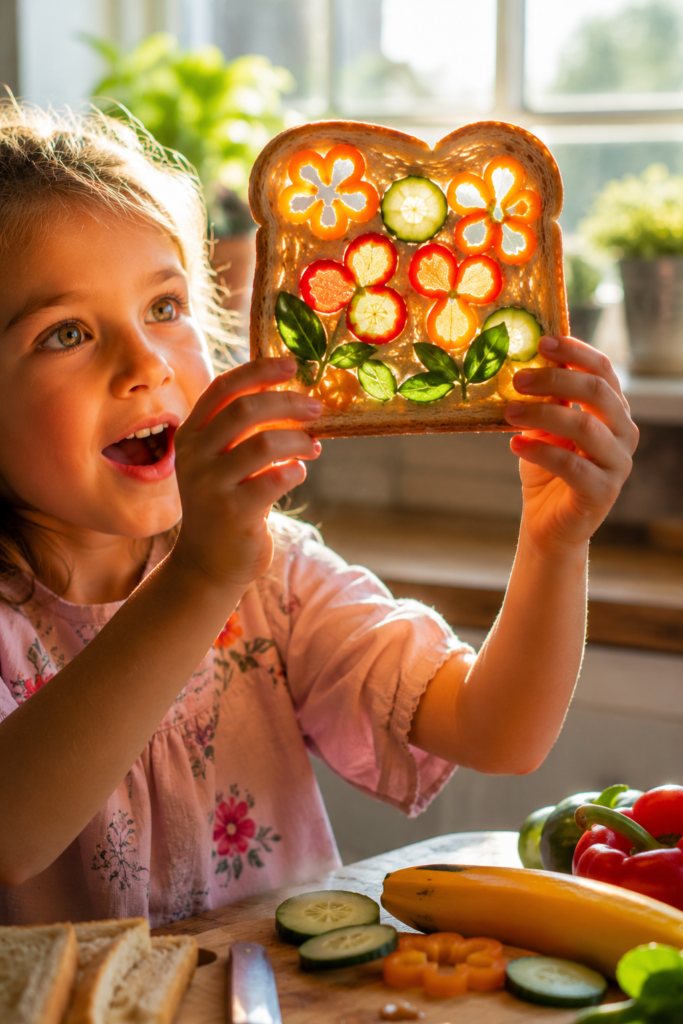
Use a cookie cutter to remove shapes from the center of bread slices. Fill the negative space with thinly sliced cucumber, red pepper, or yellow squash held in place with a thin layer of cream cheese. Hold the finished sandwich up to a window. The light comes through the vegetable panels like actual stained glass. Kids find this genuinely magical. I’ve seen it stop a seven-year-old cold in the middle of an argument.
9. Hard-Boiled Egg Animals
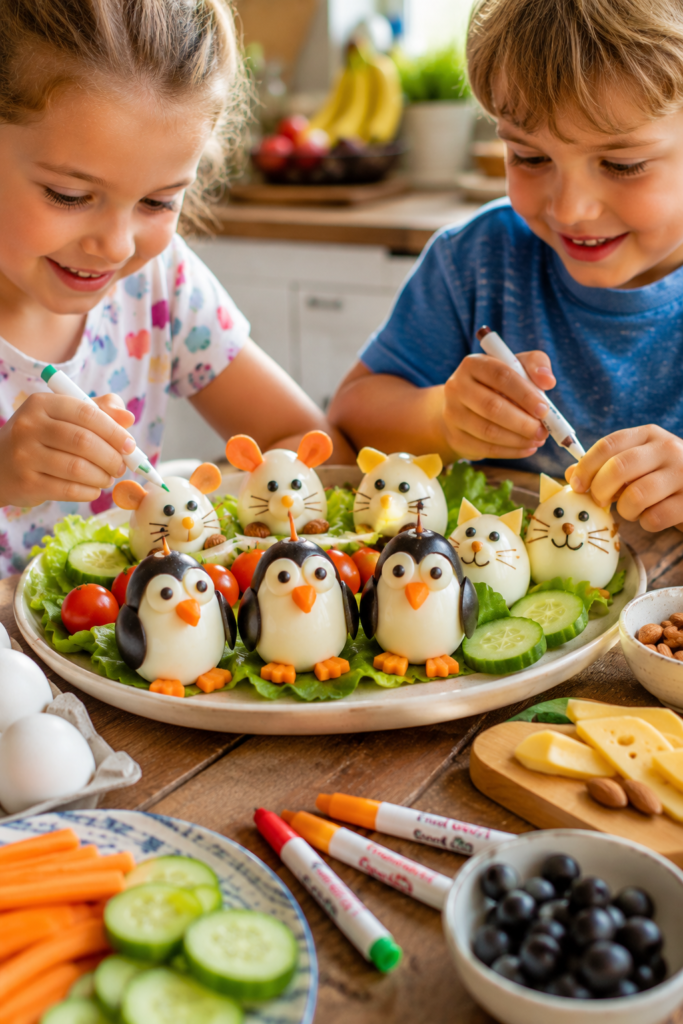
Hard-boiled eggs become penguins (olive halves for wings, carrot beak, peppercorn eyes), mice (almond slice ears, olive eyes, string cheese tail), or cats. Food-safe markers add whisker details that elevate the whole project. This one takes patience and works best when you provide a visual reference image and let kids interpret it their own way rather than demanding accuracy.
10. Pancake Art
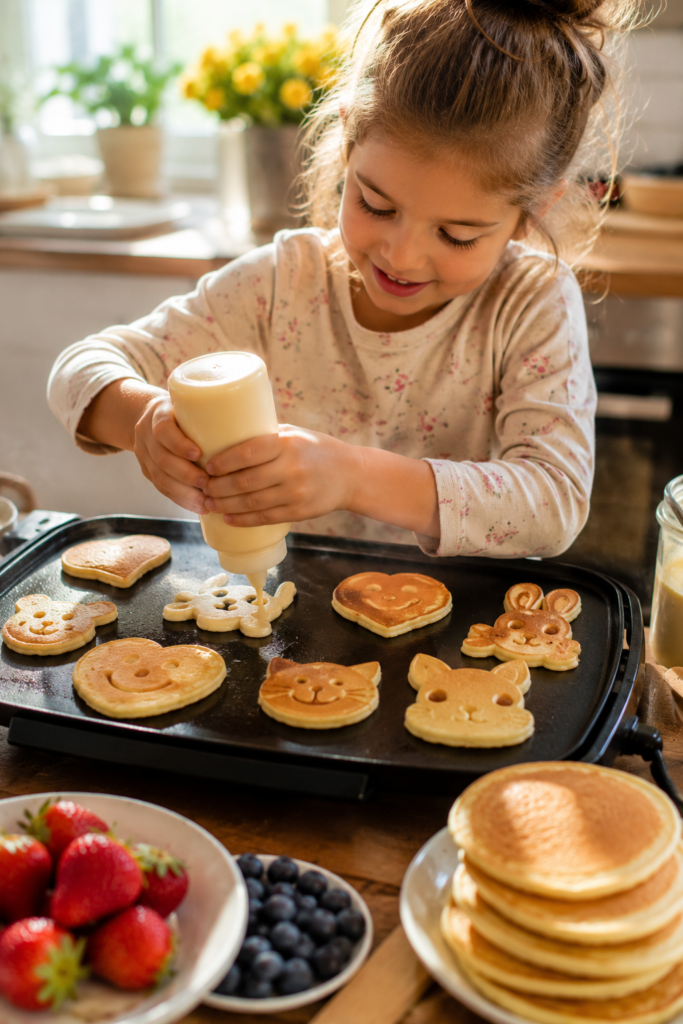
Using a squeeze bottle (a clean ketchup bottle works perfectly and costs nothing), pour pancake batter into designs on a griddle. Start simple with initials, then progress to animals, faces, and landscapes. The technique requires 30 seconds of practice to understand batter flow and temperature timing. My honest assessment: pancake art is harder than it looks on YouTube. Budget three or four failed pancakes at the start of every session and treat them as successful experiments rather than mistakes.
Advanced Projects (Ages 9-12)
11. Bento Box Storytelling Scenes
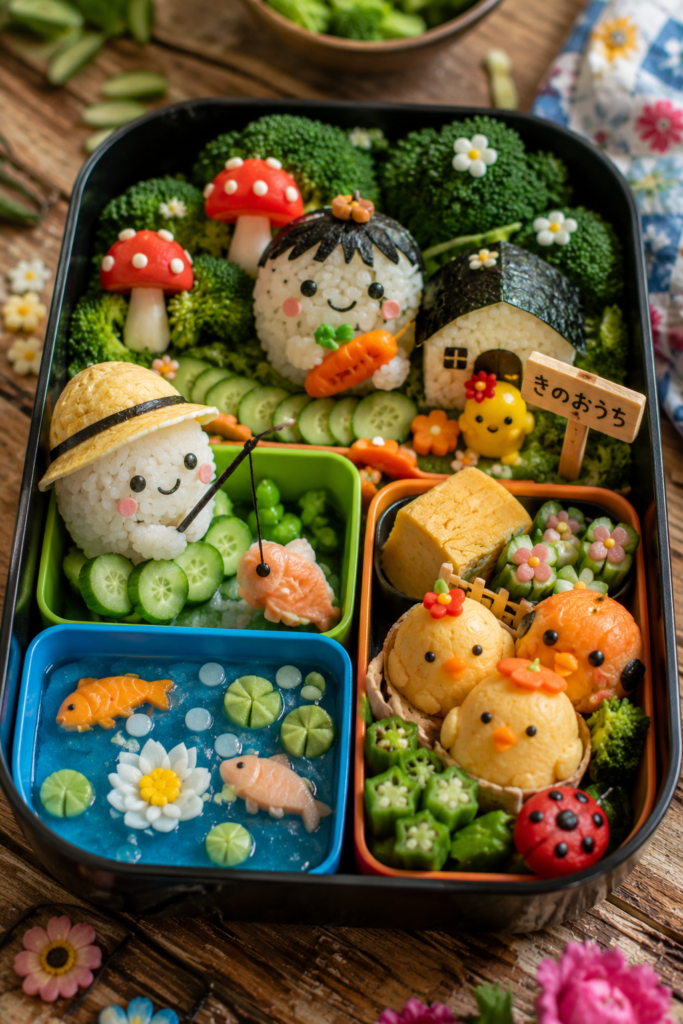
This is where food art becomes genuine narrative art. The child creates a complete scene inside a divided bento box: characters made from rice balls and nori seaweed, landscapes built from lettuce and cucumber, props fashioned from vegetable cuts. The project requires planning a story, selecting ingredients intentionally, and executing a multi-element composition.
My advice: give kids a story prompt rather than free choice when starting. “Make a scene from your favorite book” produces better results than “make whatever you want” because the narrative constraint channels creativity productively. Twelve-year-olds especially respond to the challenge.
12. Fruit Carving Basics
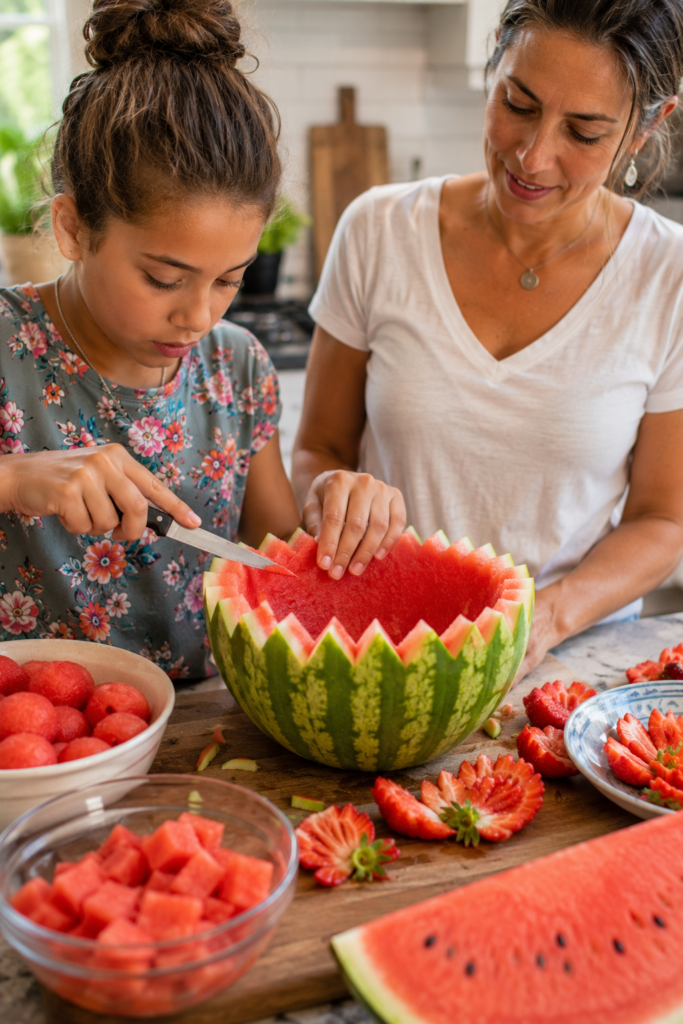
Watermelon bowls, cantaloupe baskets, and strawberry fans sit at the accessible end of fruit carving. With a melon baller, a paring knife (with close adult supervision), and fifteen minutes of practice, kids aged 10 and up can create genuinely impressive serving vessels for fruit salads.
The safety note I cannot emphasize enough: this project requires adult presence, a proper cutting surface, and the explicit conversation about knife direction (always cut away from the body). It is not a project to set up and walk away from. However, the confidence kids develop from handling tools safely and creating something beautiful is worth every minute of supervision.
13. Sushi Rolling
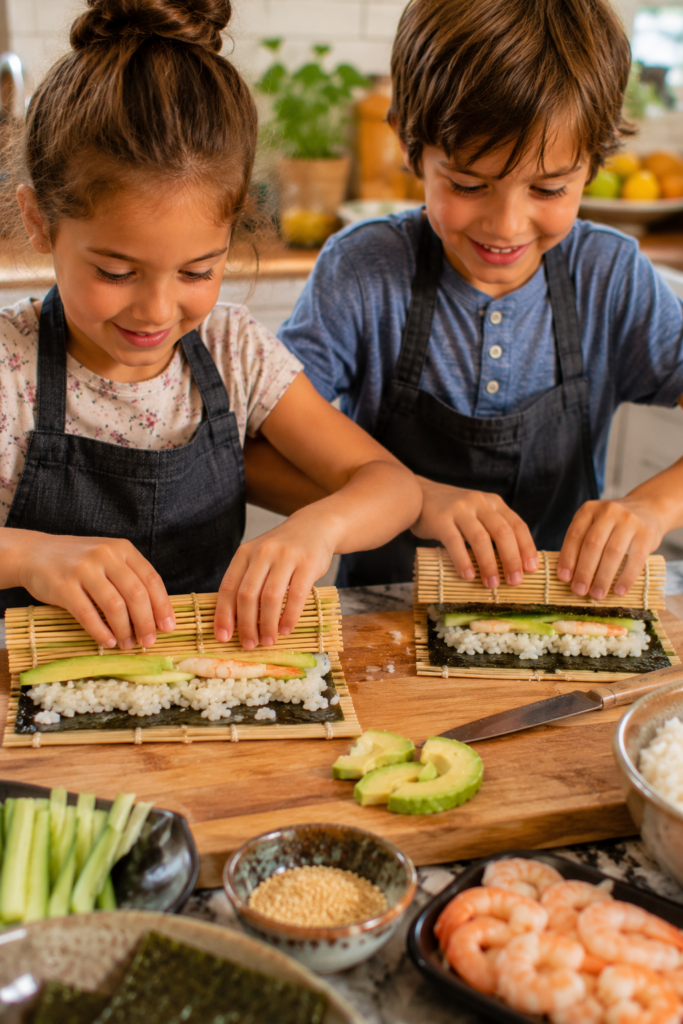
Actual sushi rice, nori sheets, cucumber, avocado, and cooked shrimp or imitation crab create a complete culinary education packed into one food art session. Kids learn about Japanese food culture. They develop fine motor control through the rolling technique. They practice patience waiting for rice to cool properly.
This project costs approximately twelve to fifteen dollars in ingredients and takes about an hour including rice cooking time. The failure rate is high on the first attempt and drops dramatically by the third roll. Treat the failed rolls as “deconstructed sushi” rather than mistakes.
14. Chocolate Bark Mosaic
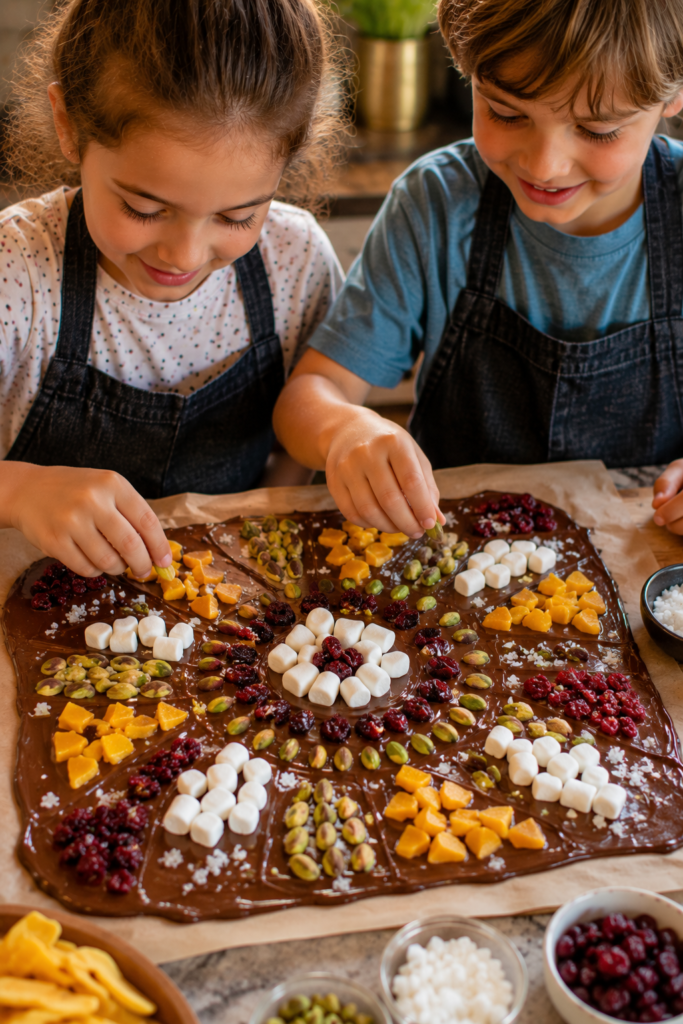
Melt dark chocolate (Ghirardelli baking bars work well and run about $4 per bar), spread onto a parchment-lined baking sheet, and let kids arrange toppings in mosaic patterns before the chocolate sets. Dried cranberries, crushed pistachios, sea salt flakes, dried mango pieces, and mini marshmallows all work beautifully.
The chocolate sets in the refrigerator in about 20 minutes. The result breaks into organic irregular pieces that look professional. Kids can package these as gifts, which adds a social-emotional dimension: making something beautiful for someone else.
15. Edible Miniature Gardens
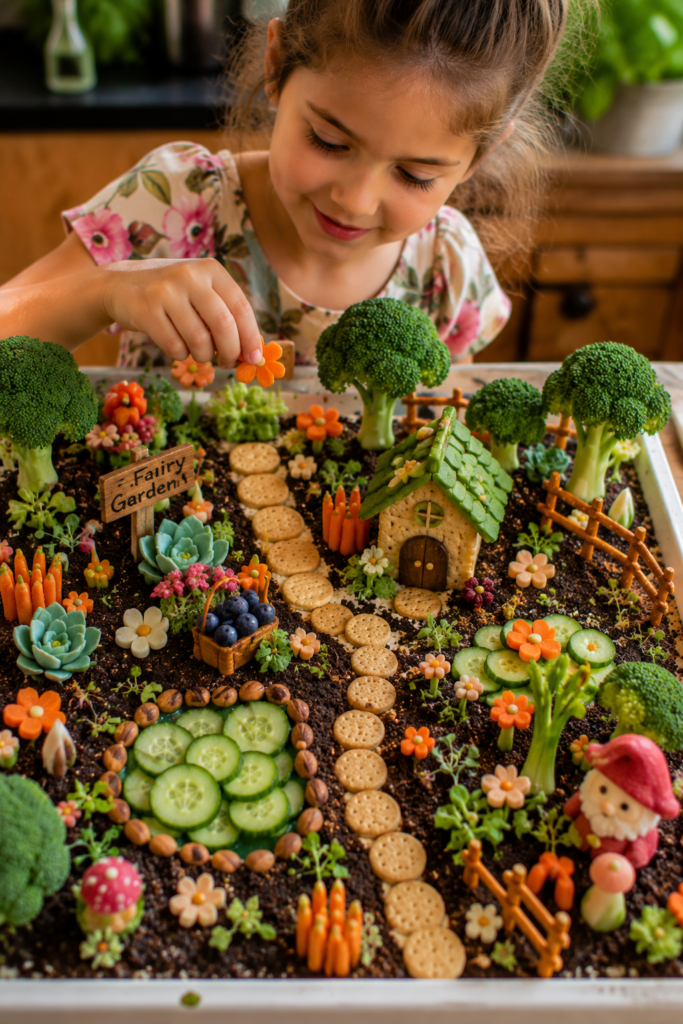
Use a shallow dish or plate. Create soil from crushed chocolate cookies or hummus. Plant “flowers” from broccoli florets and carrot stick stems. Add a “pond” from a cucumber slice. Build a fence from pretzel sticks. Install a “gate” from crossed toothpicks. The project rewards patience and imagination and teaches compositional thinking that transfers directly to real visual art skills.
How Do You Make Food Art With Toddlers Without Losing Your Mind?
With toddlers under age four, the project is the process, not the product. Simplify to two or three ingredients maximum, expect and embrace full sensory exploration (including tasting materials mid-project), and define success as fifteen minutes of engaged, happy play.
The biggest mistake I see parents make: designing a complex project, setting it up perfectly, and then feeling frustrated when the toddler eats all the blueberry “eyes” before they can be placed. That toddler is doing exactly what toddlers are supposed to do. They are exploring with their senses. The solution is not better toddler management. It is simpler projects.
For ages two to three, I recommend only: fruit face plates using large pieces, simple stamp painting with apple halves, and free-form arrangement of crackers and cheese. That’s the entire appropriate list. Everything else comes later.
Which Projects Work Best for Classroom and Group Settings?
The best group food art projects share three qualities: they require no shared tools, they have flexible timelines, and they produce genuinely different results from child to child rather than identical replicas of a template.
I’ve helped organize food art stations at three different school harvest festivals between 2021 and 2024. The projects that produced the most engagement and the fewest conflicts were vegetable mosaic portraits (each child gets their own canvas and ingredient bowls), fruit face plates, and banana sushi rolls.
The project that failed spectacularly in a group setting was pancake art, which required adult supervision at a hot griddle and created a bottleneck of twenty-five waiting, increasingly impatient children. Never again.
For classroom budgets: fruit face plates cost approximately $0.75 per child when purchasing bananas, blueberries, and strawberries in bulk. Vegetable mosaic portraits run about $1.20 per child. Both fit comfortably within typical classroom party budgets.
What Are the Most Common Food Art Mistakes (and How Do You Fix Them)?
Here’s what I wish someone had told me before my first food art session: over-planning is the enemy. Parents who arrive with a detailed vision of the final product end up directing instead of facilitating. The child becomes an assistant to the parent’s vision rather than the author of their own creation.
The second common mistake is using too many small pieces with young children. Peas and corn kernels are perfect for ages seven and up. For ages four and five, use larger, easier-to-handle pieces like grape halves, large blueberries, and strawberry slices. Fine motor frustration kills creative enthusiasm faster than anything else.
The third mistake: setting up on surfaces that won’t clean easily. Use a plastic tablecloth or silicone baking mat as the workspace. Clean-up anxiety transfers to kids and makes the session feel high-stakes. When you visibly don’t care about the mess, kids relax into genuine creativity.
Frequently Asked Questions About Food Art for Kids
How long does a typical food art session take? Budget 20 minutes for beginner projects with young children and up to 90 minutes for advanced projects with older kids. The sweet spot for most families is 30-45 minutes, which maintains engagement without fatigue.
Do kids actually eat their food art creations? Most of the time, yes. The act of creating increases investment in eating. In my experience running these sessions, children ate the food they created approximately 80% of the time, compared to roughly 40% compliance with the same foods served without the creative element.
What is the best age to start food art activities? Children as young as 18 months can participate in simple sensory food exploration that forms the foundation of food art. Structured food art projects work well starting around age three, with complexity increasing through adolescence.
Are food-safe markers worth buying? Absolutely. Wilton makes the most widely available set (around $8 at Michaels or Amazon). They work on hard-boiled eggs, white chocolate, fondant, and dried fruit. They don’t work well on wet surfaces or fresh fruit. Know the limitations and they’ll be one of your most-used food art tools.
How do you store finished food art if kids want to keep it? Most food art should be eaten within two hours of completion. If a child is genuinely attached to a creation, take a photograph immediately and with great ceremony, then explain that food art, like sand mandalas, is beautiful partly because it is temporary.
Can food art help picky eaters? The research says yes, and my personal experience strongly supports it. The key is removing pressure entirely. Never require kids to eat their creation. Just make it available. The combination of creative ownership and sensory familiarity from handling ingredients reduces food neophobia over time.
The Deeper Lesson Food Art Teaches (That Has Nothing to Do With Food)
Here’s something I’ve been thinking about since my daughter started asking to do food art every Saturday morning: these projects teach children that constraints breed creativity. You can’t use paint. You can’t use clay. You have only what grows and what you can eat. Within those limits, children discover extraordinary inventiveness.
That lesson extends far beyond the kitchen. The child who learns to make art from a banana and some blueberries is learning the same fundamental skill that engineers use when they solve problems with limited resources, that writers use when working within a poetic form, that chefs use when they create a dish from whatever arrived at the market that morning.
Food art is not a craft activity. It is a thinking curriculum disguised as snack time.
Start with a fruit face plate this weekend. Keep the ingredient list short, your expectations flexible, and your camera ready but secondary. Let whatever gets made be exactly right.
What food art project are you most excited to try first? And if you’ve already done some of these with your kids, what happened that you didn’t expect?