
20 Aloha Party Table Decoration Ideas That Don’t Look Like a Party Store Threw Up Tiki
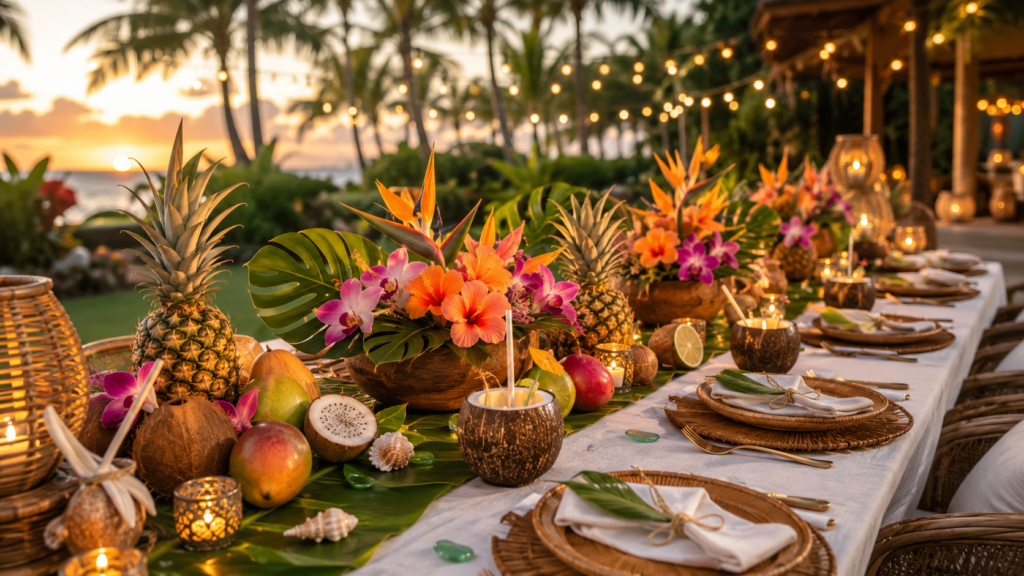
Here’s the problem with most “luau party” decorations: they all come from the same three warehouse suppliers, so every backyard aloha party ends up looking identical. Plastic leis. A single inflatable palm tree. Paper umbrellas nobody uses for their drinks. It works, technically. It just doesn’t feel like anything.
A good aloha-themed table doesn’t need to be authentic to Hawaiian culture in a museum-piece sense but it should feel intentional, warm, and a little bit surprising, rather than like you grabbed the first bag off a shelf labeled “Luau.” That’s the difference between a table people photograph and a table people walk past.
Below are 20 aloha party table decoration ideas, organized so you can actually use them — not just admire them. Some are five-minute fixes. A few take real setup time. All of them are things you can pull off without turning your dining room into a theme park gift shop.
What Makes an Aloha Table Actually Work (Not Just Look Tropical)
The best tropical tablescapes lean on a few consistent elements: layered textures (woven, glossy, matte), a restrained color palette instead of “every bright color at once,” and real organic material — actual leaves, actual flowers, actual wood — mixed with the plastic stuff so it doesn’t read as 100% synthetic.
If you only take one idea from this whole guide, take this: buy less, and choose better. A table with five thoughtful elements beats a table buried under twenty cheap ones.
1. Ditch the Solid Tropical Tablecloth for a Banana Leaf Table Runner
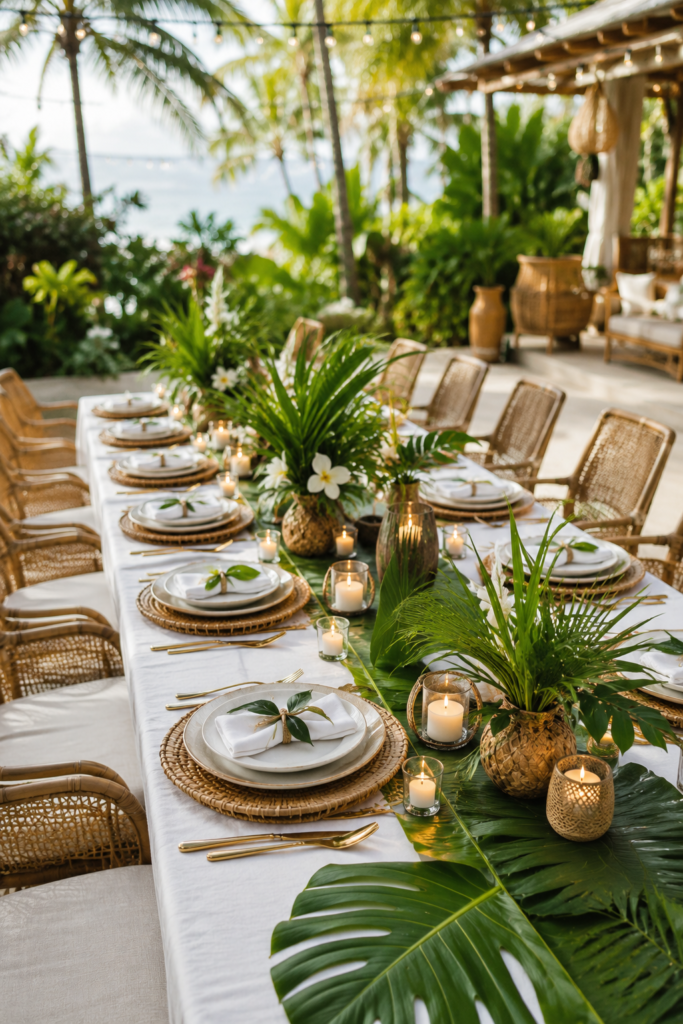
A full tropical-print tablecloth can look busy fast, especially once you add centerpieces on top of it. Instead, use a plain neutral cloth (white, cream, or natural linen) as your base, then run an actual banana leaf table runner down the center. Fresh banana leaves are sold at many Asian and Latin grocery stores, or you can find realistic faux versions online if you want something reusable.
This single swap does more visual work than almost anything else on this list, because it grounds the whole table in a color and texture that reads as genuinely tropical rather than “printed tropical.”
2. Layer in Real (or Very Real-Looking) Tropical Foliage
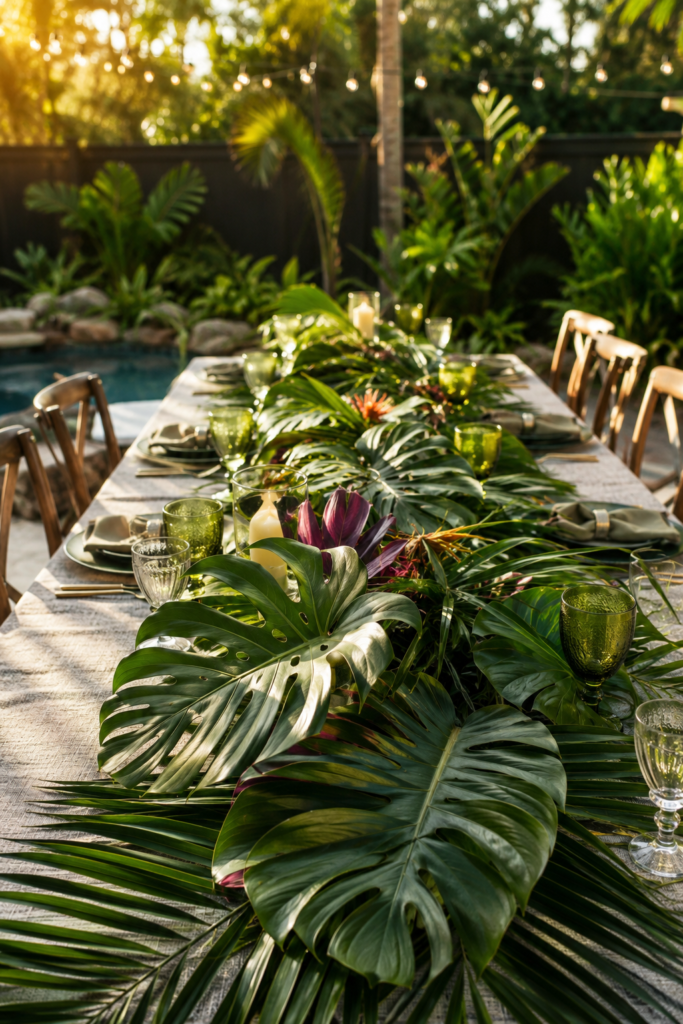
Skip the plastic palm fronds you see stapled to fences at big-box party stores. Monstera leaves, ti leaves, and small palm branches are inexpensive at most florists and hold up fine for a single evening without water. Tuck a few along the runner, letting some hang slightly off the table edge.
If you’re doing this outdoors in a hot climate, cut leaves the morning of the party and keep them in a cool spot (a garage floor, a shaded porch) until an hour before guests arrive — they wilt faster than you’d expect in direct sun.
3. Build Centerpieces in Low Vessels, Not Tall Vases
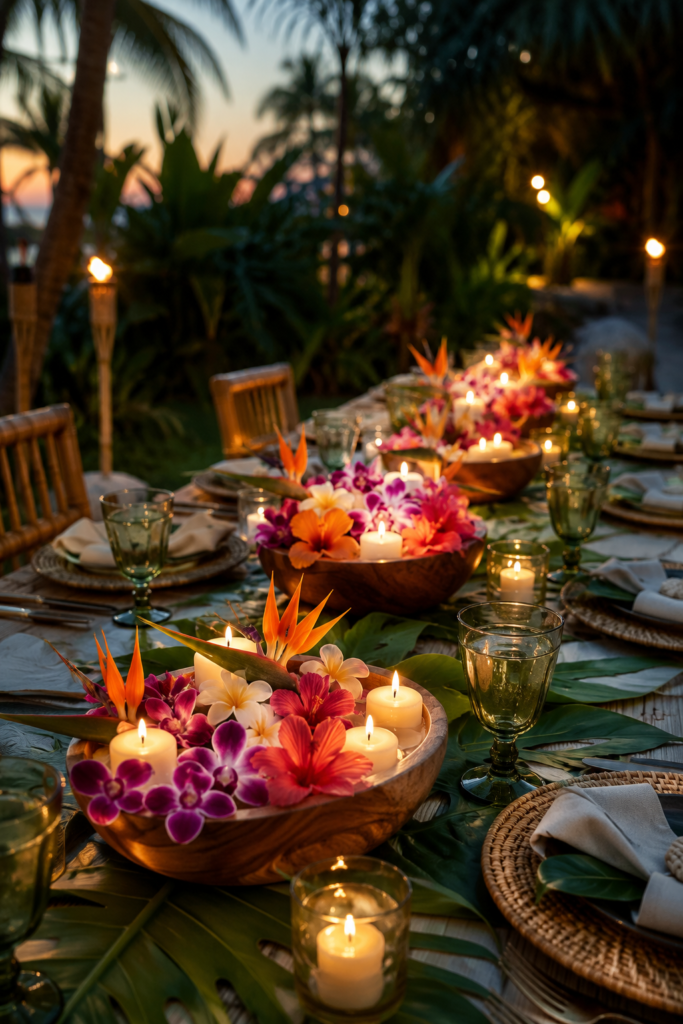
Tall centerpieces block sightlines across a table where people are trying to talk and pass food. For a luau table, low and wide works better anyway — think shallow wooden bowls, hollowed-out pineapples, or coconut shells filled with tropical flowers (orchids, hibiscus, bird of paradise if you can source it) and a few floating candles.
If fresh flowers aren’t in the budget, a mix of high-quality silk tropical flowers with real greenery still reads well, especially under evening lighting.
4. Use Real Pineapples as Both Decor and Dessert Stands
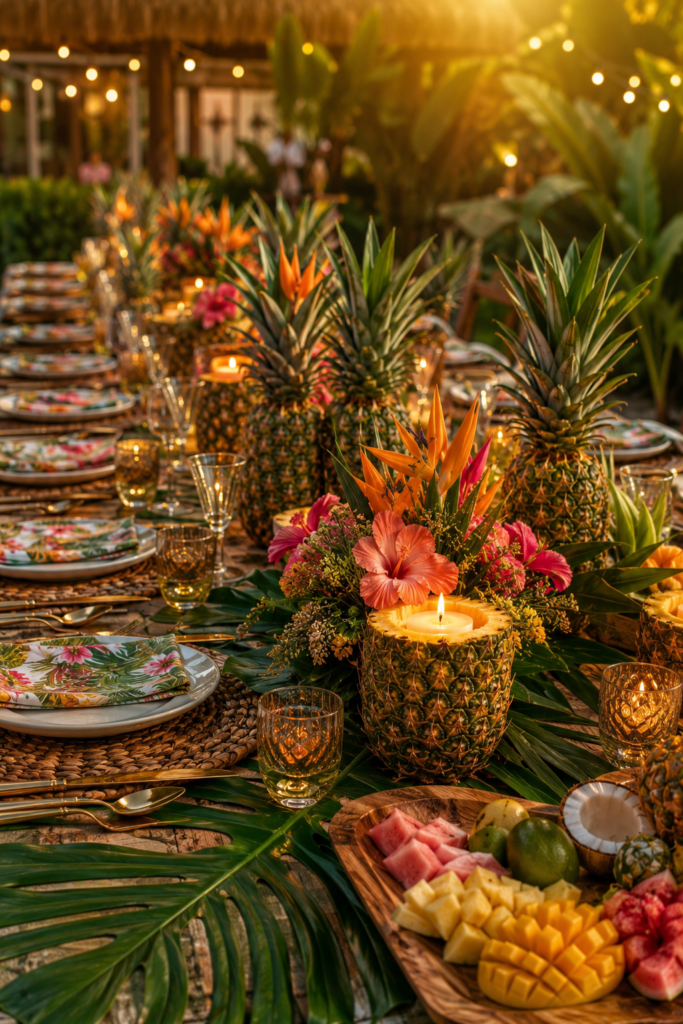
A pineapple with the top sliced off can hold a small candle, a mini bouquet, or even skewered fruit around its base. Buy a few extra pineapples specifically for decoration (not just the ones you’re serving) and place them at intervals down the table instead of clustering everything in the middle.
They’re inexpensive, they smell good, and unlike most decor, they can go straight into a fruit salad the next day instead of the trash.
5. Set the Table with Bamboo or Rattan Chargers
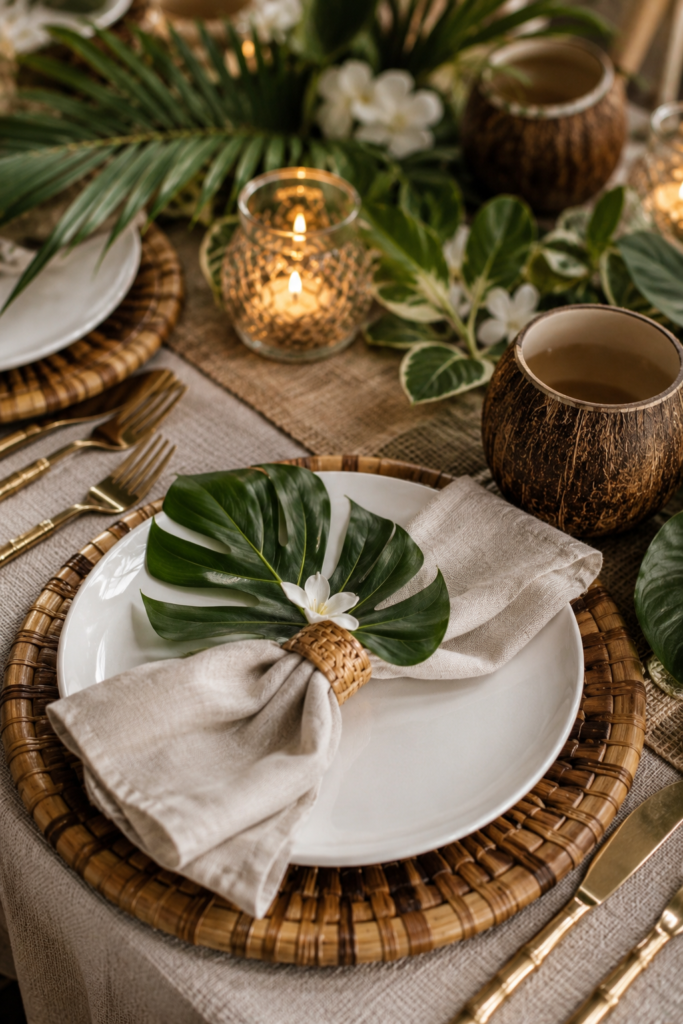
Underneath each place setting, a woven bamboo or rattan charger plate adds texture without adding clutter. This is a small detail, but it’s the kind of thing that makes photos of the table look considered rather than assembled last-minute. Most home goods stores carry these year-round (not just as seasonal party items), so they’re also reusable for any future outdoor dinner.
6. Make Individual Leis Part of the Place Setting
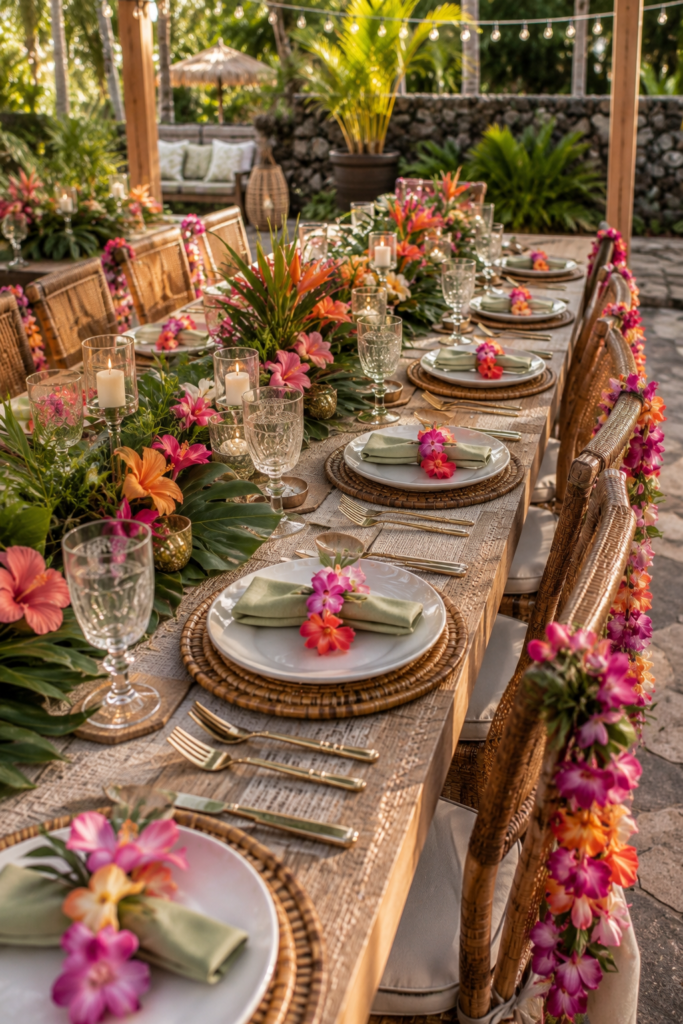
Instead of handing leis out at the door, drape a simple lei over the back of each chair, or loop a smaller one around each napkin. It signals “this seat is claimed and welcome” the moment guests sit down, and it photographs beautifully from above.
For texture variety, mix a couple of real flower leis (kukui nut or plumeria, if available locally) with woven raffia or paper ones — an all-plastic lei table starts to feel like a costume shop.
7. Use Coconut Shells as Drink Holders at Each Place
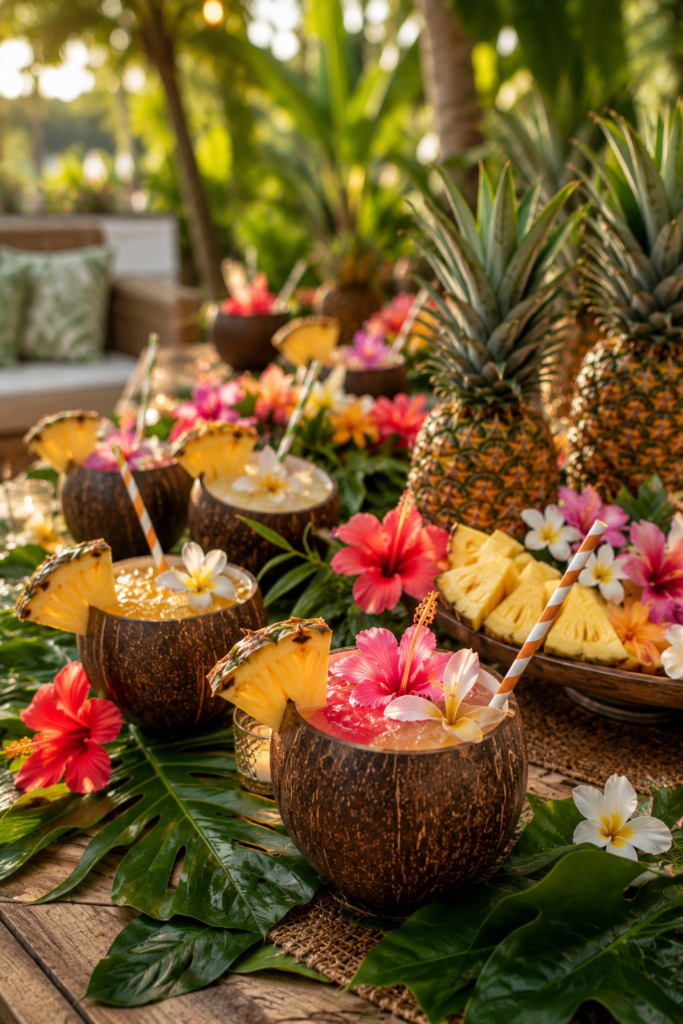
A halved, cleaned coconut shell makes a genuinely functional cup for a signature drink — not just a decoration you look at. You can buy pre-cleaned coconut cups online in bulk relatively cheaply, or hollow real coconuts yourself if you want the DIY version (it takes more effort than most tutorials admit).
Set one at each place setting with a colorful straw, and you’ve solved decor and drinkware in a single move.
8. Anchor the Table with a Driftwood or Bamboo Centerpiece Base
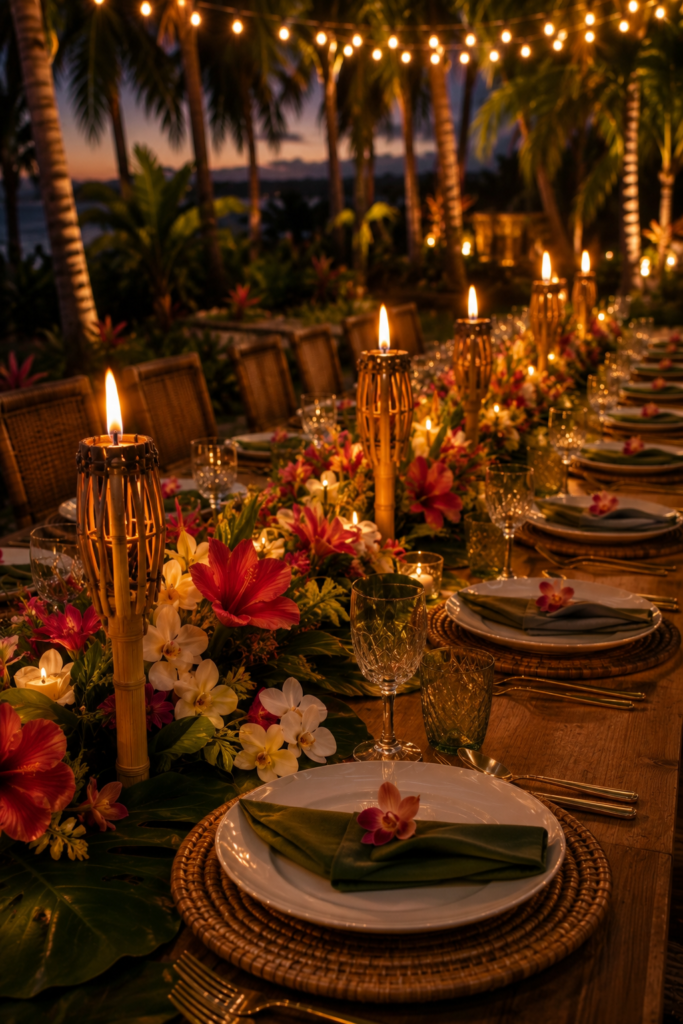
Rather than scattering decorations directly on the tablecloth, lay a piece of driftwood, a bamboo pole, or a low wooden plank down the center as a “stage” for everything else — candles, flowers, small shells. It keeps the eye organized and gives loose items something to visually rest on, especially outdoors where wind can scatter things.
9. Add Tiki Torches or Bamboo Torches as Table-Height Accents (Carefully)
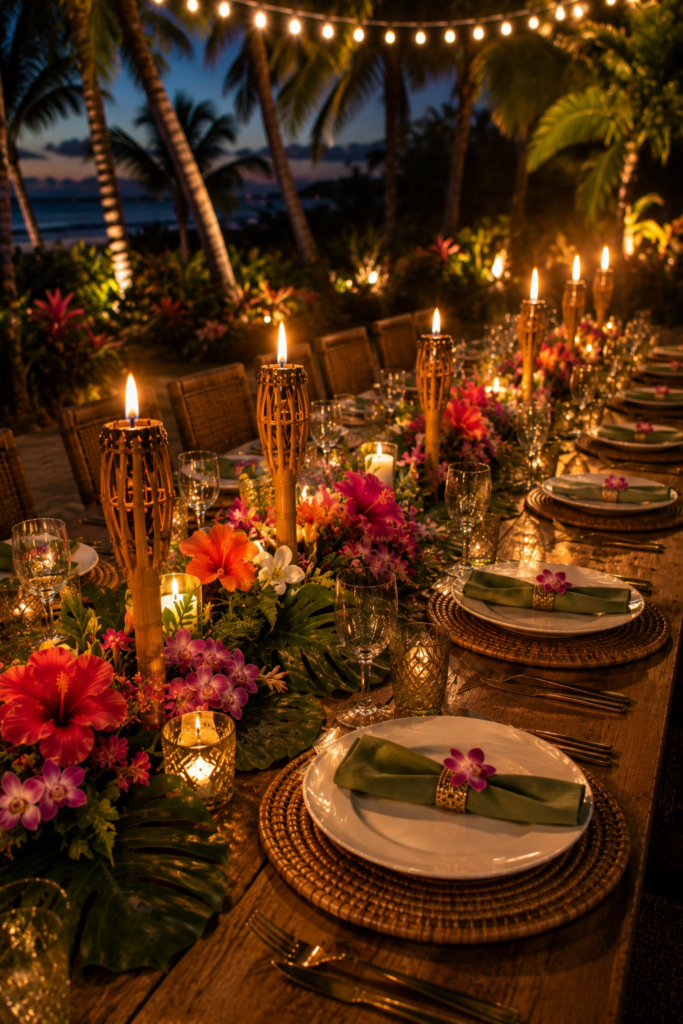
Full-size tiki torches usually belong around the perimeter of a yard, not on the table itself — but mini tabletop versions exist and can work as a centerpiece element if you’re eating after dusk. If you go this route, always check they’re rated for tabletop use and keep them well clear of napkins, leis, and anything flammable. This is one spot where the “cool factor” isn’t worth an actual fire hazard, so don’t wing it with an open-flame torch you weren’t sure was tabletop-safe.
10. Use Real Shells and Sea Glass as Scatter Decor
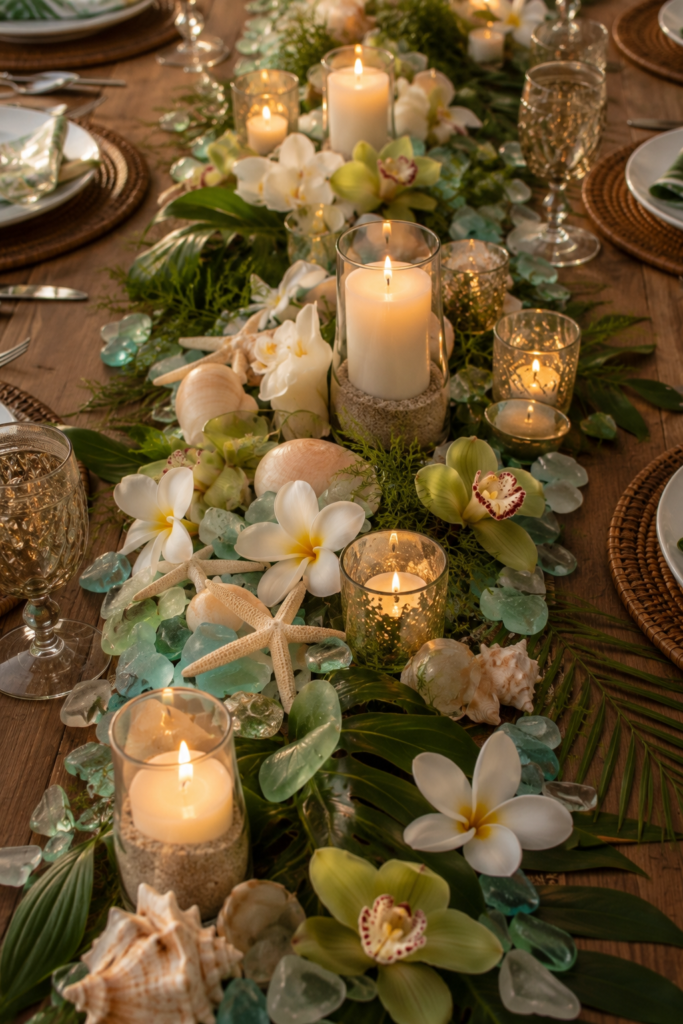
A handful of real shells (bought in bulk from a craft store, not collected endangered coral) scattered along the table runner adds texture in the gaps between bigger centerpieces. Sea glass, in blues and greens, does something similar with a bit more sparkle. Both are cheap, reusable, and don’t scream “party store.”
11. Choose a Two- or Three-Color Palette Instead of “All the Tropical Colors”
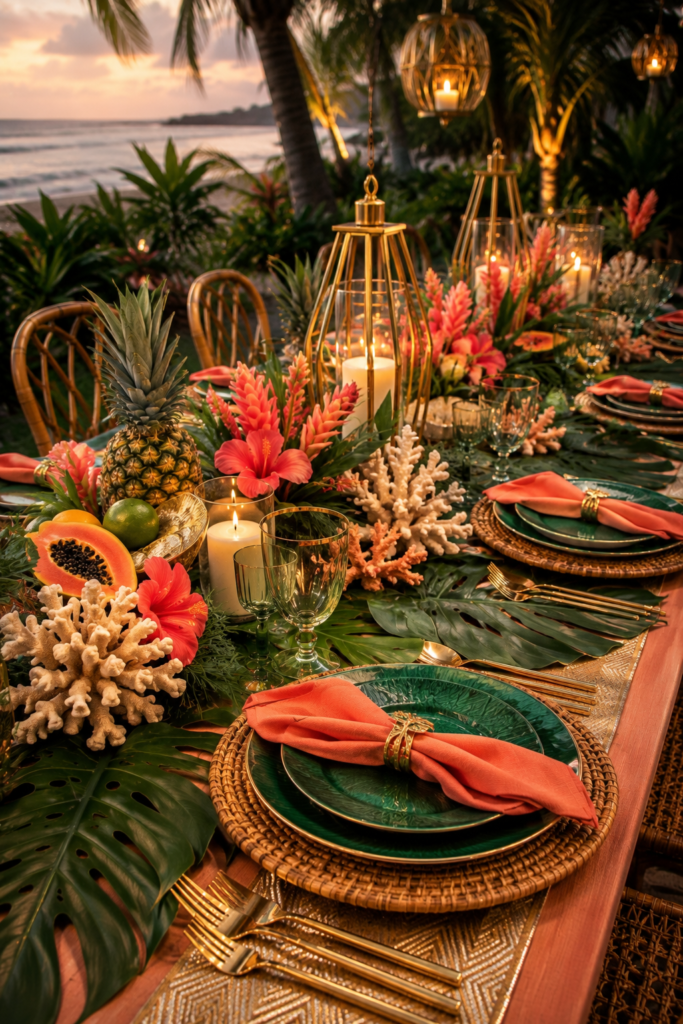
The instinct with tropical parties is to throw hot pink, orange, turquoise, and yellow all onto one table. It can work in small doses, but it more often looks chaotic. Pick two or three colors — say, coral, deep green, and gold — and let every element (napkins, flowers, ribbon, plates) pull from that palette. The table will look far more intentional for the same amount of effort.
12. Fold Napkins Into a Simple Palm Leaf Shape
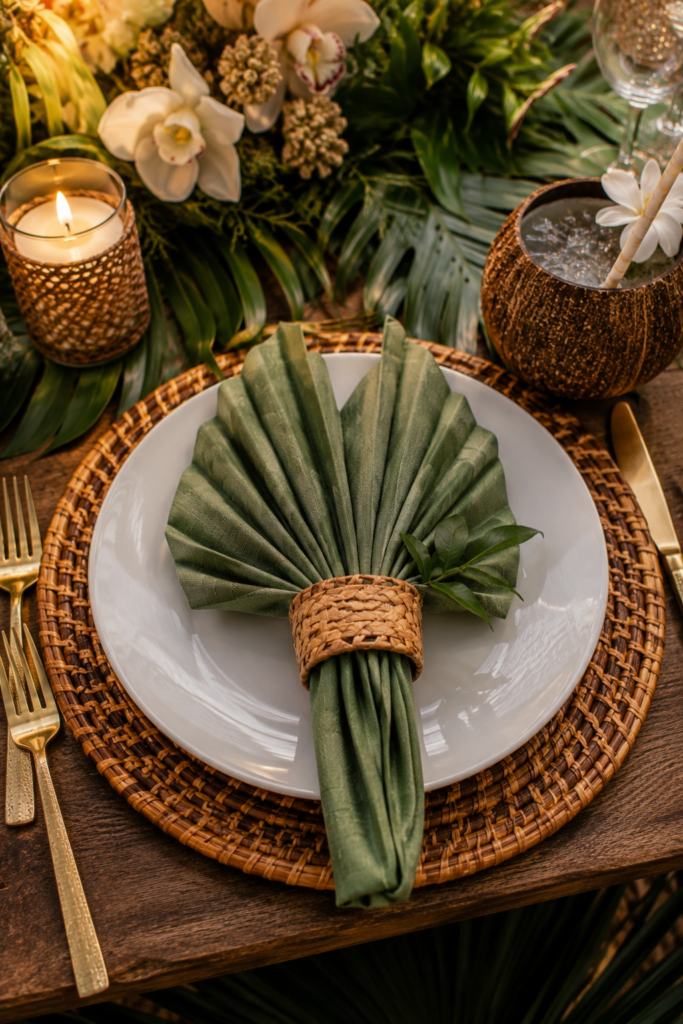
You don’t need to be a professional napkin-folder for this. A basic accordion fold, fanned out and tucked into a napkin ring or lei, reads as a palm frond from across the table. It’s a five-minute upgrade with zero extra materials if you’re already using cloth napkins.
13. Use Tropical Fruit as Functional Centerpiece Filler
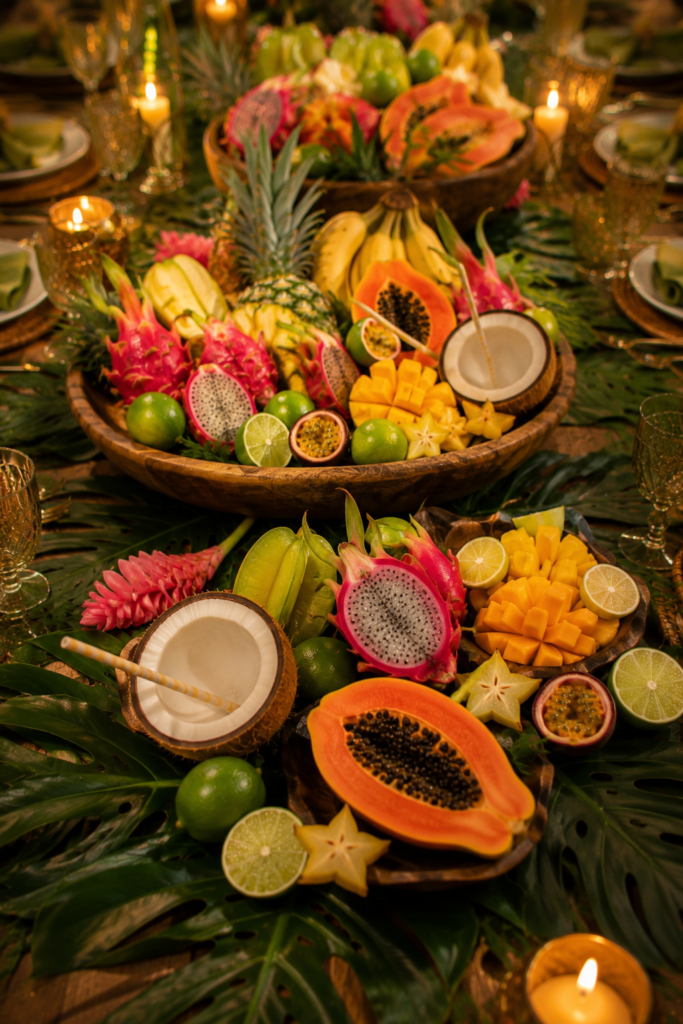
Beyond pineapples, a wide shallow bowl piled with whole mangoes, star fruit, and dragon fruit does real decorative work — the colors and shapes are naturally tropical, and unlike flowers, nothing goes to waste. This is a good option if your budget is tighter than florist prices allow, since you can usually eat or repurpose everything afterward.
14. Add Warm, Low Lighting Instead of Bright String Lights
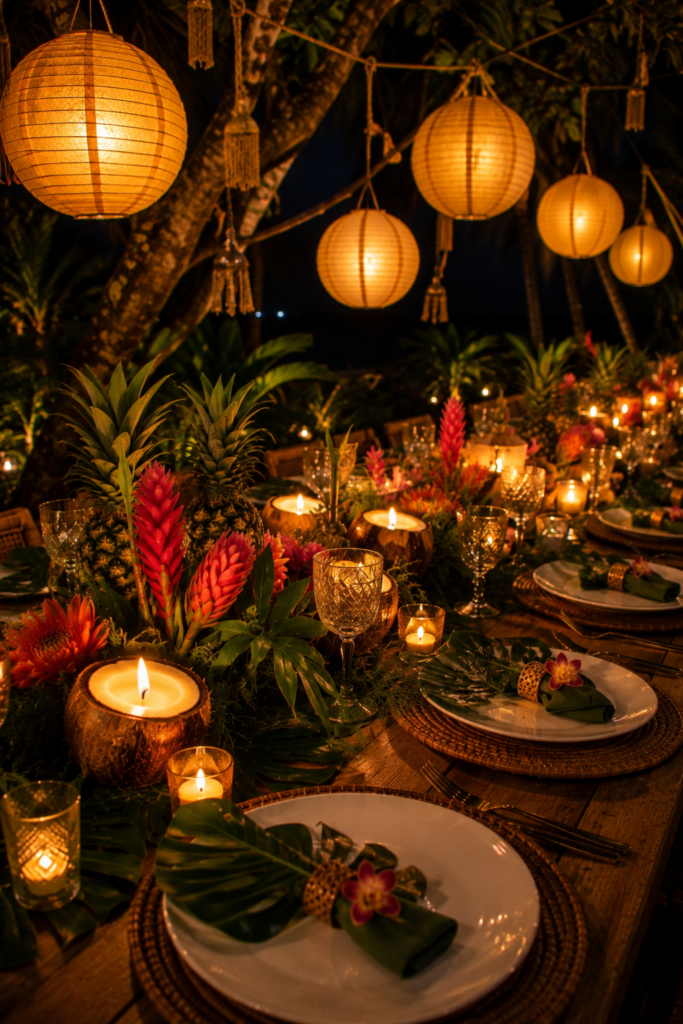
String lights get suggested for every outdoor party, but for a luau table specifically, warmer and lower light does more for the mood — think small LED candles tucked into coconut shells, or a few paper lanterns in warm amber tones hung just above the table rather than strung around the whole yard. Save any brighter string lights for the surrounding space, not the table itself, so they don’t wash out your centerpieces.
15. Use a Woven Placemat Under Each Setting Instead of a Full Tablecloth
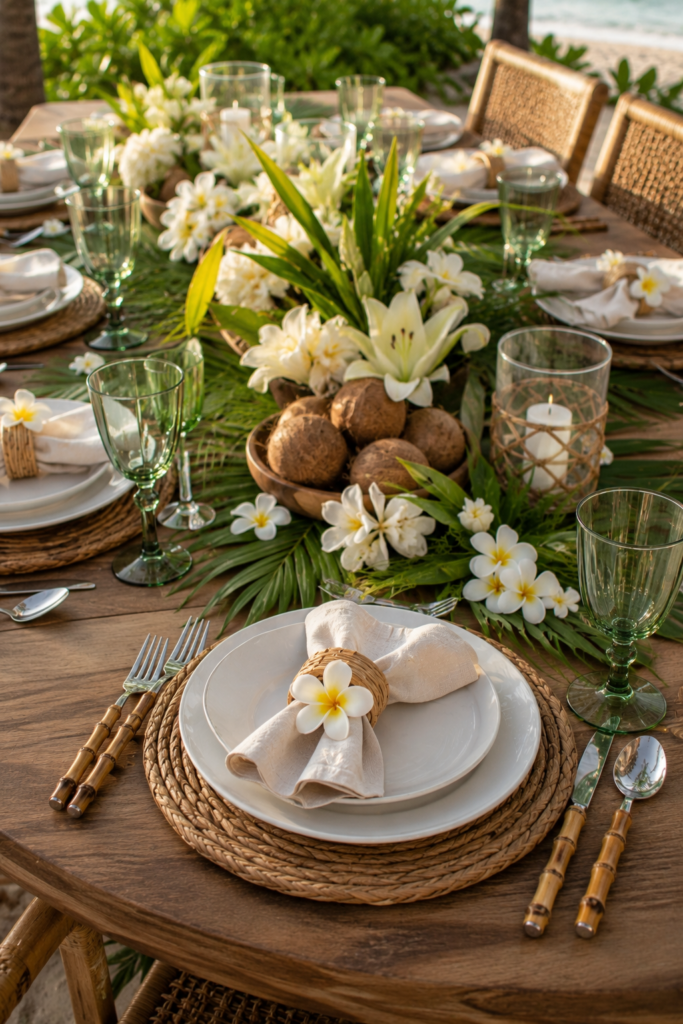
If a full banana leaf runner feels like too much for your table, woven straw or seagrass placemats under each plate accomplish something similar on a smaller scale. This also makes cleanup easier since each mat can be wiped or replaced individually if something spills.
16. Incorporate a Small “Welcome” Sign in Natural Materials
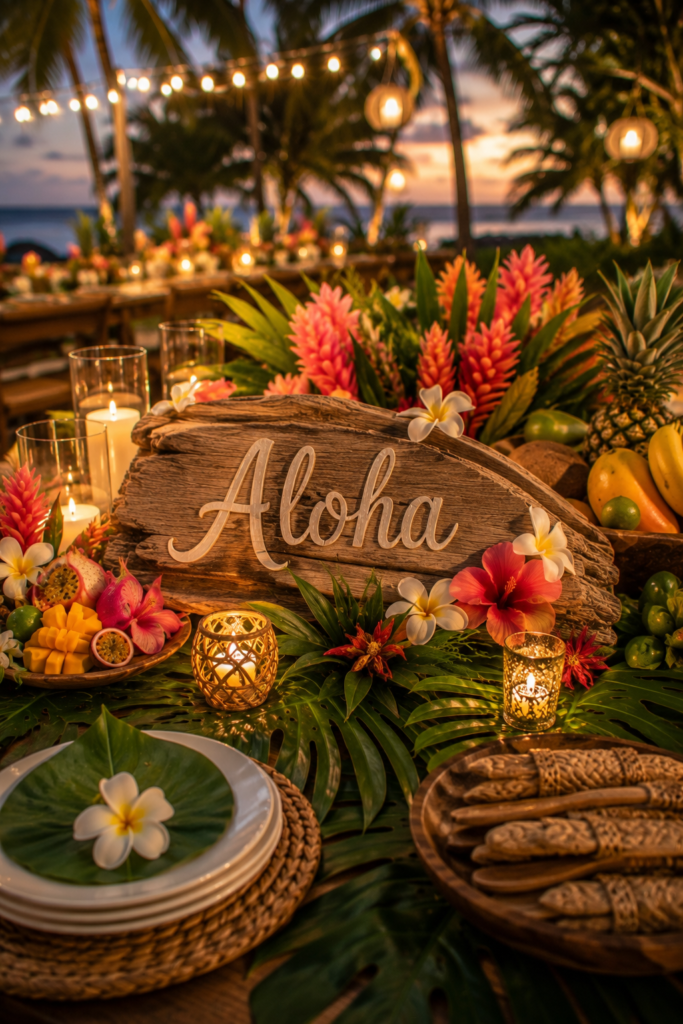
A small sign — “Aloha,” a table name, or a simple welcome message — painted or burned onto a piece of driftwood or a slice of tree trunk adds a personal touch without looking like a printed banner. Place it at the head of the table or near the food.
17. Use Citronella Candles That Double as Decor
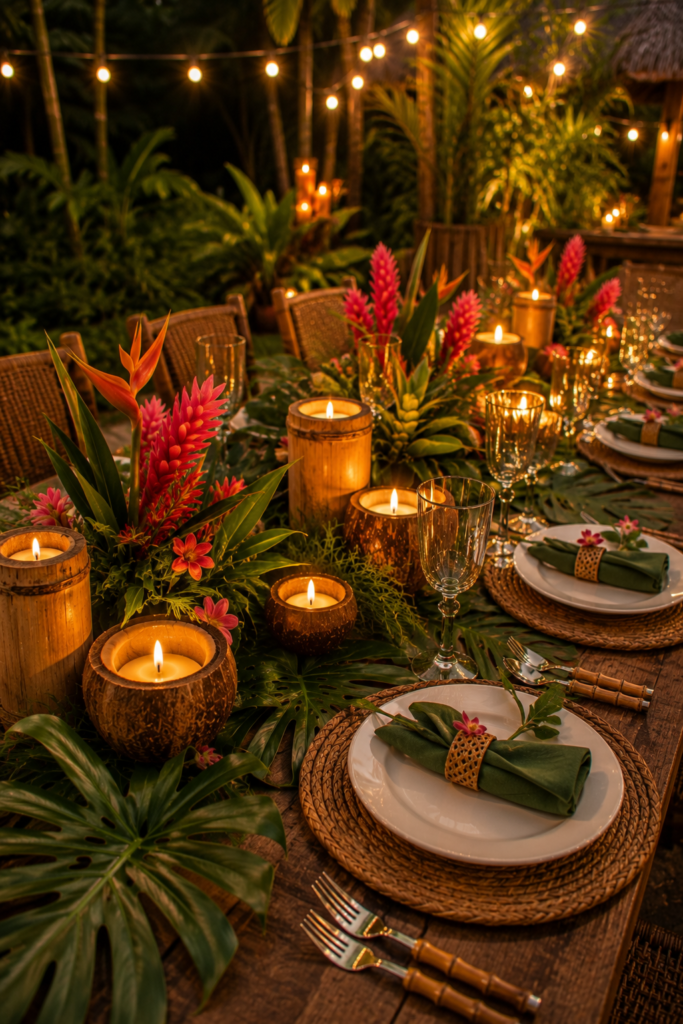
If you’re outdoors, you likely need some form of bug control anyway. Rather than hiding citronella candles off to the side, choose ones in natural-looking containers (bamboo, terracotta, or coconut shell holders) and let them serve double duty as part of the centerpiece run.
18. Add a Signature Drink Station Right on the Table
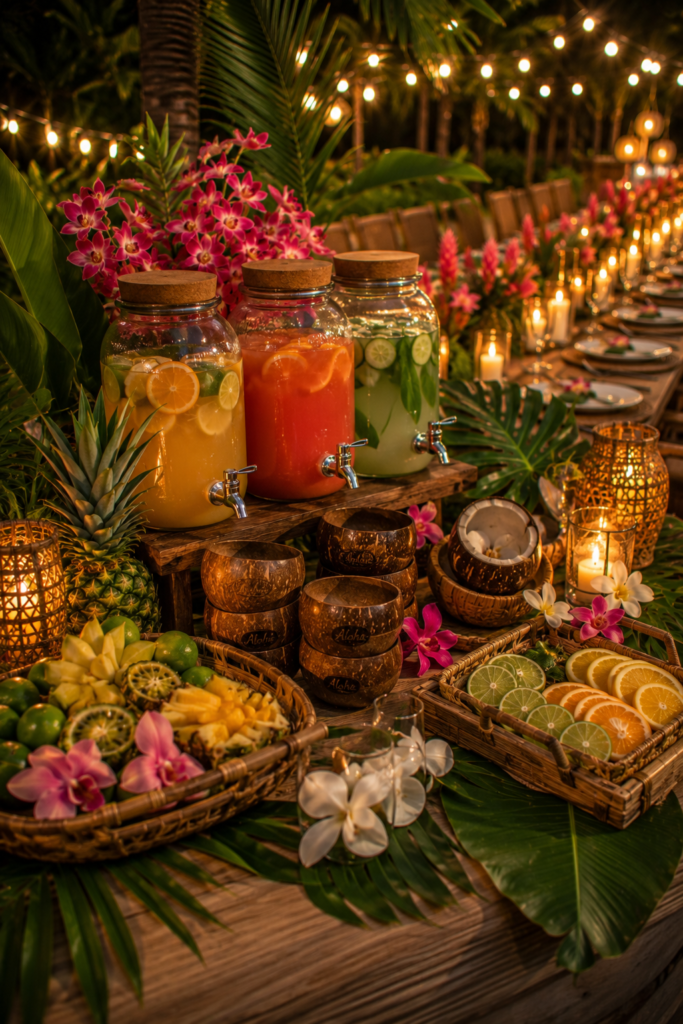
Rather than a separate bar cart, a small drink station at one end of the table — a pitcher of something tropical, a stack of coconut cups, a bowl of citrus wedges — keeps people seated and mingling instead of wandering off. Decorate the station the same way as the rest of the table so it doesn’t feel like a separate zone.
19. Use Ti Leaves or Palm Fronds as Individual Plate Liners
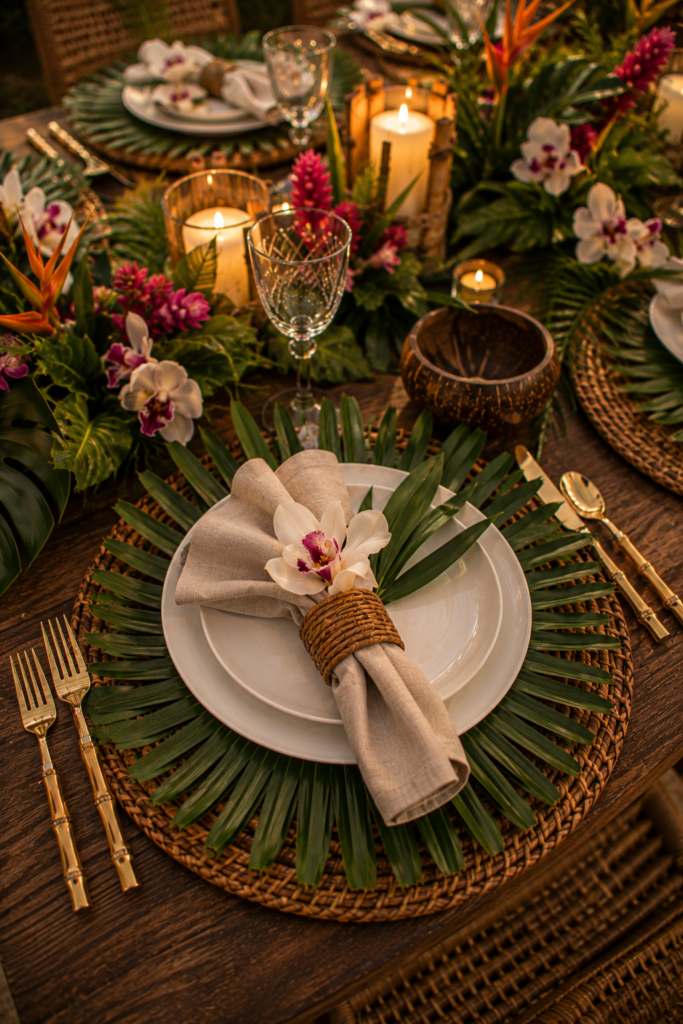
Instead of a plain charger, a single large leaf placed under each plate (real or a good faux version) adds a layer of green that ties the place settings back to the runner down the center. It’s a small repeated detail, and repetition is what makes a table feel styled rather than assembled piecemeal.
20. Keep One “Hero” Element and Let Everything Else Support It
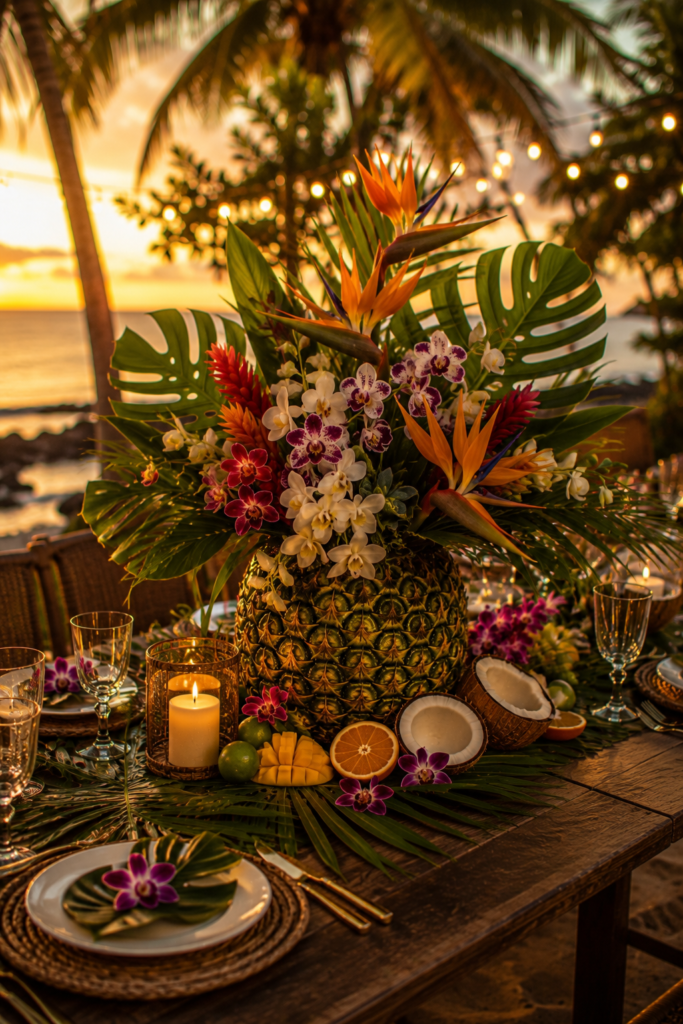
Whether that’s a large hollowed-out pineapple centerpiece, a driftwood runner, or a cluster of orchids in coconut shells, pick one focal piece and build everything else around it at a smaller scale. Tables that try to make every single element the star end up with no clear focal point at all.
Frequently Asked Questions
Do I need real flowers, or are fake ones acceptable? Fake flowers are fine, and often more practical for outdoor parties in hot weather. The key is quality — cheap plastic flowers with unnatural colors are usually what makes a table look like a costume shop. If you mix in even a small amount of real greenery (ti leaves, palm fronds) alongside good silk flowers, the table reads as far more authentic than an all-fake or all-real setup would suggest.
How far in advance can I prep real tropical decorations like leaves and pineapples? Leaves and cut flowers are best assembled the same day, ideally within a few hours of guests arriving, since tropical foliage wilts faster than typical floral greenery. Pineapples and other whole fruit can be bought several days ahead and stored normally. If you want a head start, prep anything non-perishable (chargers, runners, napkin folding) the night before, and save the organic material for party day.
What’s a budget-friendly alternative to a full banana leaf runner? A length of solid green or natural-toned fabric can approximate the color and shape at a fraction of the cost, especially topped with a few real leaves scattered on top rather than a continuous layer. You get most of the visual effect without buying enough banana leaves to cover an entire table length.
Is it okay to mix Hawaiian and generic “tropical” decor, or does that feel inauthentic? Most home aloha parties blend broader Pacific and tropical elements (pineapples, palm leaves, tiki imagery) rather than sticking strictly to Hawaiian cultural specifics, and that’s the common, low-stakes approach for a casual party. If you want to lean more specifically Hawaiian, focus on things like real leis, ti leaves, and poke or kalua-style food rather than generic “tropical party” clip art aesthetics, and be thoughtful about not treating sacred or ceremonial items (like certain lei types) as disposable party props.
How do I keep decorations from blowing away outdoors? Anything lightweight — paper items, loose leaves, small flowers — needs weight or an anchor. Tuck loose leaves partially under plates or centerpiece bowls rather than laying them flat and unsecured. For runners, a few decorative stones or shells placed periodically along the length will hold fabric or leaves in place without looking like a functional weight.
What should I avoid entirely for a tasteful aloha table? Avoid grass skirts as table decor (they’re more costume than table decoration and read as dated), overly cartoonish tiki-head decor packed onto the table itself, and stacking too many bright colors and patterns in the same few square feet. A table with fewer, better elements will consistently look more put-together than one with every item from a “luau decorations” multipack.