
Salsa Recipes Homemade: 3 Easy Versions That Beat Anything From a Jar
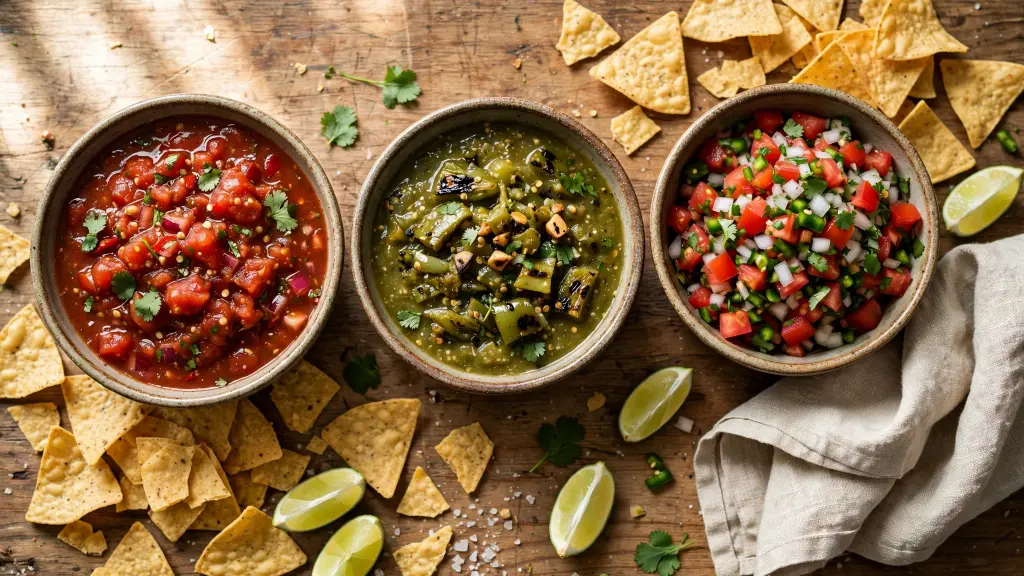
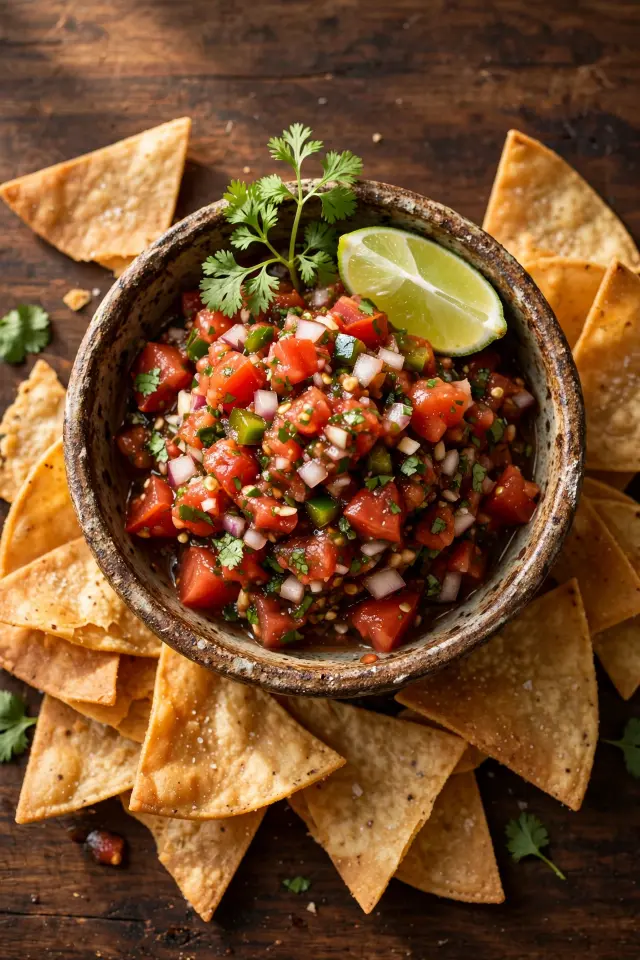
The first time I made salsa recipes homemade from scratch instead of grabbing a jar, I honestly couldn’t believe how much brighter everything tasted — the tomatoes actually tasted like tomatoes, and the whole kitchen smelled like a taqueria. Once you taste the difference, store-bought salsa starts to feel like a compromise you didn’t need to make.
Quick-Answer Summary
Total time: 15–20 minutes (no cooking required for the classic version) | Servings: About 2 cups, enough for 6–8 people as a snack | Difficulty: Beginner-friendly | Key tip: Let your salsa rest in the fridge for at least 20 minutes before serving — this short rest lets the flavors actually blend instead of tasting like separate chopped ingredients.
Why You’ll Love This Homemade Salsa
- It comes together in under 20 minutes with a knife and a bowl, no fancy equipment required.
- You control the heat level completely, from mild enough for kids to fiery enough for chile lovers.
- It’s naturally gluten-free, dairy-free, and vegan, so it fits almost any table.
- The flavor is dramatically fresher than anything from a jar, with real texture instead of a mushy, cooked-down consistency.
- It’s endlessly adaptable — swap in roasted tomatoes, mango, or charred corn depending on what you’re craving.
Ingredients
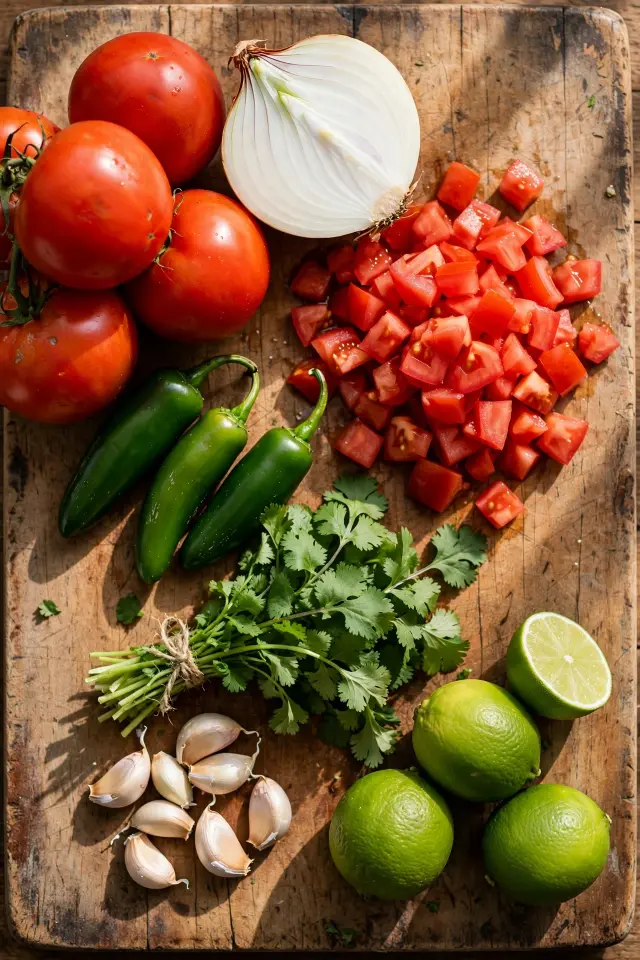
- 4 medium ripe tomatoes, diced (Roma tomatoes work well because they hold their shape; canned diced tomatoes with juices drained can sub in a pinch)
- 1/2 medium white onion, finely diced (red onion works too, for a sharper bite)
- 1–2 jalapeños, seeded and minced (leave the seeds in if you want more heat, or swap in a serrano for extra kick)
- 2 cloves garlic, minced
- 1/2 cup fresh cilantro, chopped (if you’re in the cilantro-tastes-like-soap camp, fresh parsley is a fine substitute)
- Juice of 1–2 limes
- 1/2 teaspoon ground cumin (optional, but it adds a nice earthy depth)
- Salt, to taste
Step-by-Step Instructions
- Dice the tomatoes. Cut them into small, even pieces so every bite has good texture. If your tomatoes are very juicy, scoop out some of the seeds and gel first so your salsa doesn’t turn watery.
- Finely chop the onion, jalapeño, and garlic. The smaller you cut these, the more evenly the heat and sharpness distribute through the salsa instead of hitting you in random bites.
- Combine everything in a bowl. Add the tomatoes, onion, jalapeño, garlic, and cilantro together, then squeeze in the lime juice and sprinkle in the cumin and salt.
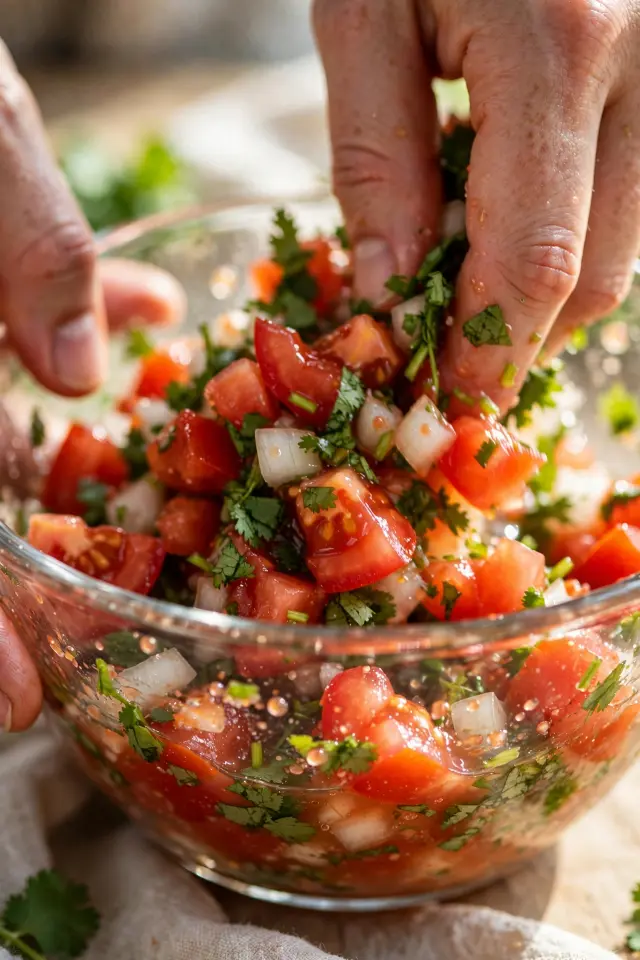
- Taste and adjust. Salsa always needs a little tweaking — add more lime for brightness, more salt to make the flavors pop, or more jalapeño if you want extra heat.
- Rest before serving. Cover and refrigerate for at least 20 minutes. This is the step people skip, and it’s the one that turns “fine” salsa into genuinely great salsa, because it gives the onion and garlic time to mellow and the flavors time to marry.
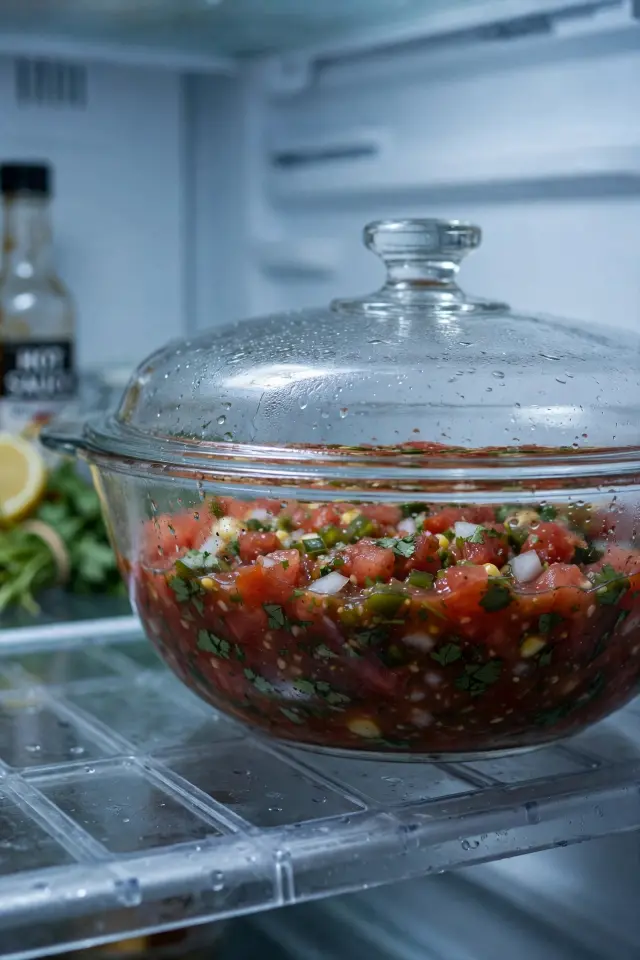
Wondering if you can make this ahead of time? Absolutely — in fact, salsa often tastes better the next day once the flavors have had time to fully develop, which makes it a great make-ahead option for parties or a <cite index=”1-1,1-2″>taco bar</cite> spread.
Variations Worth Trying
Once you’ve got the basic technique down, it’s easy to branch out:
- Roasted salsa: Char the tomatoes, onion, garlic, and jalapeño under the broiler for 8–10 minutes before chopping, for a deeper, smokier flavor.
- Green salsa (salsa verde): Swap tomatoes for tomatillos and roast everything before blending for a tangier, brighter sauce.
- Fruit salsa: Add diced mango or pineapple for a sweet-spicy contrast that’s especially good with grilled chicken or fish.
- Restaurant-style blended salsa: Pulse everything in a food processor for a smoother, chip-friendly consistency instead of the chunky version above.
Have leftover produce from a party spread? This same fresh-chopping approach works beautifully for a <cite index=”1-70,1-71″>fruit platter</cite> or a <cite index=”1-64,1-65″>snack mix</cite> table too.
Recipe Card
Homemade Salsa Total time: 20 minutes (no cook) | Yield: About 2 cups | Servings: 6–8
Ingredients: 4 tomatoes, diced; 1/2 white onion, diced; 1–2 jalapeños, minced; 2 garlic cloves, minced; 1/2 cup cilantro, chopped; juice of 1–2 limes; 1/2 tsp cumin (optional); salt to taste.
Instructions: Dice tomatoes, onion, jalapeño, and garlic. Combine with cilantro, lime juice, cumin, and salt. Taste and adjust seasoning. Chill at least 20 minutes before serving.
Nutrition (per 1/4 cup serving, approximate): 15 calories, 0g fat, 3g carbohydrates, 1g fiber, 1g protein, 95mg sodium.
Frequently Asked Questions
What’s the best type of tomato for homemade salsa?
Roma tomatoes are ideal for homemade salsa because they’re meatier and less watery than beefsteak varieties, which keeps the finished salsa thick instead of runny. Vine-ripened tomatoes work well too, especially in peak summer months.
How long does homemade salsa last in the fridge?
Fresh homemade salsa typically stays good for 4–5 days when stored in an airtight container in the refrigerator. If you notice excess liquid pooling, simply drain it off before serving.
Can I make salsa less spicy?
Yes — removing the seeds and white membrane from the jalapeño significantly reduces the heat while keeping the pepper flavor. You can also swap the jalapeño for a milder pepper like poblano.
Why does my salsa taste watery?
Watery salsa usually happens when tomato seeds and gel are left in or when the salsa is served immediately without draining. Scooping out the seeds before dicing and letting the mixture rest (then draining excess liquid) solves this.
Can I freeze homemade salsa?
Fresh salsa can be frozen for up to 2 months, though the texture softens slightly upon thawing since raw vegetables lose some crispness. It’s best used in cooked dishes like salsa-braised chicken after freezing rather than served fresh.
Storage and Reheating Notes
Store leftover salsa in an airtight container in the refrigerator for up to 5 days. This salsa isn’t meant to be reheated — it’s meant to be enjoyed cold or at room temperature. If you’re prepping for a crowd, this recipe multiplies easily and holds up well on a <cite index=”1-71,1-72″>healthy appetizer</cite> spread alongside other <cite index=”1-73,1-74″>easy finger foods</cite>, or as part of a bigger <cite index=”1-15,1-16″>catering buffet table</cite>.
If you give this homemade salsa a try, I’d love to hear how it turns out — drop a comment below, save this recipe for your next taco night, and share it with anyone who’s still buying salsa from a jar.