
18 Peach Cheesecake Recipes That Actually Deliver on Flavor
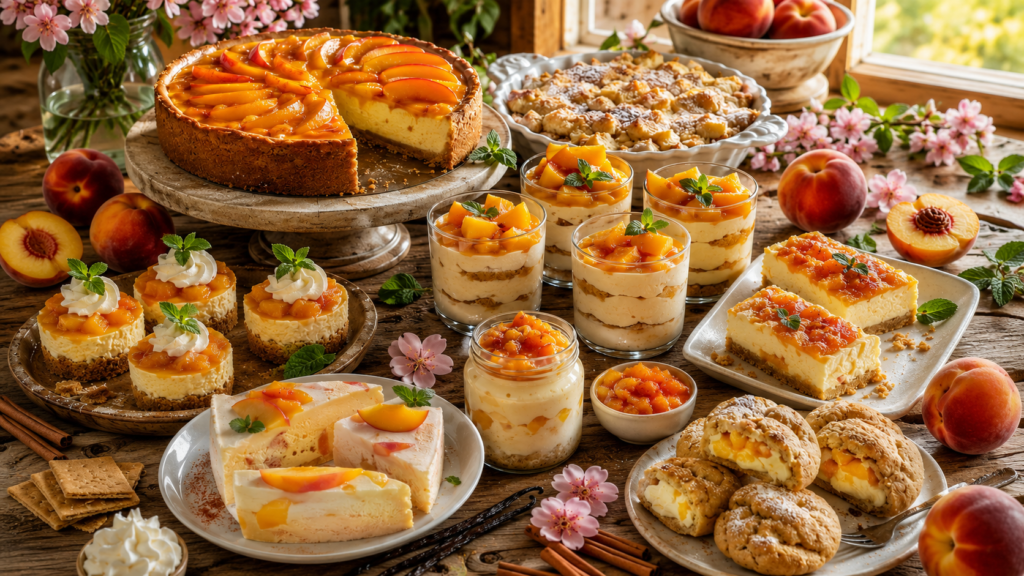
Peach season is short. That’s exactly why it’s worth building a repertoire of peach cheesecake recipes instead of making the same one every August and calling it a day. Peaches bring something most cheesecake add-ins can’t: a bright acidity that cuts through all that rich cream cheese, plus a natural sweetness that lets you dial back the sugar elsewhere.
This guide covers 18 peach cheesecake recipes distinct approaches classic baked versions, no-bake shortcuts, bars, cups, and a few less obvious formats along with the technique details that determine whether a cheesecake turns out silky or cracked, dense or gluey.
Why Peaches and Cheesecake Work So Well Together
Ripe peaches are roughly 85–90% water with a good amount of natural pectin and acid (mostly malic acid). That acidity does real work here: it balances the fat content of cream cheese, which usually runs 33–35% fat. Without something acidic cutting through, a plain cheesecake can taste flat and one-note no matter how much vanilla you add.
There’s a technical tradeoff, though. That same high water content means raw peaches added directly to a cheesecake batter can release liquid during baking, leading to a soggy crust or a batter that never fully sets in the middle. Most of the recipes below solve this the same few ways: roasting or macerating the peaches first to drive off excess moisture, using peach flavor in reduced or concentrated form (jam, puree cooked down, or compote), or keeping the peaches as a topping added after baking rather than mixed in.
The Base Technique Every Recipe Below Relies On
Before getting into variations, it helps to nail the fundamentals, because a peach topping can’t rescue a cracked or gummy cheesecake base.
Room temperature everything. Cream cheese, eggs, and sour cream (or heavy cream) all need to be genuinely room temperature — not just “not cold from the fridge.” Cold cream cheese won’t fully incorporate, and you’ll end up with small lumps that never smooth out no matter how long you beat it.
Don’t overbeat once eggs go in. Overbeating incorporates air, and air is what causes cheesecakes to puff up in the oven and then collapse and crack as they cool. Mix on low speed, and stop as soon as the eggs are combined.
Water bath, or a reasonable substitute. A water bath insulates the pan and keeps the outer edge of the cheesecake from cooking faster than the center — this is the single biggest factor in avoiding cracks. If you don’t want to deal with wrapping a springform pan in foil, a pan of hot water placed on the rack below the cheesecake achieves a similar humidity effect, just less precisely.
Low and slow, then rest. Bake at 325°F (163°C) rather than 350°F+. The cheesecake is done when the center still has a slight jiggle — it firms up as it cools. Then it needs to cool gradually: turn the oven off, crack the door, and leave it in for about an hour before moving it to the counter, then the fridge. Rushing this step is the most common reason home versions crack.
With that foundation in place, here are the 18 recipes.
Classic Baked Peach Cheesecakes
1. Classic Peach Cheesecake with Roasted Peach Topping
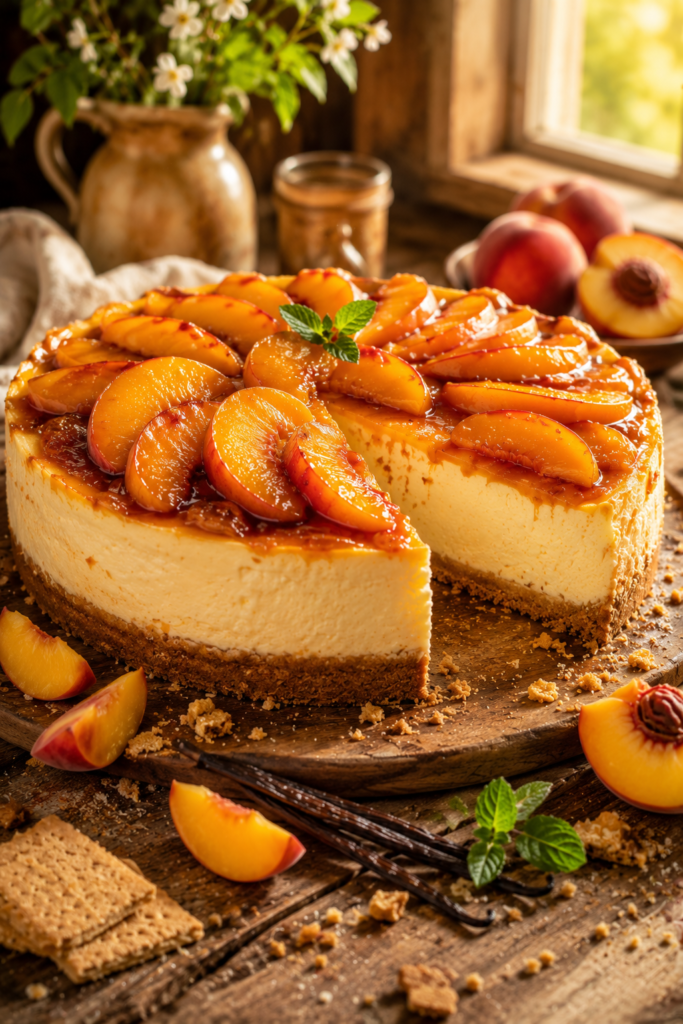
The benchmark version: a graham cracker crust, a plain vanilla cheesecake filling baked in a water bath, topped after cooling with peaches that have been roasted at 400°F until caramelized at the edges. Roasting concentrates the peach flavor and removes the excess liquid issue entirely, since the topping goes on after baking, not into the batter.
2. Peach Cobbler Cheesecake
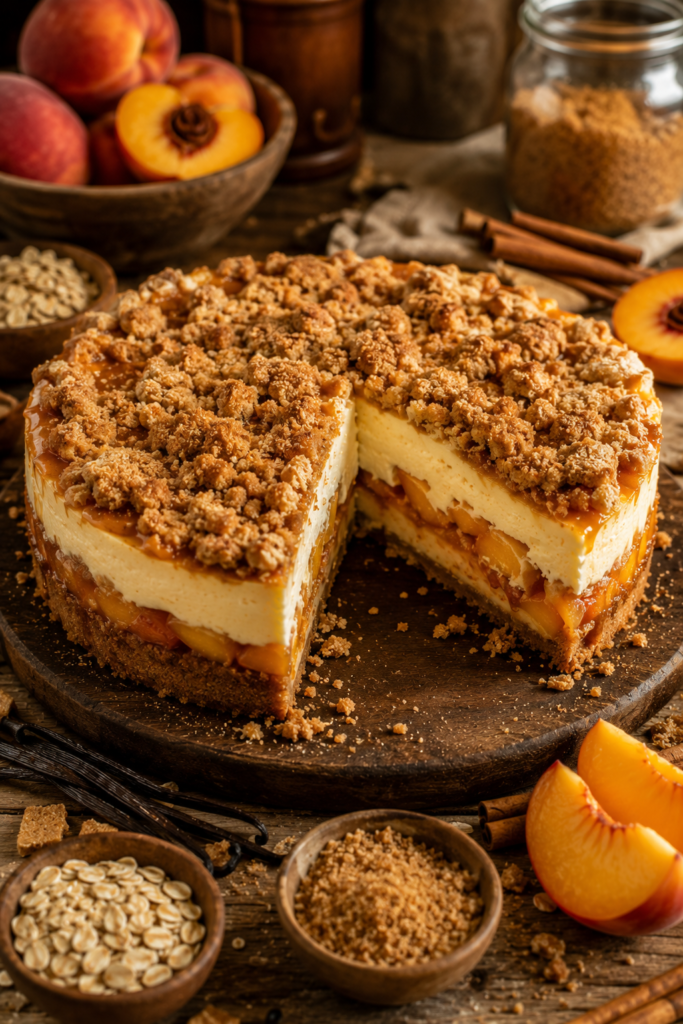
Combines two desserts by layering a peach cobbler filling (peaches cooked down with butter, brown sugar, and cinnamon) between the crust and the cheesecake layer, then finishing with a crumble topping instead of a plain crust top. Best baked with a light foil tent for the first 30 minutes so the crumble doesn’t over-brown before the center sets.
3. Bourbon Peach Cheesecake
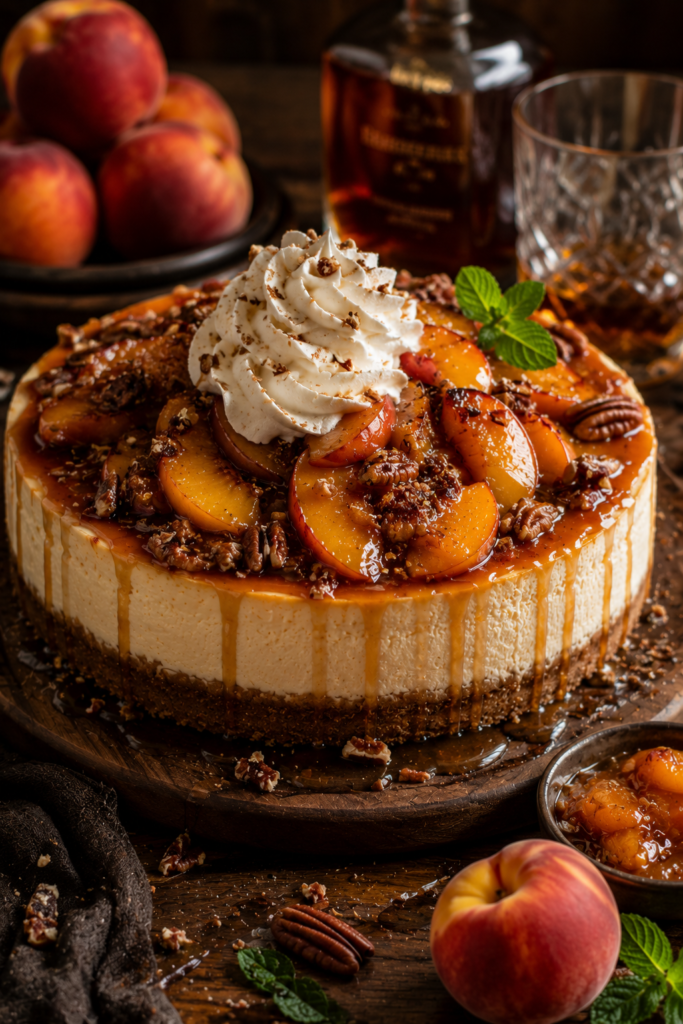
A splash of bourbon in the peach compote (cooked off enough to lose the raw alcohol bite but keep the flavor) pairs surprisingly well with the vanilla base. Works particularly well with a brown sugar or graham-pecan crust.
4. Peaches and Cream Swirl Cheesecake
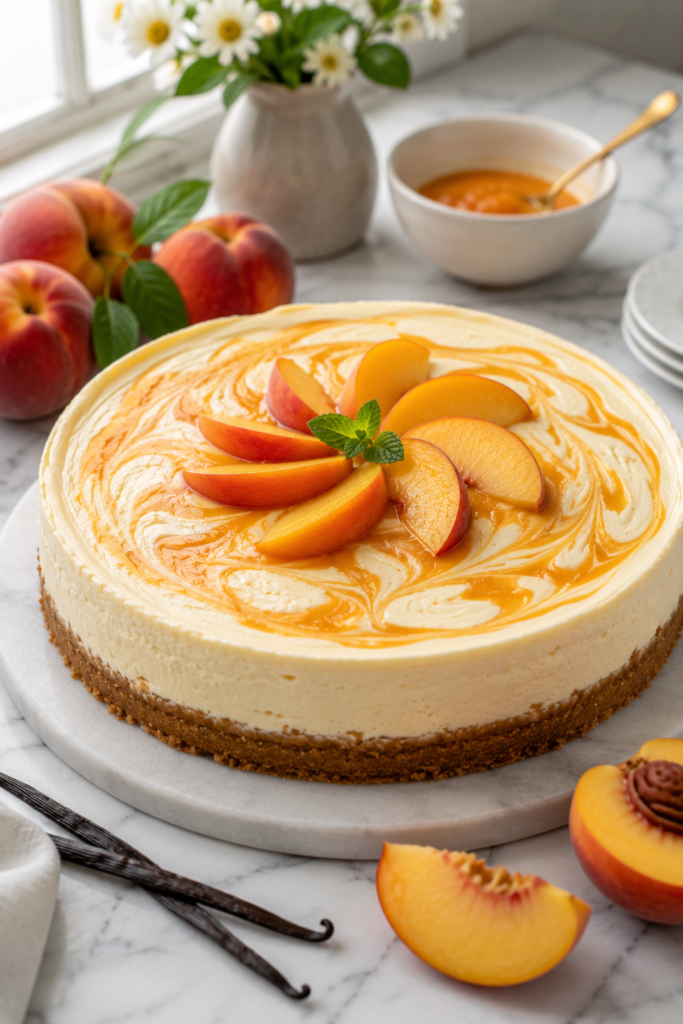
Rather than a topping, this one swirls a thick peach puree directly into the batter right before baking, using a knife or skewer to create a marbled effect. The puree needs to be reduced on the stovetop first until it’s jammy and thick — thin puree will sink and separate during baking.
5. Brown Butter Peach Cheesecake
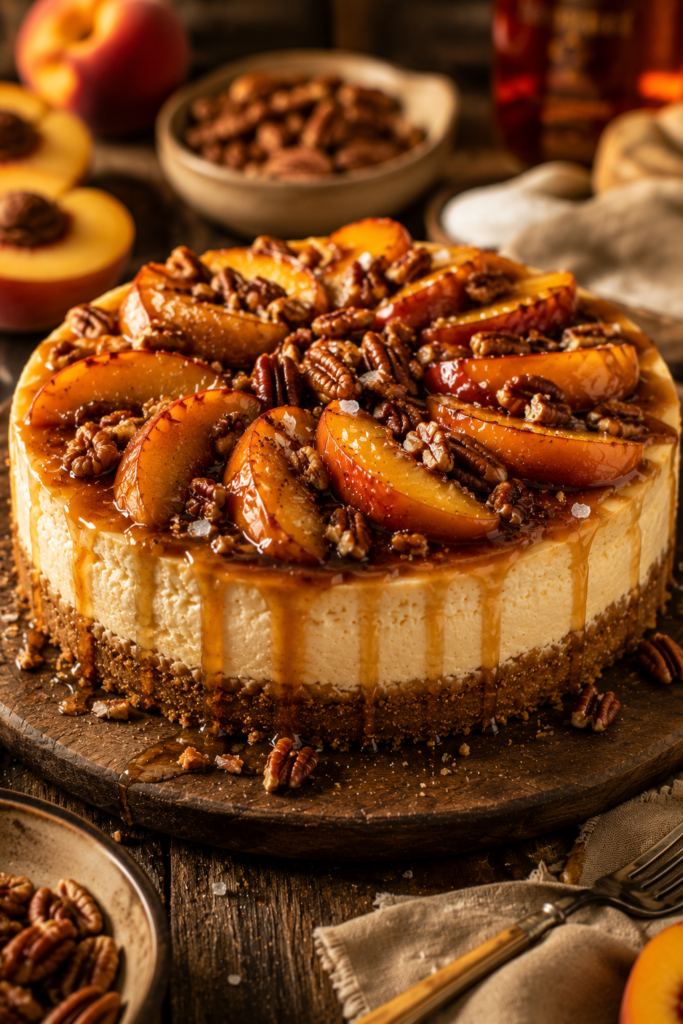
Browning the butter for the crust and, optionally, a portion of the batter’s fat adds a nutty depth that complements peach’s sweetness instead of competing with it. A small but noticeable upgrade for anyone who already has a base recipe they like.
6. Peach Basil Cheesecake
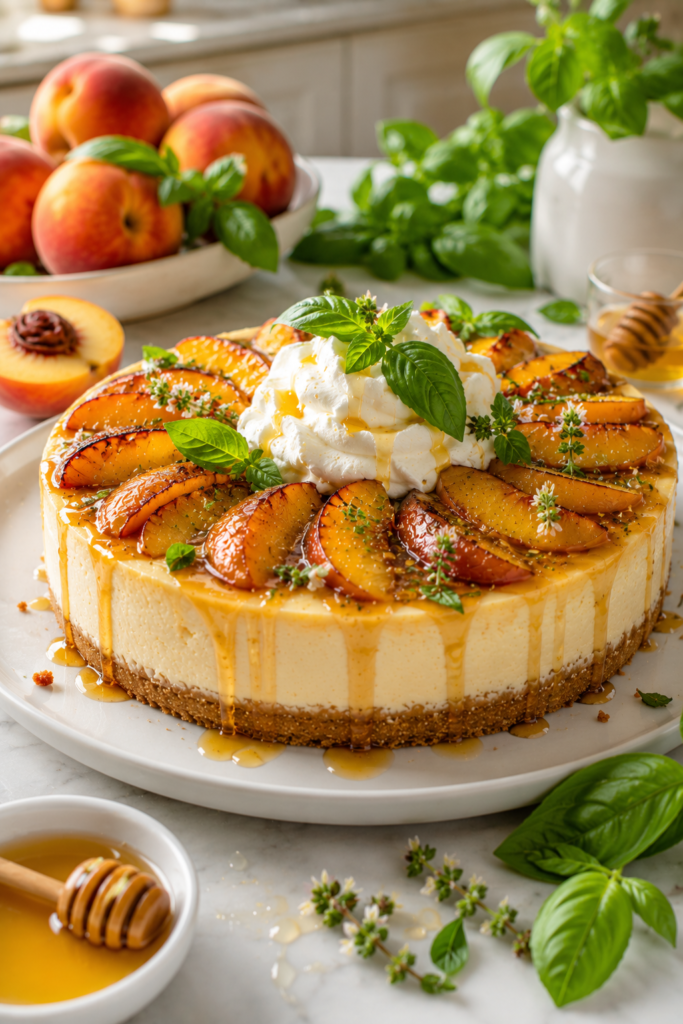
An unexpected but genuinely good pairing — basil’s slight pepperiness plays off peach the way it does in a good caprese-adjacent salad. Infuse cream with torn basil leaves, strain, then use that cream in the batter, and finish with a few fresh basil ribbons over the peach topping.
No-Bake Peach Cheesecakes
7. Classic No-Bake Peach Cheesecake
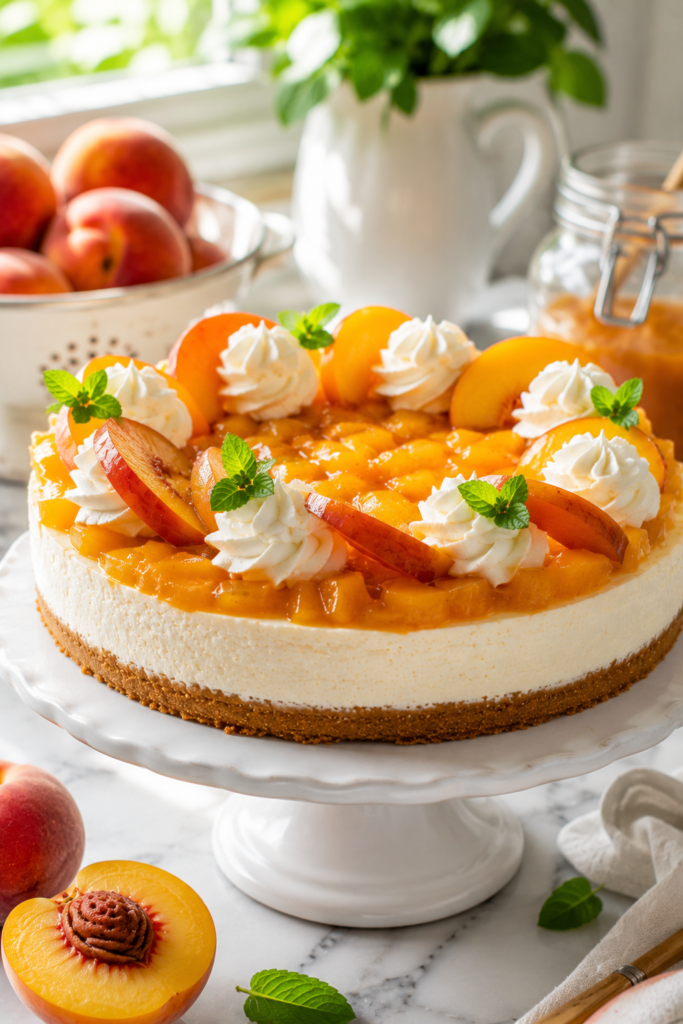
For hot weather when turning on the oven isn’t appealing. Relies on gelatin or a high enough ratio of whipped cream to cream cheese to set properly without heat. The peach layer here should be a cooked-down compote, not raw fruit, since raw peach water will prevent the filling from setting firm.
8. No-Bake Peach Cheesecake Parfaits
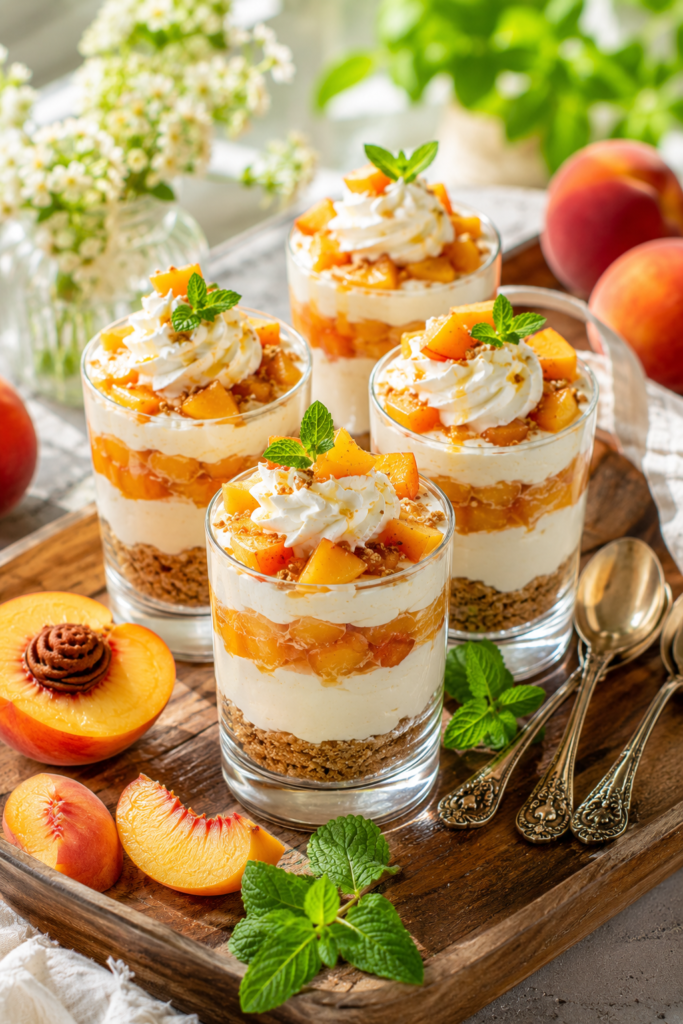
Layered in glasses rather than a pan — crushed graham crackers, whipped cheesecake filling, peach compote, repeated. No structural concerns about slicing cleanly, which makes this one of the more forgiving formats for beginners.
9. Peach Mango No-Bake Cheesecake
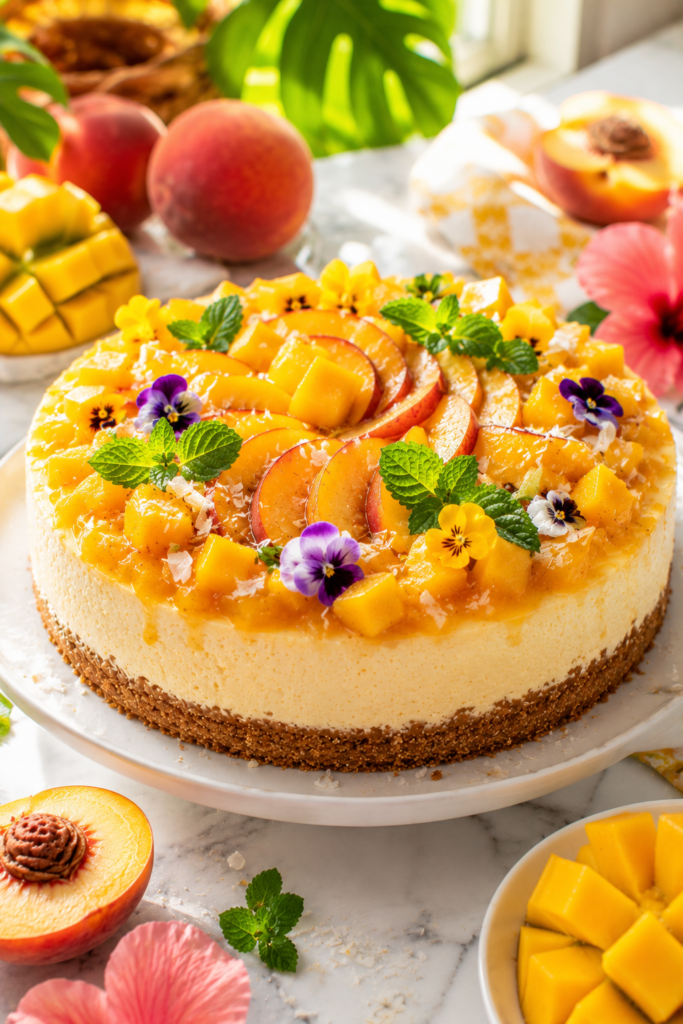
Two stone-fruit-adjacent flavors that share a similar sweetness profile, blended into one compote layer. The mango adds a tropical note without overpowering the peach.
10. Frozen Peach Cheesecake (Icebox Style)
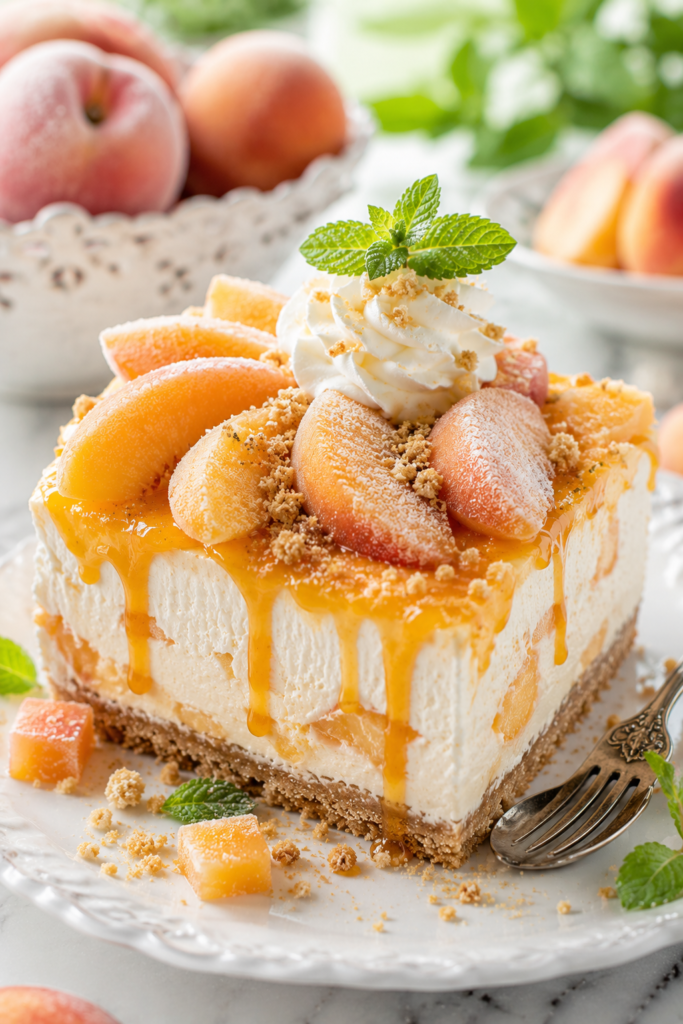
Set in the freezer rather than the fridge, this one has a texture closer to a semifreddo than a traditional cheesecake. Best served slightly softened, about 10 minutes out of the freezer before slicing.
Bars, Cups, and Individual Portions
11. Peach Cheesecake Bars
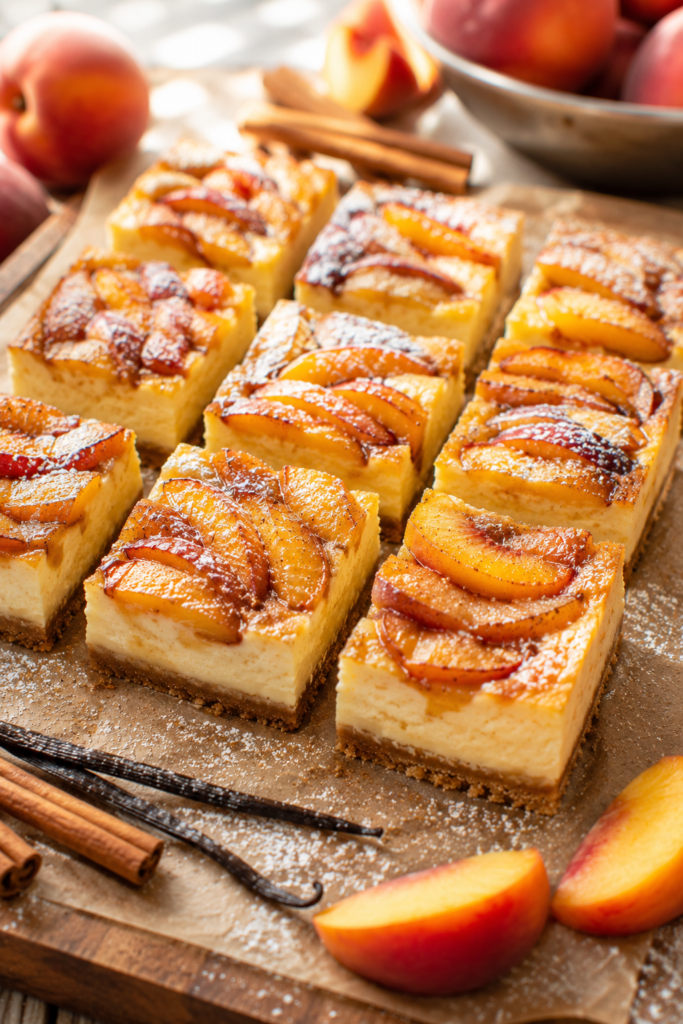
A sheet-pan format that bakes faster and slices into neat squares — genuinely useful for potlucks or when you need portion control. The crust-to-filling ratio is usually higher than a traditional cheesecake, so it holds together well without a springform pan.
12. Mini Peach Cheesecakes (Muffin Tin)
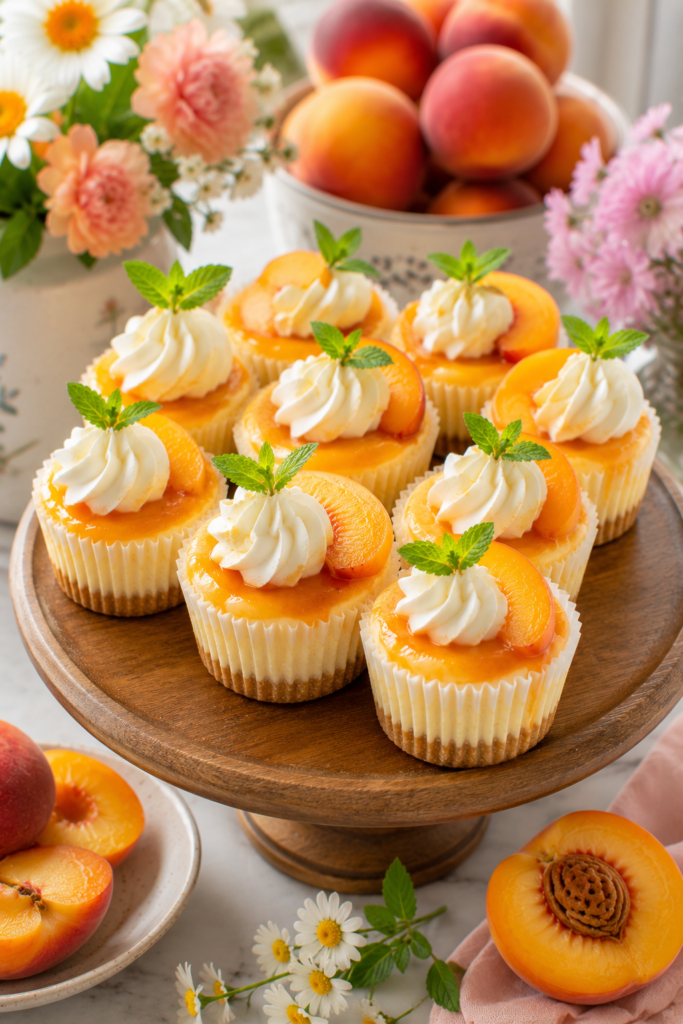
Baked in a lined muffin tin with a vanilla wafer as the entire crust (no pressing or pre-baking needed). These bake in about 18–20 minutes and don’t need a water bath since the smaller volume cooks evenly on its own.
13. Peach Cheesecake Stuffed Cookies
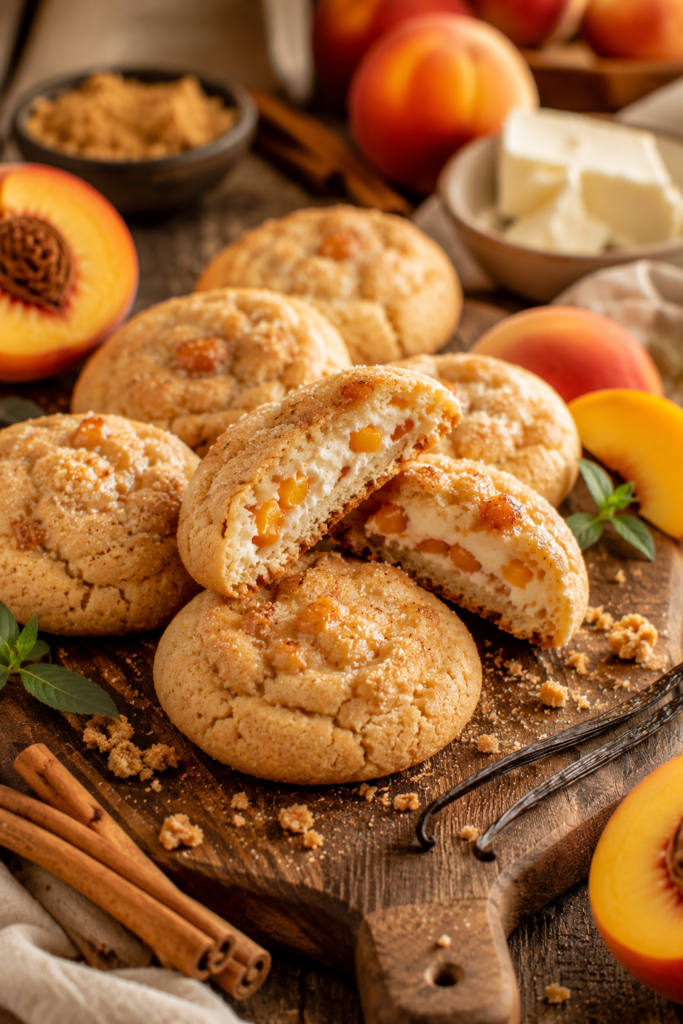
A softer, cookie-adjacent format: a brown sugar cookie dough wrapped around a small disc of frozen peach cheesecake filling, baked until the outside sets but the center stays soft. Freezing the filling discs ahead of time is essential — without that step, the filling melts out during baking.
14. No-Bake Peach Cheesecake Cups (Jars)
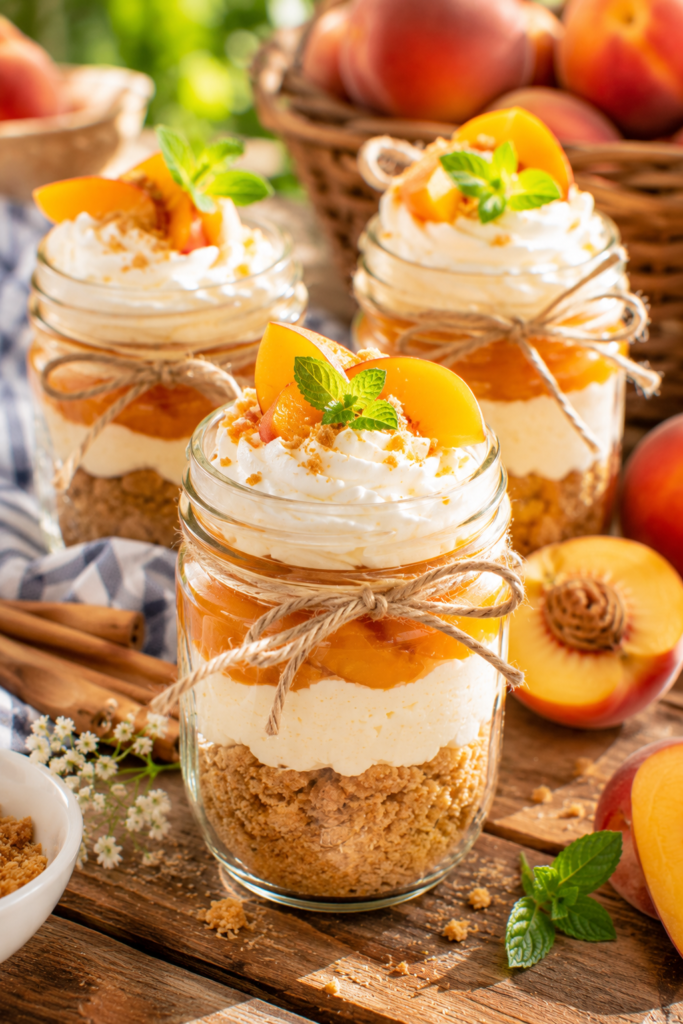
Similar to the parfait but designed to be sealed and transported — mason jars with layered crust, filling, and compote. Good make-ahead option since they hold well in the fridge for 3–4 days without the presentation degrading.
Less Conventional Formats
15. Peach Cheesecake Ice Cream
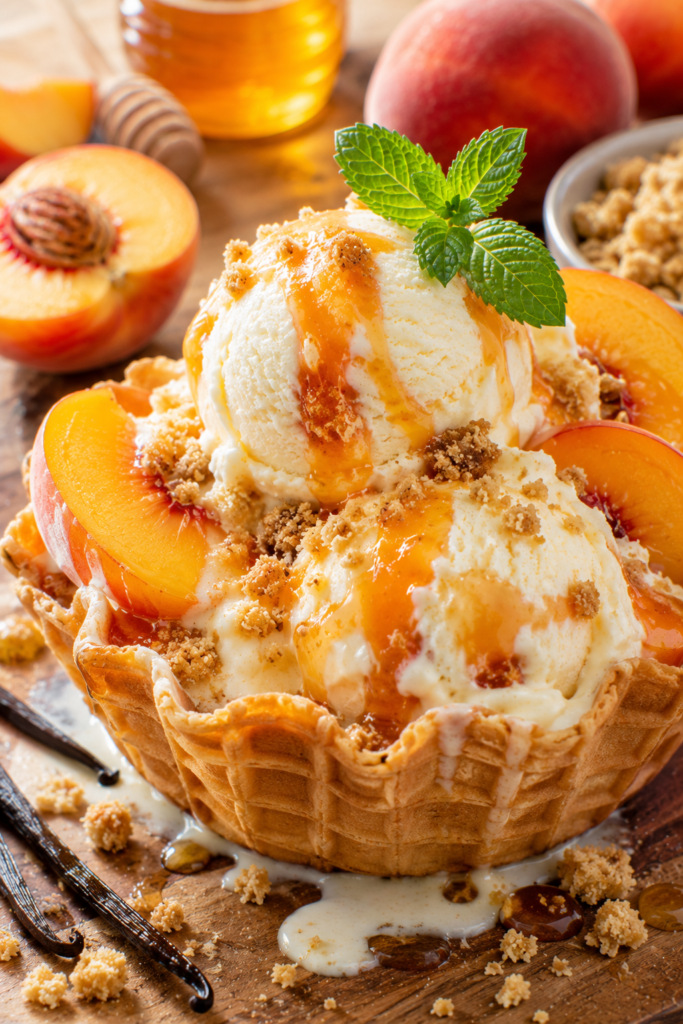
Takes the flavor profile into churned ice cream territory: a cream cheese-based custard base swirled with peach compote and crushed graham cracker. Needs an ice cream maker, and the compote should be cold before swirling in, or it will partially melt the ice cream base.
16. Grilled Peach Cheesecake Skewers
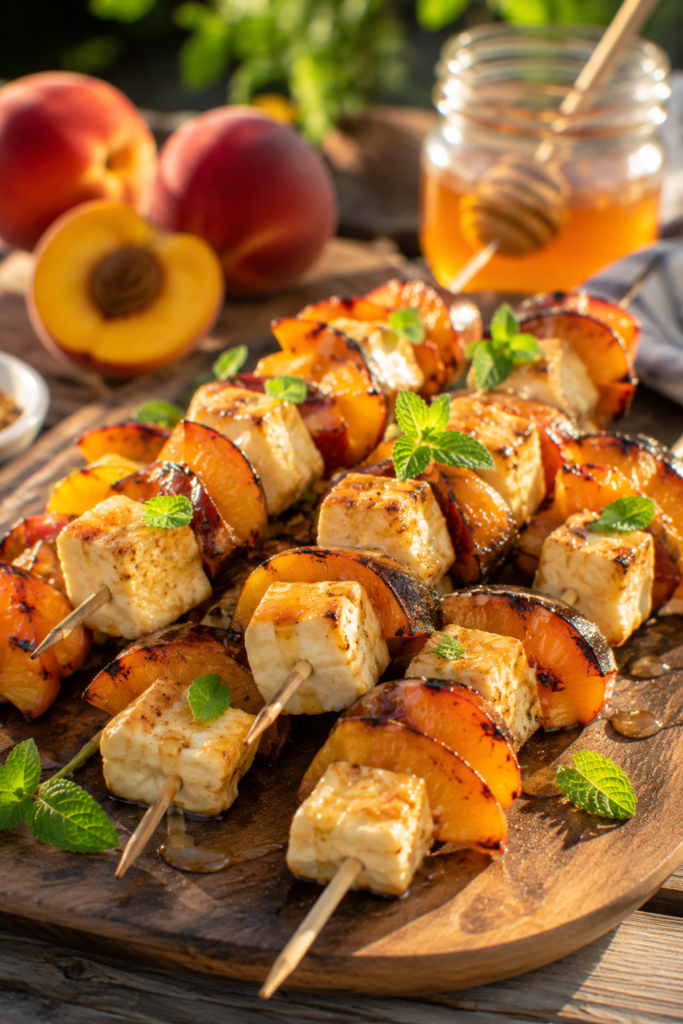
An appetizer-adjacent take — cubes of no-bake cheesecake alternated with grilled peach wedges on skewers, finished with a drizzle of honey. More of a summer-party format than a traditional dessert course.
17. Peach Cheesecake Stuffed French Toast
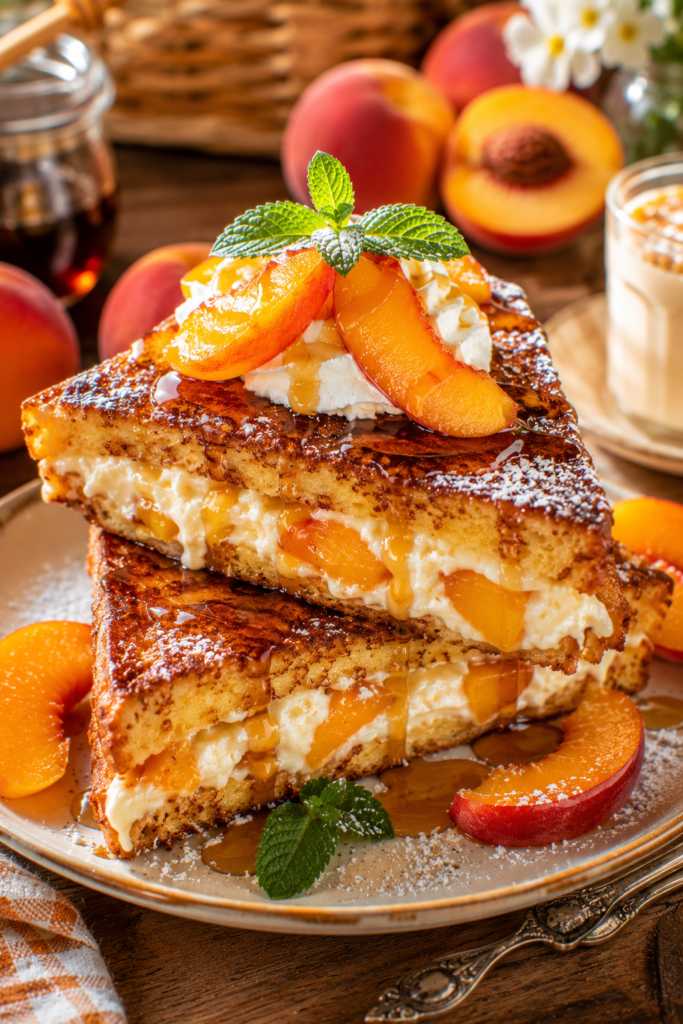
A brunch crossover: thick bread slices stuffed with a lightly sweetened cream cheese filling and diced peaches, then cooked French-toast style. Not a “cheesecake” in the traditional sense, but it hits the same flavor notes for a morning version.
18. Vegan Peach Cheesecake (Cashew-Based)
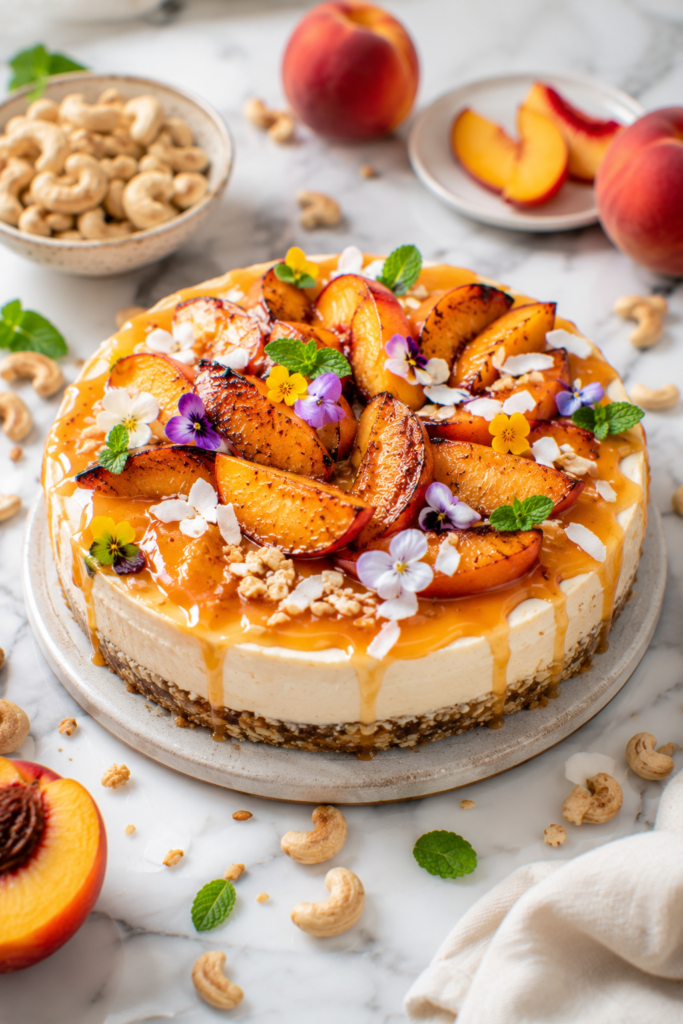
Built on soaked, blended cashews instead of dairy cream cheese, set with coconut cream and a bit of lemon juice for tang, and usually finished no-bake since the base doesn’t behave the same way under heat as dairy. The peach topping technique (roasted or reduced compote) carries over unchanged from the dairy versions.
Frequently Asked Questions
Can I use canned peaches instead of fresh? Yes, with adjustments. Canned peaches are already soft and packed in syrup, so drain them well and pat dry before using, and reduce added sugar elsewhere in the recipe since the syrup adds sweetness. They work best in a cooked-down compote rather than as a raw topping, since their texture is already past the point of holding a clean slice shape.
Why did my peach cheesecake crack in the oven? Almost always one of three things: overbeating the batter (too much air), baking without a water bath or humidity source, or cooling too fast by taking it straight from the oven to the fridge. Address those three and cracking mostly goes away.
How do I keep the crust from getting soggy under a peach topping? Add the peach layer after the cheesecake has fully cooled and set, not before or during baking. If a recipe calls for peaches mixed into the batter itself, make sure the peaches are cooked down into a thick compote first — raw peach water is the usual culprit.
Do I need a springform pan? For a full-size cheesecake, yes — it’s the only reliable way to remove a delicate baked filling without breaking it. For bars, cups, parfaits, or minis, you don’t need one at all.
Can I make any of these ahead of time? Cheesecake generally improves with an overnight rest in the fridge — the texture firms up and the flavors settle. Most of the recipes above can be made 1–2 days ahead; the exceptions are the ice cream (best within a week) and anything with a fresh fruit garnish added right before serving, like the grilled skewers.
What’s the best peach variety for baking into cheesecake? Freestone peaches (where the flesh separates easily from the pit) are easier to work with for slicing and dicing. Clingstone peaches tend to be sweeter but are more work to prep. For compotes and purees where you’re blending or cooking the fruit down anyway, either works fine.
A Few Closing Notes
Peach season doesn’t last long enough to make all 18 of these in one summer, so it’s worth picking based on what you actually need: the classic version and bars cover most everyday occasions, the no-bake options solve for hot weather or no oven access, and the individual formats (minis, cups, parfaits) are the easiest to scale up or down for a crowd. Whichever version you start with, the fundamentals — room temperature ingredients, gentle mixing, a water bath, and a slow cooldown — matter more than the specific peach technique layered on top.