
20 Pastel Pink Birthday Party Decoration Ideas That Don’t Look Like a Pinterest Cliché
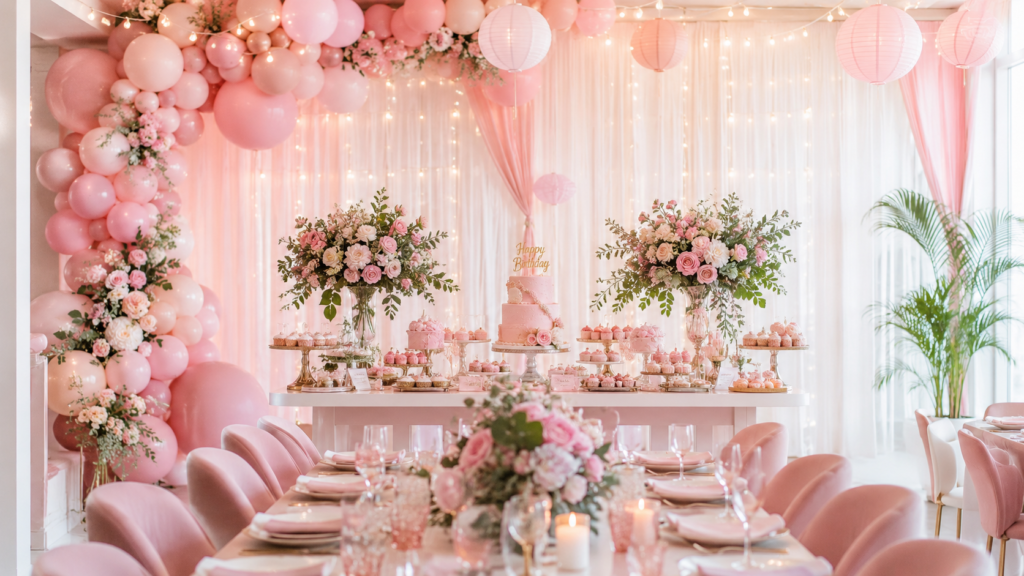
Pastel pink has a problem. Done wrong, it looks like a baby shower that wandered into the wrong party. Done right, it’s one of the most flattering, photogenic, and genuinely versatile color schemes you can build a birthday around for a first birthday, a sweet sixteen, or a 40th Pastel Pink Birthday Party Decoration Ideas brunch.
The difference almost never comes down to budget. It comes down to a handful of decisions about shade, texture, and contrast that most party planning guides skip over. This guide covers all of them, organized into twenty concrete decoration ideas you can mix and match depending on your space, age group, and budget.
Pick Your Pink Before You Pick Anything Else
Before balloons, before tablecloths, before a single Pinterest board, settle on which pastel pink you’re actually using. “Pastel pink” covers a wide range, and the shade you choose changes everything else.
- Blush pink — warm, slightly beige-leaning, reads sophisticated and works well for adult birthdays.
- Bubblegum pink — brighter and more saturated, leans youthful and energetic, ideal for kids’ parties.
- Dusty rose — muted and a little gray, photographs beautifully in both daylight and indoor lighting.
- Cotton candy pink — very pale and cool-toned, airy and soft, but can wash out in bright sunlight.
1. Build a one-page color reference before you shop. Pick one primary pink and one or two accent colors, then snap a swatch photo on your phone. Bring it with you (or pull it up) every time you order balloons, ribbon, or tableware online, because “pink” varies enormously between vendors, and mismatched pinks are the single most common reason a pastel party photographs as messy rather than cohesive.
Balloon Ideas That Don’t Look Like Every Other Balloon Arch
Balloons are the fastest way to fill a room with color, but they’re also the easiest decoration to get wrong. Uniform, same-size balloons in one shade of pink read flat in photos.
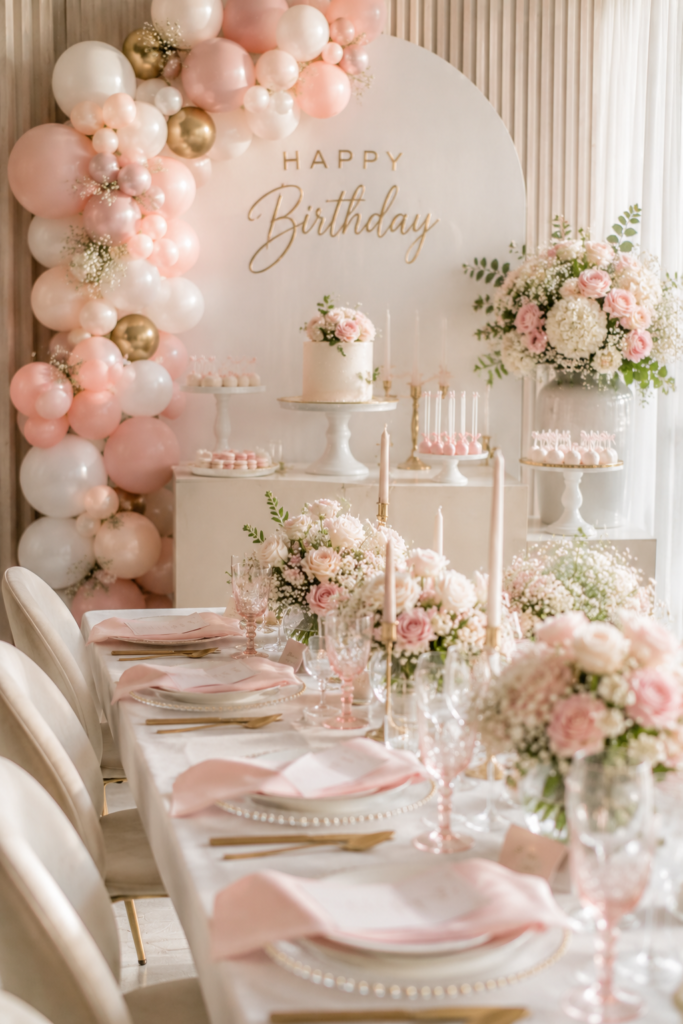
2. Organic balloon garland. Instead of a uniform balloon arch, use a mix of balloon sizes (5-inch, 11-inch, and one or two 18-inch) in two or three tonal pinks plus a neutral like white or champagne. Cluster them along a string or chicken-wire frame rather than a rigid arch shape. The size variation is what makes it look designed rather than store-bought.
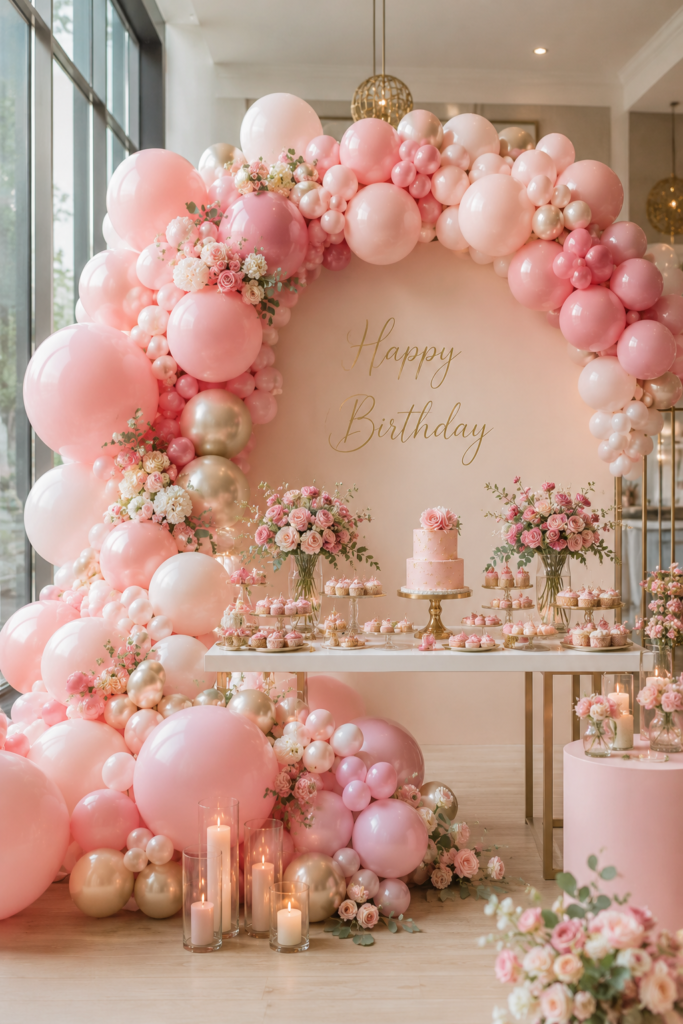
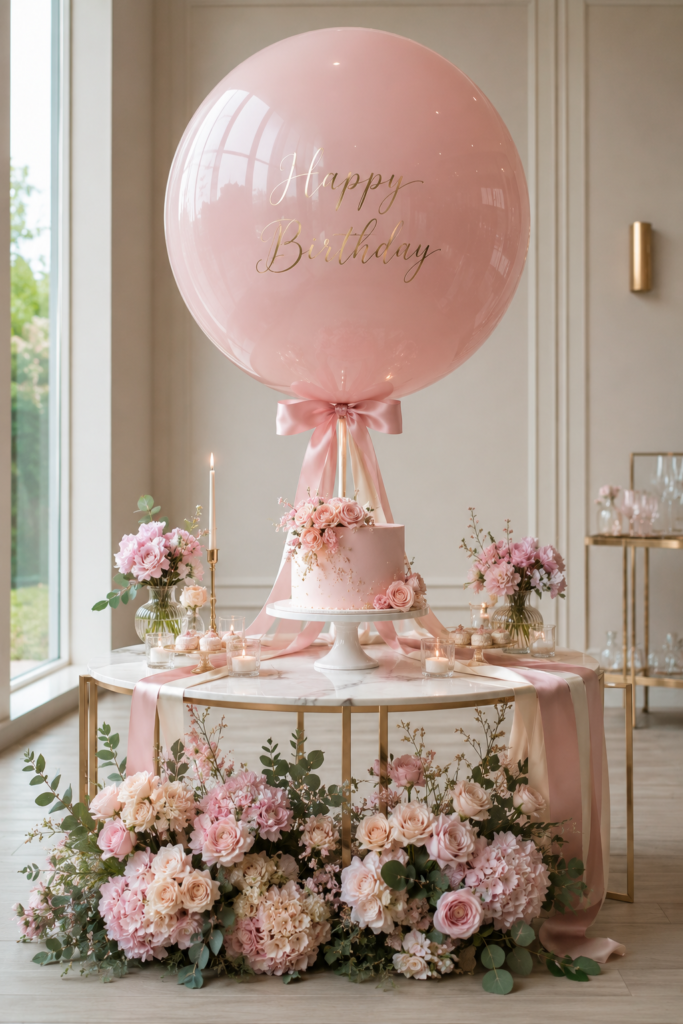
3. A single oversized statement balloon. One giant 36-inch pastel pink balloon, anchored low with a ribbon weight or tucked into a stand, does more visual work than a dozen small ones. Use it behind the cake table or as the centerpiece of a photo corner.
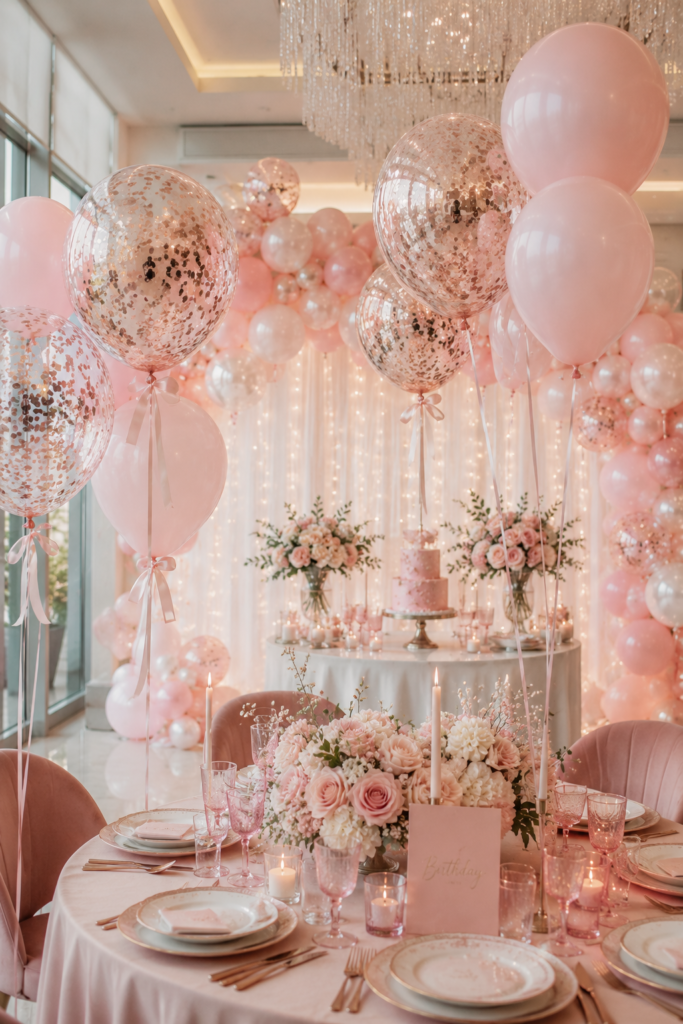
4. Confetti balloons as the contrast piece. Fill two or three clear balloons with gold or rose-gold confetti and place them among your solid pink ones. This breaks up what would otherwise be a wall of flat color and adds shimmer without adding more pink.
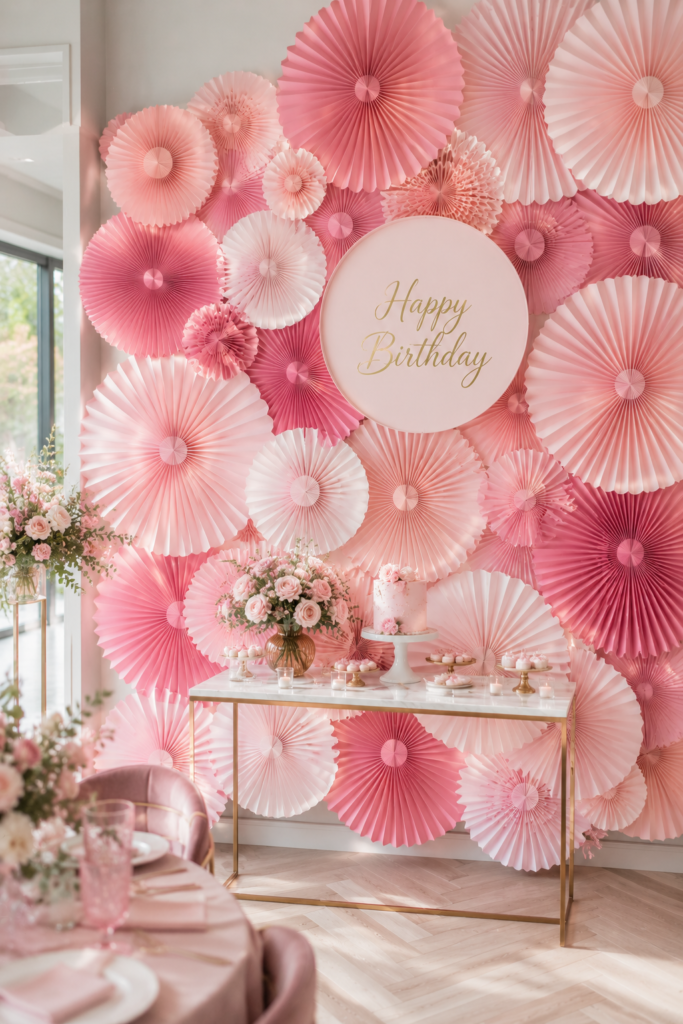
5. Balloon-free alternative: paper fans. If balloons feel overdone or you’re decorating outdoors where wind is an issue, pastel pink paper fans in varying sizes, fanned out on a wall, give a similar “filled space” effect without the helium logistics.
Backdrop and Photo Wall Ideas
Every party now has a photo moment, whether it’s a dedicated backdrop or just the cake table. These backdrops work because they add texture, not just color.
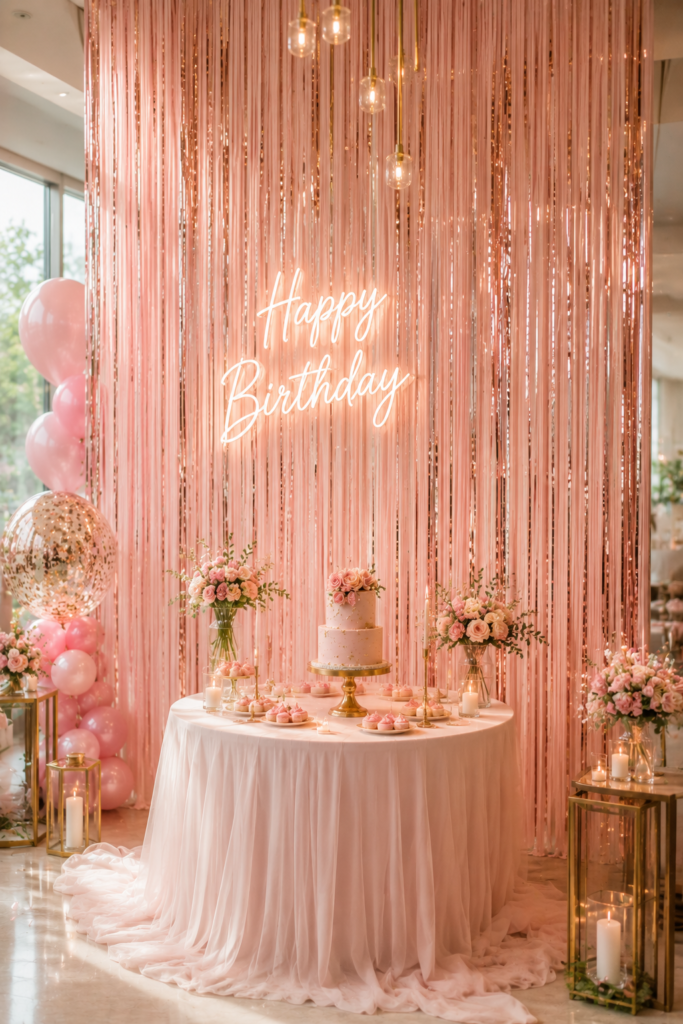
6. Fringe curtain backdrop. A metallic or matte pastel pink fringe curtain, hung floor to ceiling, gives instant texture and movement. It’s inexpensive, photographs well even in low light, and reads as polished rather than thrown together.
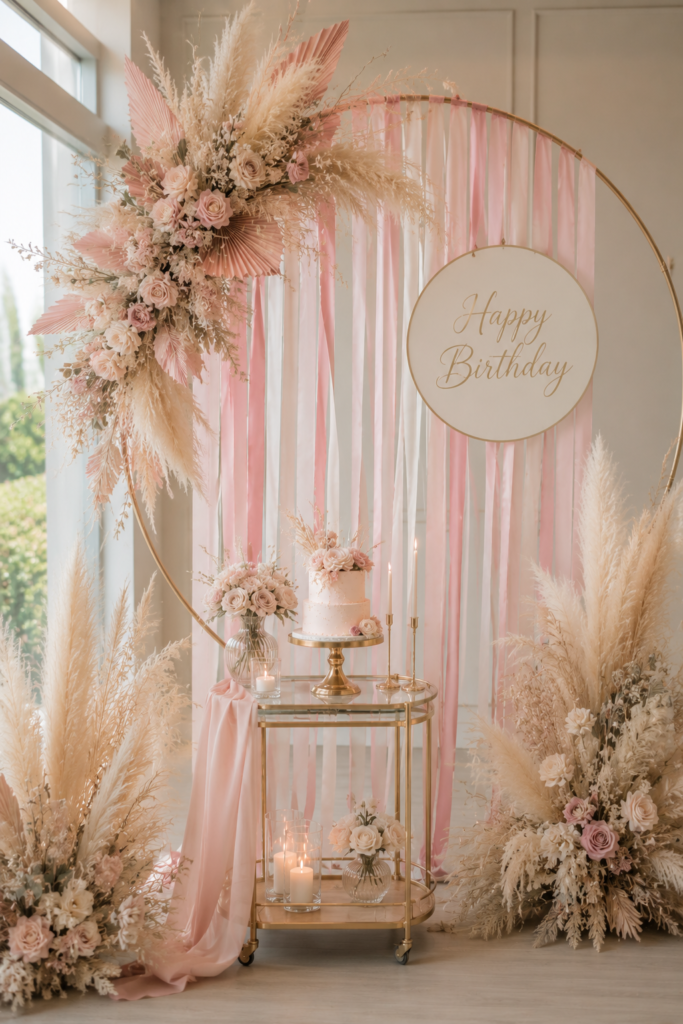
7. Pampas grass and pink ribbon wall. Dried pampas grass stems in cream and blush, paired with long pastel pink ribbon streamers, gives a softer, more grown-up backdrop than balloons alone. This pairing works particularly well for milestone adult birthdays where a kids’-party feel isn’t the goal.
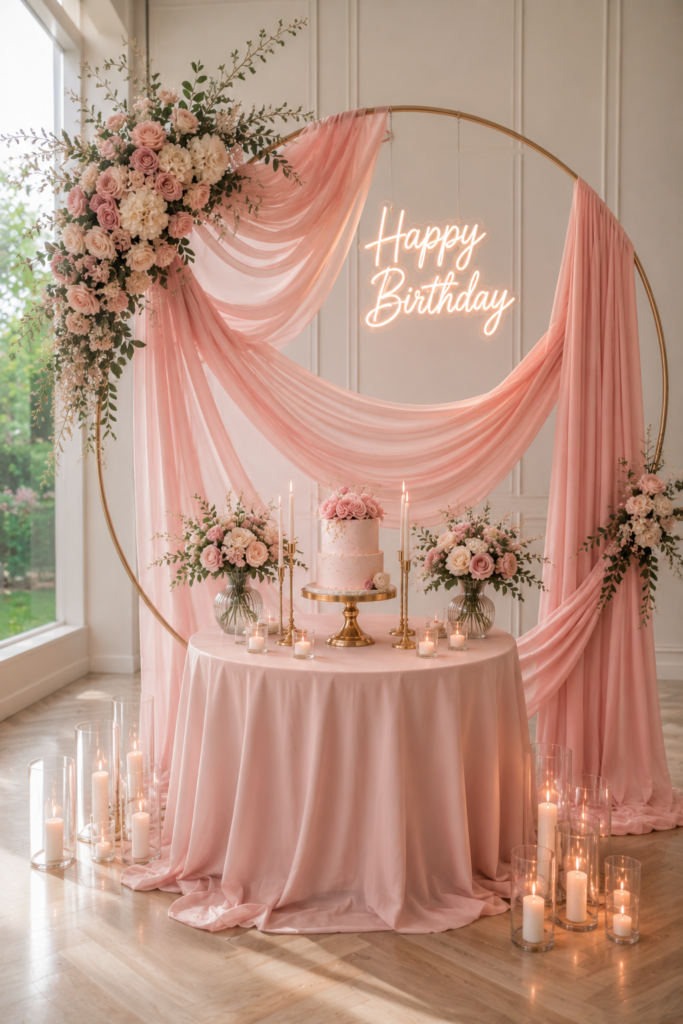
8. Fabric drape with a focal point. Drape lightweight pastel pink fabric (tulle or chiffon works better than satin, which can look stiff) asymmetrically across a wall or arch, and add one focal element in the center — a monogram, an age number, or a floral cluster.
Tablescape Ideas
The table is where guests spend the most time looking closely at your decor, so small details matter more here than anywhere else.
9. Layered tablecloth and runner. Use a neutral base tablecloth (white, cream, or champagne) with a pastel pink table runner down the center, rather than covering the whole table in pink. This keeps the look from feeling overwhelming and gives you a clean surface for food and place settings.
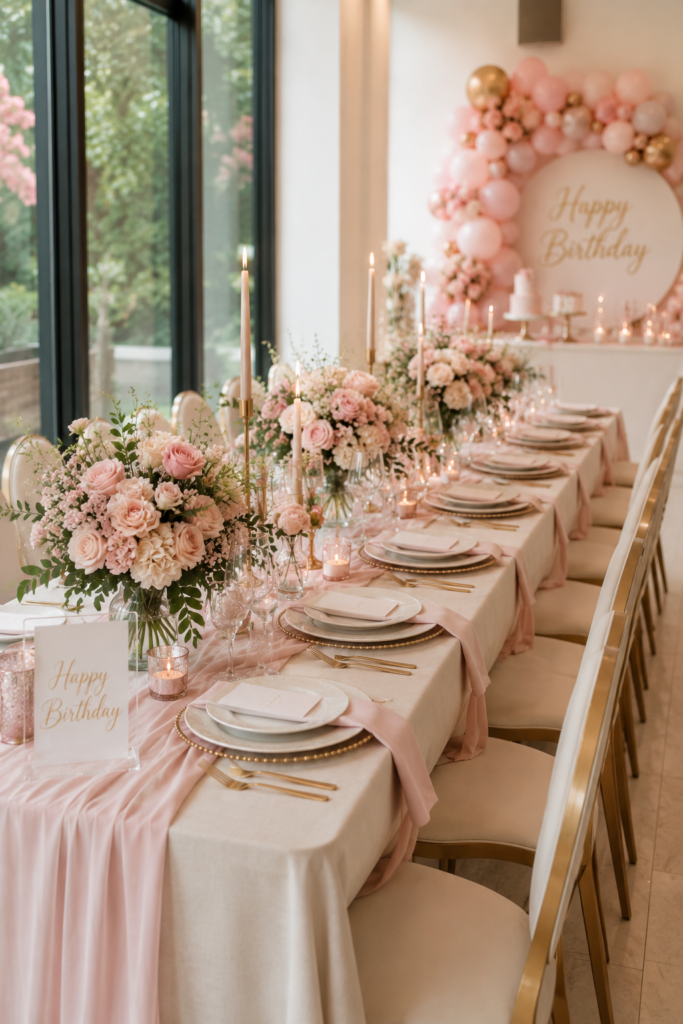
10. Pink glassware as the statement piece. Pink-tinted glassware or goblets are one of the easiest ways to add color at eye level without touching the food presentation. They photograph beautifully with natural light coming through them.
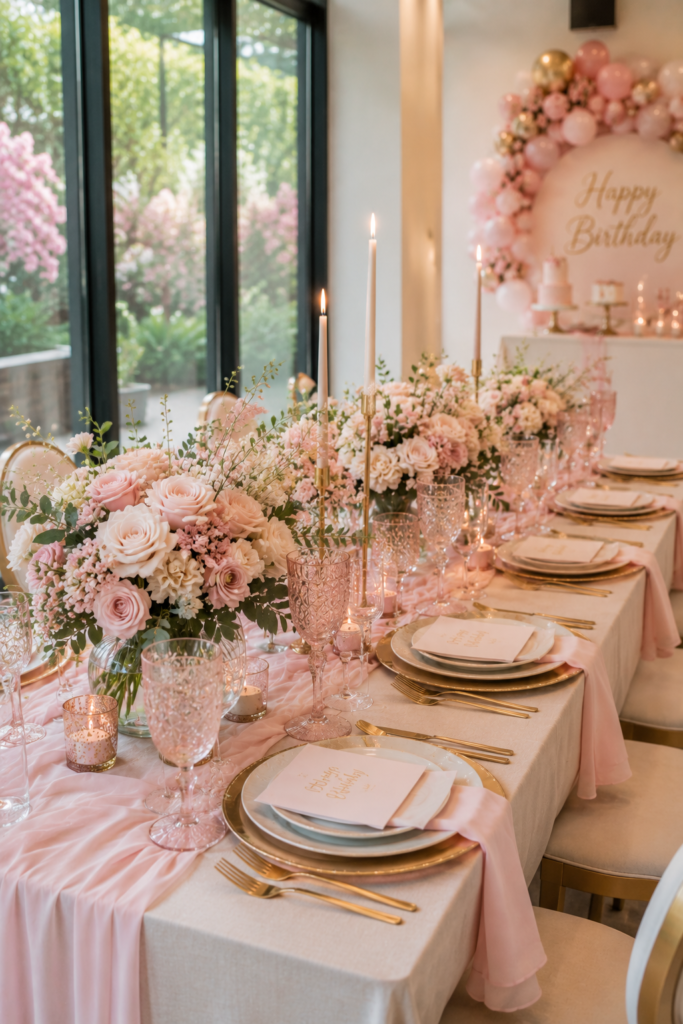
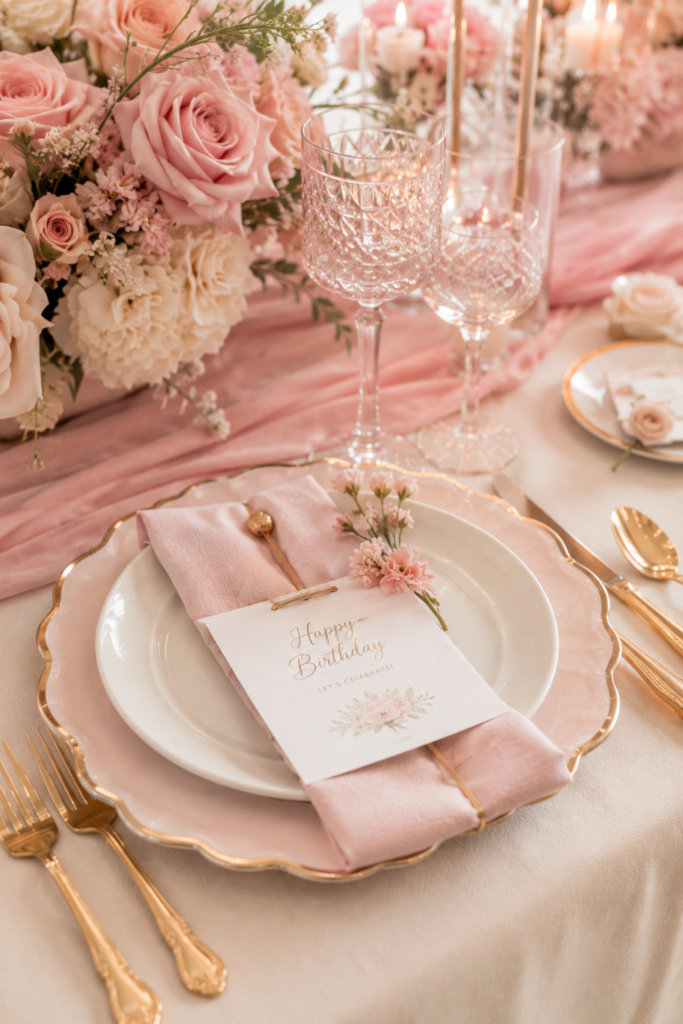
11. Charger plates with texture. A textured charger — rattan, scalloped ceramic, or even a simple pleated paper charger — under each place setting elevates a pastel pink table instantly. It’s a small cost per setting that makes a disproportionate visual difference.
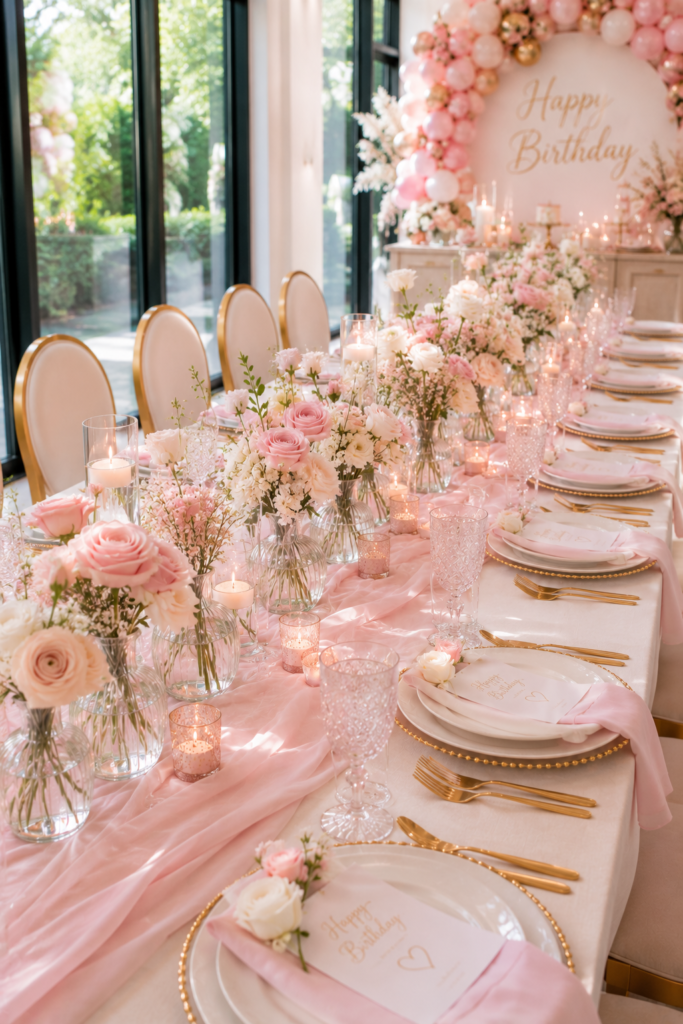
12. Low floral centerpieces in glass bud vases. Cluster three to five small bud vases with single stems (ranunculus, spray roses, or carnations in blush and white) down the table instead of one large arrangement. Guests can actually see and talk across the table, and it’s significantly cheaper than one large centerpiece.
Lighting Ideas
Lighting changes how every other pastel pink element in the room reads, especially after sunset.
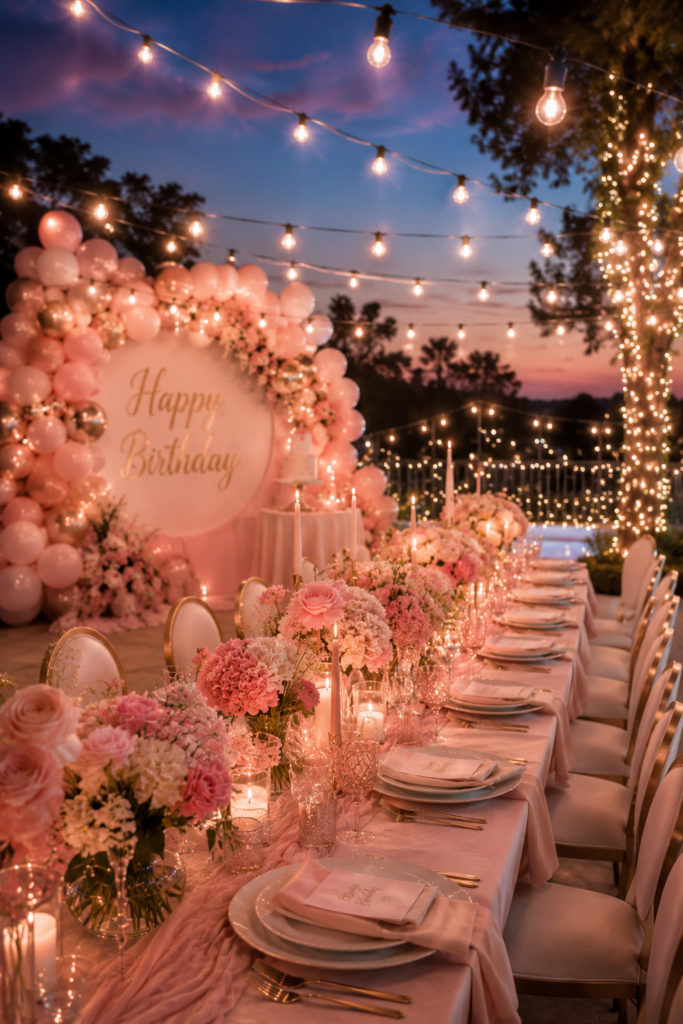
13. Warm string lights, not cool-white. Pastel pink decor under cool, bluish LED lighting tends to look washed out and slightly gray. Warm white (2700K, if you’re buying bulbs) or amber-toned string lights make pinks look warmer and more saturated without changing a single decoration.
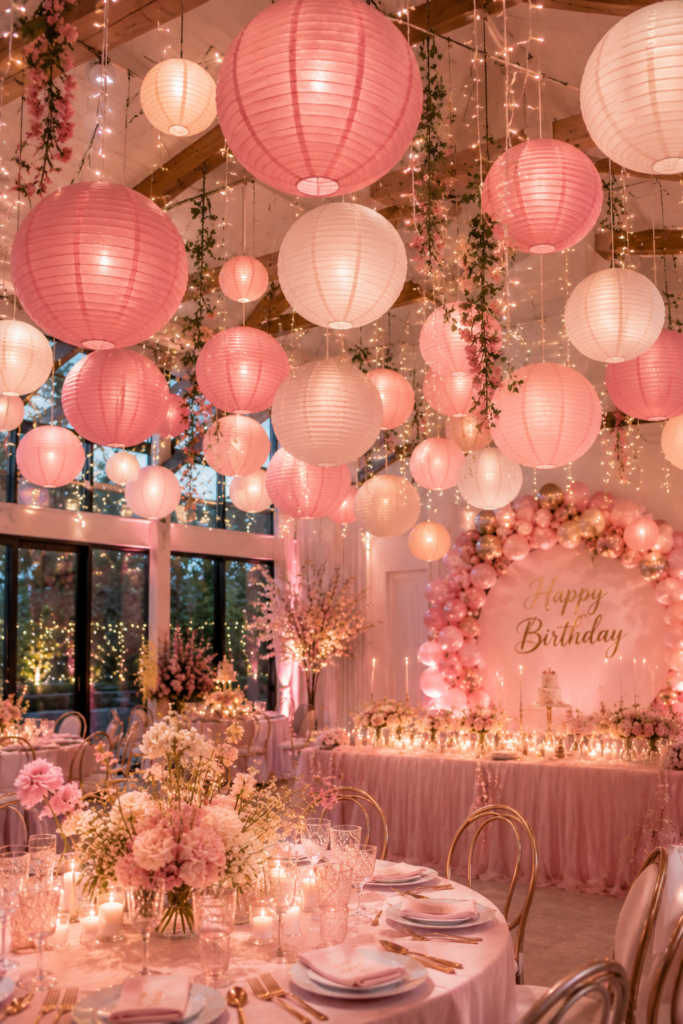
14. Paper lanterns in graduated pink tones. Hang paper lanterns in three or four shades, from pale blush to deeper rose, at varying heights. The graduated color does more visual work than a single uniform shade and adds dimension overhead, where most parties leave dead space.
Cake and Dessert Table Ideas
15. A tonal dessert table. Instead of matching every dessert to the exact same pink, vary the shades across your treats — blush macarons, deeper pink frosting, white chocolate-dipped pretzels — against a single-color backdrop. The backdrop provides cohesion; the desserts provide the variation.
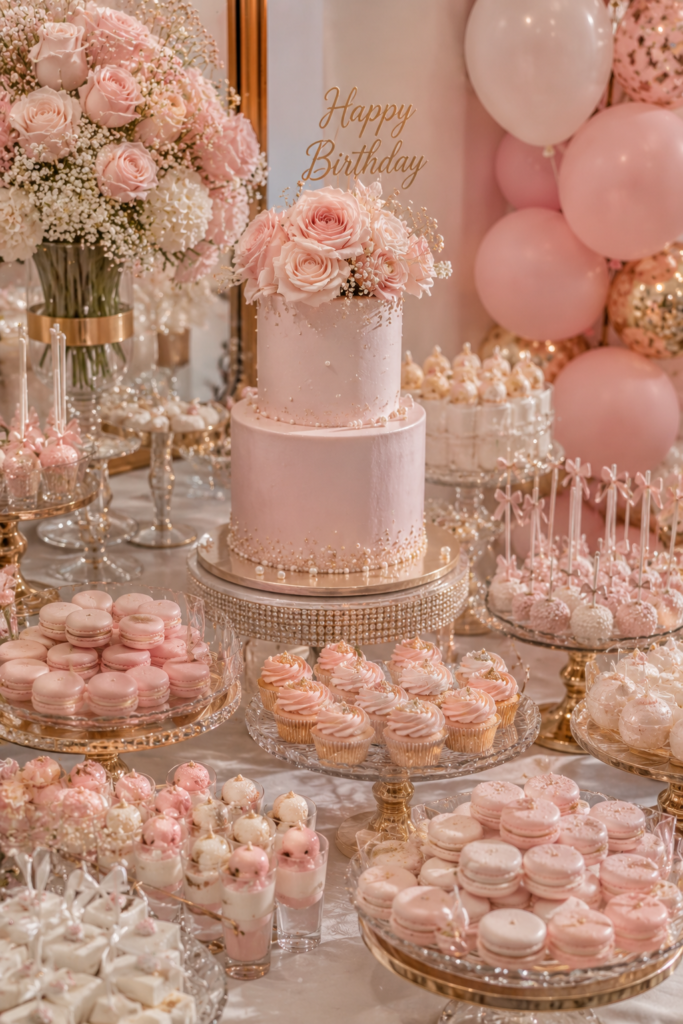
16. Cake stands at different heights. Use risers or stacked books under a tablecloth to vary the height of your dessert stands. A flat dessert table reads as an afterthought; a tiered one reads as a designed display, even with the same desserts.
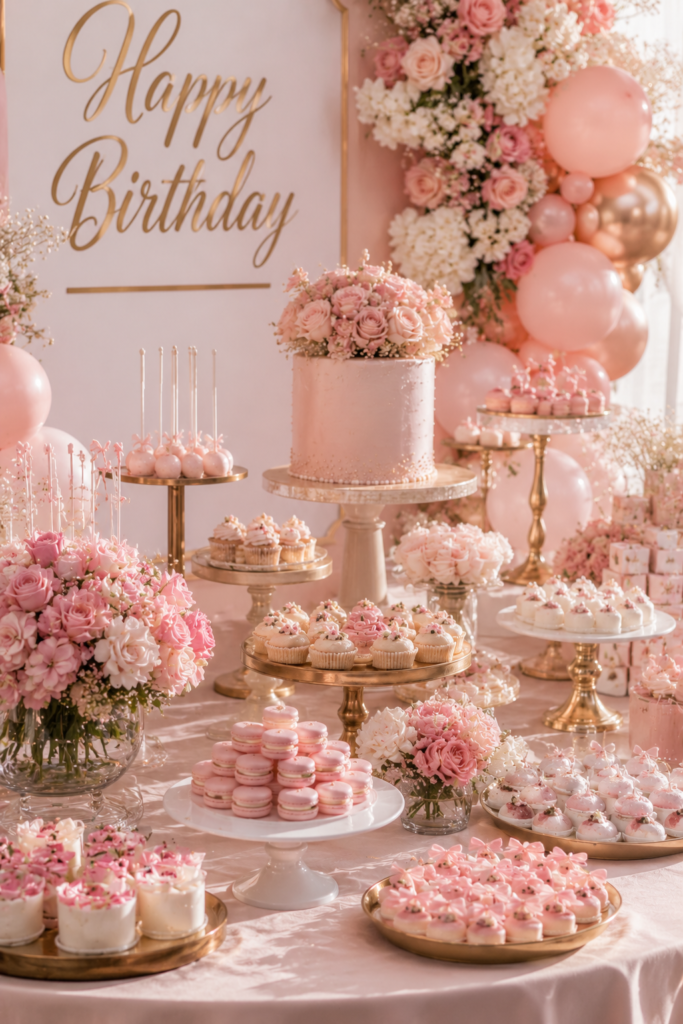
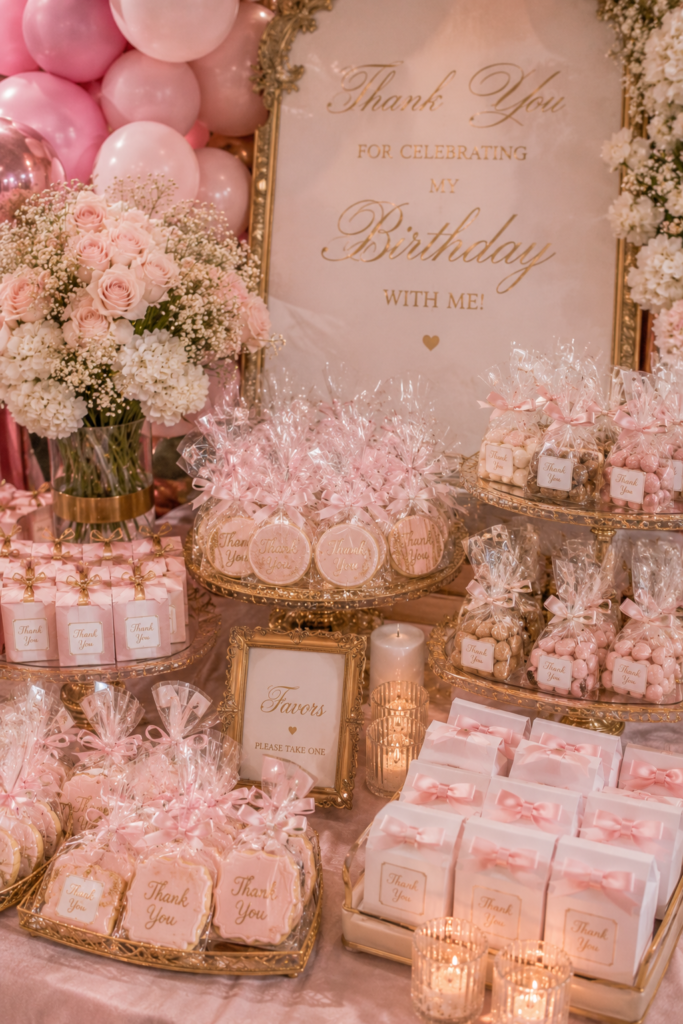
17. Edible favors instead of trinkets. Small individually wrapped cookies or chocolates in pastel pink packaging double as a dessert table element and a take-home favor, which solves two decoration problems at once and tends to get used rather than thrown away.
Floral and Greenery Pairings
Pure pastel pink, with nothing to break it up, can start to feel flat after about ten minutes in a room. Greenery and neutral florals are what keep it from feeling like a single block of color.
18. Pair pink with sage or eucalyptus greenery. Sage green is pastel pink’s most reliable partner. It’s muted enough not to compete, and it shows up beautifully in both fresh and dried arrangements. Eucalyptus garland along a table runner or backdrop frame does the same job at a lower cost than fresh florals.
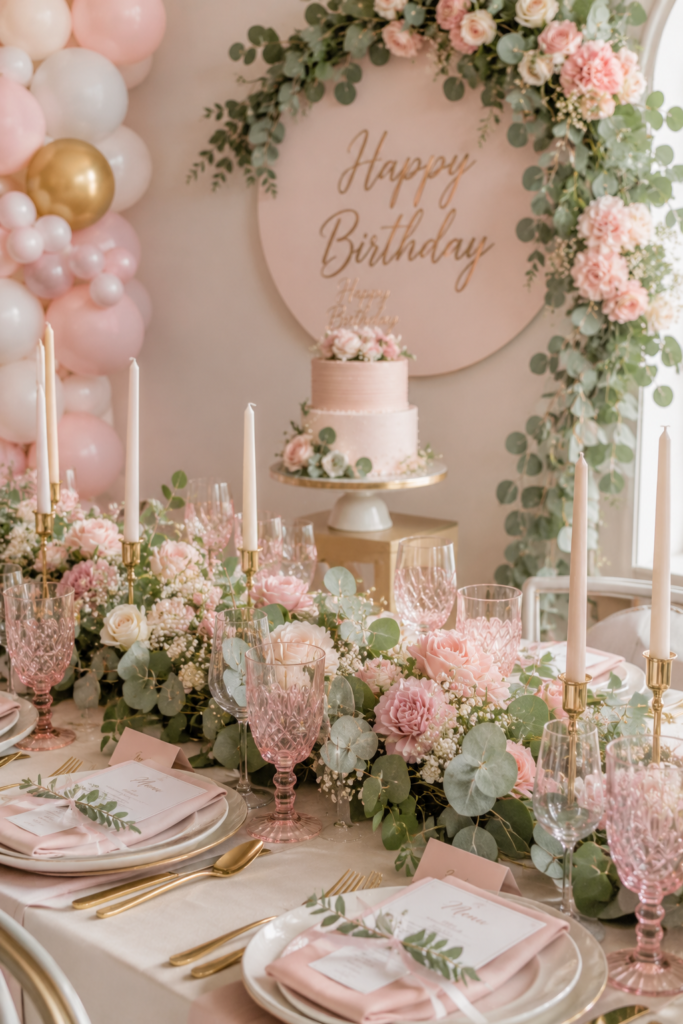
19. Use white or cream as your breathing room. Every successful pastel pink party has somewhere for the eye to rest — a white tablecloth, cream ribbon, or ivory chair covers. Without a neutral, the pink starts to feel loud rather than soft, which defeats the point of choosing a pastel in the first place.
A Budget DIY Option
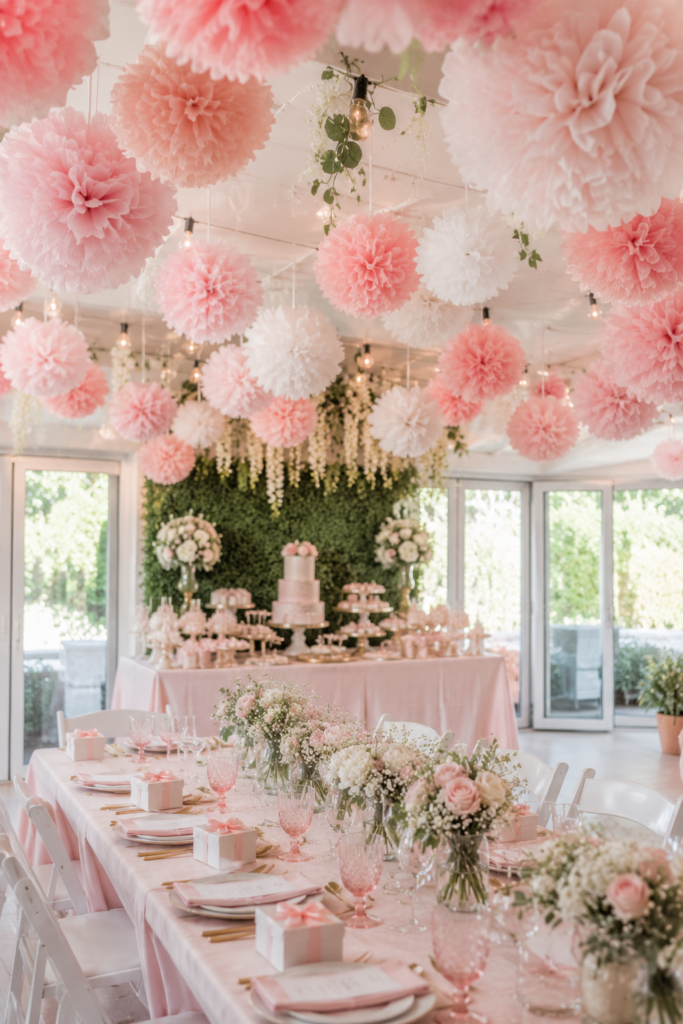
20. Tissue paper pom-poms. They’re inexpensive, take about ten minutes each to make once you’ve got the folding technique down, and they fill visual space (ceilings, doorways, the backs of chairs) better per dollar than almost any other decoration on this list. Mix two pink shades with one white pom-pom for every three or four pink ones, for the same tonal variation principle used throughout this guide.
Mixing Pastel Pink With an Accent Color
A pure pastel pink party, with no second color at all, is harder to pull off well than it looks. Here’s how four common accent pairings change the overall feel:
| Accent Color | Mood | Works Best For |
|---|---|---|
| Sage green | Soft, garden-party, slightly grown-up | Milestone birthdays, spring/summer parties |
| Gold or rose gold | Glamorous, celebratory | Sweet sixteens, adult milestone birthdays |
| Dusty blue | Unexpected, calm, modern | Gender-neutral first birthdays, minimalist themes |
| Terracotta | Warm, earthy, less “girly” | Outdoor or garden parties, fall birthdays |
A good rule of thumb: use your pastel pink as roughly 60% of the visible color, your accent as 30%, and a neutral (white or cream) as the remaining 10%. Parties that go heavier on pink than that tend to feel overwhelming in photos, even when they look fine in person.
Adjusting Pastel Pink for Different Ages
The same color palette needs different execution depending on who the party is for.
First birthdays can lean into brighter bubblegum pink with simple shapes — balloons, soft fabric bunting — since the decor is largely a backdrop for photos of a one-year-old, not a sophisticated design statement.
Tween and teen birthdays (sweet sixteens included) generally look better with dustier, more saturated pinks paired with metallics like gold or rose gold, since overly pale, baby-adjacent pinks can feel like a mismatch with an older guest of honor.
Adult milestone birthdays (30th, 40th, 50th) tend to work best with blush or dusty rose as a sophisticated neutral-adjacent color, paired with deeper greenery or black accents to keep the palette from skewing too sweet.
Realistic Budget Ranges
Costs vary enormously by region and how much you DIY versus buy pre-made, but as a general guide:
- Balloons and basic décor (DIY): typically the lowest-cost category, especially with tissue paper and dollar-store balloon kits.
- Backdrops (fringe, fabric, or floral): mid-range, and the single biggest visual upgrade for the money if you’re choosing where to spend.
- Fresh florals: the most expensive per-item category; dried or silk alternatives can deliver 70–80% of the visual impact at a fraction of the cost.
- Tableware and glassware: ranges widely depending on whether you buy disposable, rent, or invest in reusable pieces for future parties.
If you’re working with a tight budget, prioritize the backdrop and lighting over the table settings — most party photos are taken standing in front of a backdrop, not seated at the table.
Common Mistakes to Avoid
Using only one shade of pink. It looks flatter in photos than it does in person. Always include at least two tonal variations plus one neutral.
Skipping a neutral or accent color entirely. An all-pink room with nothing to break it up tends to read as overwhelming rather than elegant, especially in photos with flash.
Cool-toned lighting. Blue-leaning LED lights make pastel pink look gray and tired. Warm white or amber lighting is almost always the better choice.
Matching pink across vendors without checking swatches. Balloon pink, fabric pink, and floral pink rarely match perfectly out of the box. A quick swatch check before ordering saves a lot of last-minute scrambling.
Forgetting outdoor lighting conditions. Pale pastel pinks, especially cotton candy shades, can wash out almost completely in direct midday sun. If your party is outdoors and during the day, lean toward slightly more saturated pinks than you would for an indoor evening event.
Frequently Asked Questions
What’s the best shade of pastel pink for outdoor daytime parties? Slightly more saturated shades like dusty rose or a warm blush hold their color better in direct sunlight than very pale cotton candy pink, which can wash out almost to white in bright light.
Does pastel pink work for a boy’s birthday party? Yes. Pairing pastel pink with dusty blue, sage green, or a strong neutral like charcoal shifts the palette away from a traditionally “girly” feel while keeping the soft, pastel quality intact.
How many balloon colors should I use in a pastel pink balloon garland? Two to three tonal pinks plus one neutral (white, champagne, or cream) typically looks more designed than a single uniform pink, which can read flat in photos.
What accent color pairs best with pastel pink for an adult birthday? Gold or rose gold for a more glamorous feel, or sage green for something softer and more garden-party in tone. Both photograph well in warm indoor lighting.
Is fresh or fake florals better for a pastel pink party? Fresh florals look slightly more luxurious but cost significantly more and won’t survive a long event. Good-quality dried or silk florals in blush and cream tones deliver most of the visual effect at a much lower cost and can be reused.
How do I keep a pastel pink party from looking too “baby shower”? Avoid pairing pastel pink exclusively with white and pale yellow, which is the classic baby-shower combination. Pairing it instead with deeper greenery, gold, or a bolder neutral like charcoal shifts the feel toward a birthday party rather than a shower.
What lighting works best for evening pastel pink parties? Warm white string lights (around 2700K) or amber-toned paper lanterns keep pinks looking warm and saturated. Cool white or blue-toned LEDs tend to make pastel pink look gray and washed out.
Can pastel pink decorations be reused for a different party theme later? Neutral elements like glass bud vases, charger plates, and string lights are easily reused. Color-specific items like balloons and tableware are harder to repurpose, so it’s worth investing more in the neutral, reusable pieces and treating the pink-specific décor as the lower-cost, disposable layer.
Pulling It All Together
The parties that make pastel pink look intentional, rather than like a default color choice, almost always share three things: more than one shade of pink, at least one contrasting neutral or accent color, and warm rather than cool lighting. Everything else on this list — balloons, backdrops, florals, tableware — is really just a way of applying those three principles to a specific budget and space.
Start with your color reference swatch, pick four or five ideas from this list that fit your venue and age group, and build outward from there rather than trying to use all twenty at once. A focused, well-executed handful of decorations will photograph better than a room crowded with every pastel pink idea on Pinterest.