
25 Anniversary Cake Decorating Ideas That Don’t Look Like Everyone Else’s
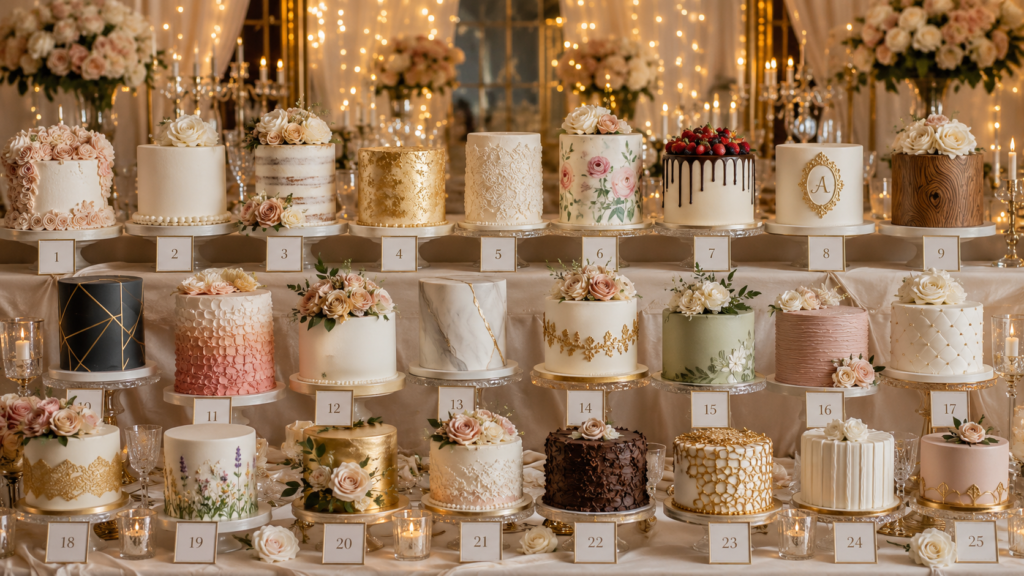
Looking for anniversary cake decorating ideas that actually feel personal instead of generic? You’re in the right place. Below are 25 anniversary cake decorating ideas covering everything from classic buttercream florals to modern minimalist tiers, rustic garden looks, metallic showstoppers, and sentimental personal touches so whether you’re planning a 1st anniversary or a 50th, you’ll find a design that fits the couple, not just the occasion.
I’ve decorated a lot of anniversary cakes. Some for my own family, most for friends who called me two weeks before the big day asking, “Can you just… make it nice?” That question is harder to answer than it sounds, because “nice” for a 5th anniversary looks nothing like “nice” for a 50th, and a couple who eloped in jeans wants something very different from a couple planning a vow renewal with a string quartet.
What I’ve learned, cake after cake, is that the best anniversary cakes aren’t the most complicated ones. They’re the ones that actually say something about the couple. A cake covered in intricate sugar flowers can still feel generic. A simple two-tier cake with the couple’s actual wedding date piped on in their handwriting can feel like the most personal thing in the room.
So instead of just listing 25 techniques, I’ve grouped these ideas by mood, because the decision that matters most isn’t “buttercream or fondant” — it’s “what does this couple actually want to feel when they see the cake?” Pick the section that fits, then borrow freely across the others.
Classic and Romantic Anniversary Cake Ideas
1. Ivory buttercream with a cascading floral spray This is the cake people picture when they hear “anniversary cake,” and there’s a reason it never goes out of style. A smooth ivory or soft champagne buttercream base with fresh or sugar flowers cascading down one side reads as timeless without trying too hard. If you’re working with fresh flowers, always confirm they’re food-safe and pesticide-free, or insert them into small floral picks so no stem touches the cake directly.
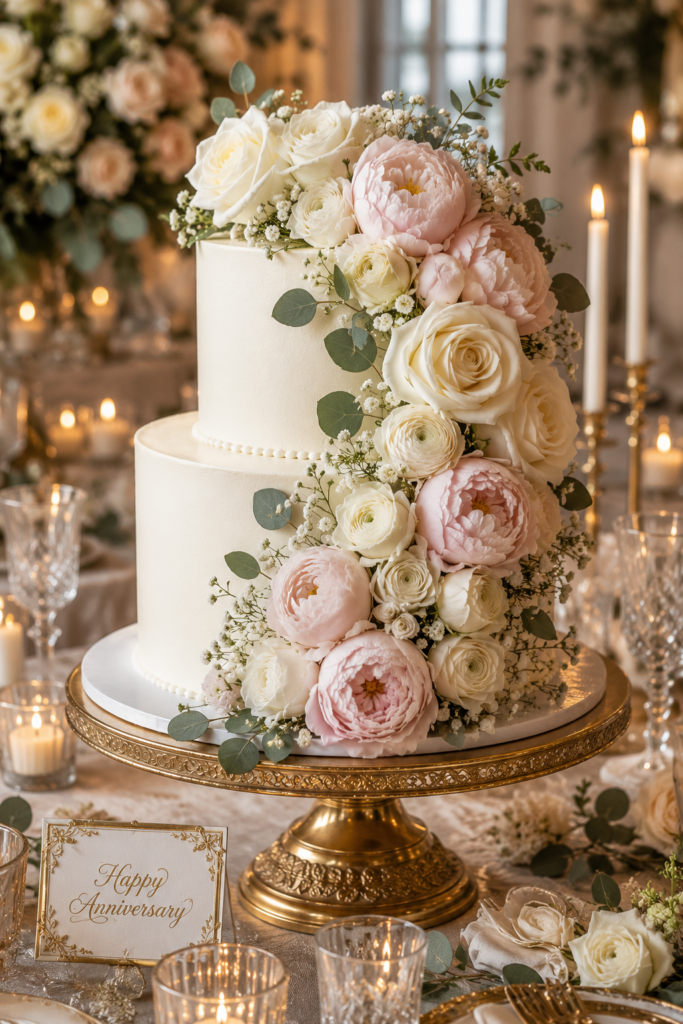
2. Lace-piped tiers Piped royal icing lace, done in a repeating pattern around the base of each tier, mimics the look of vintage lace without the cost of actual sugar lace appliqué. It takes patience — I’d budget two to three hours per tier the first time you try it — but a size 1 or 2 round piping tip and a steady hand get you most of the way there.
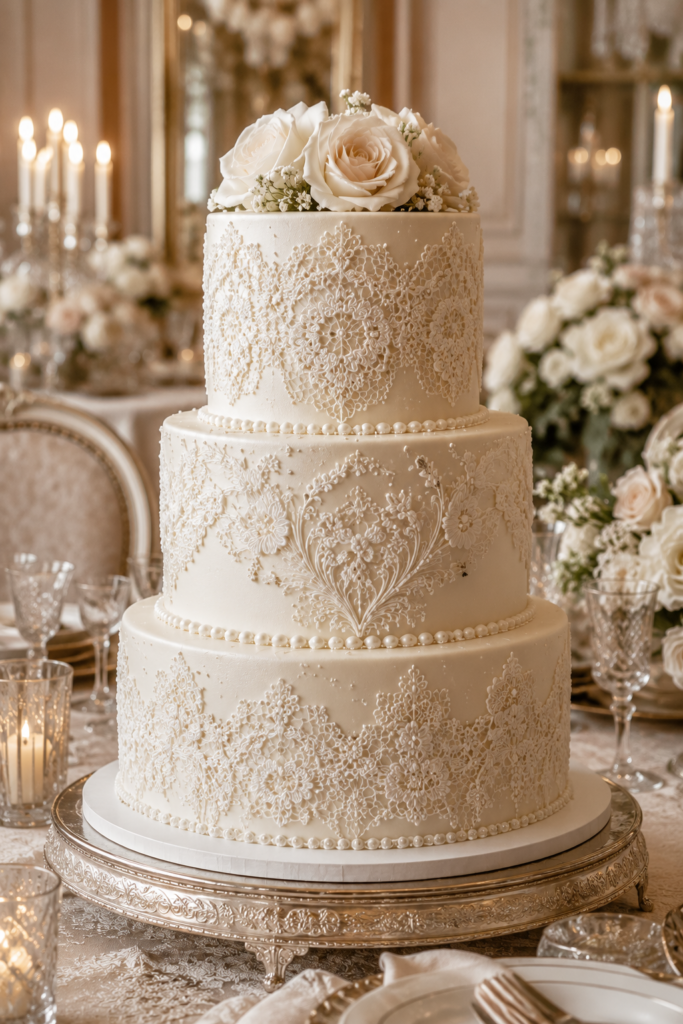
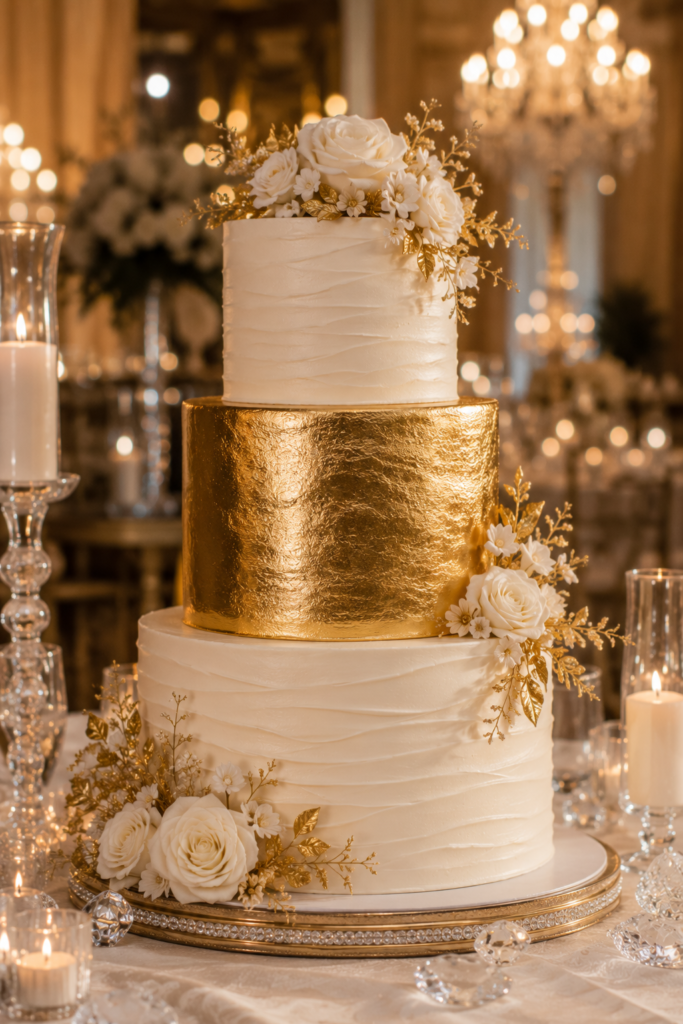
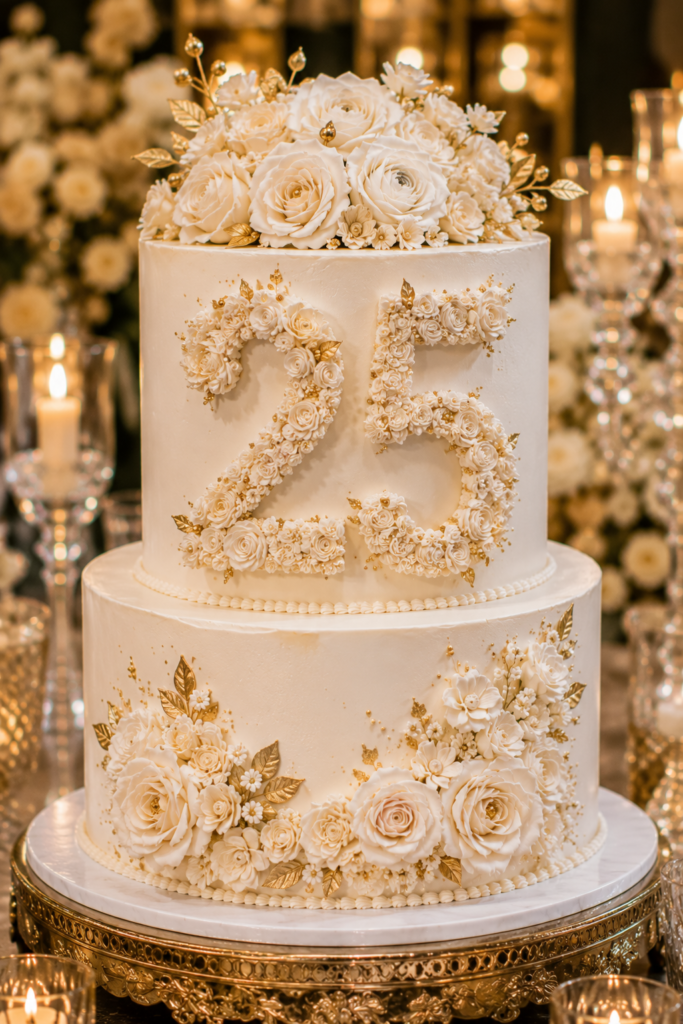
3. Gold-rimmed tiers with a monogram A single thin gold leaf or gold luster dust border along the base of each tier, paired with the couple’s monogram piped or painted on the front, keeps things elegant without covering the whole cake in metallic finish. This works especially well for milestone years like the 25th or 50th.
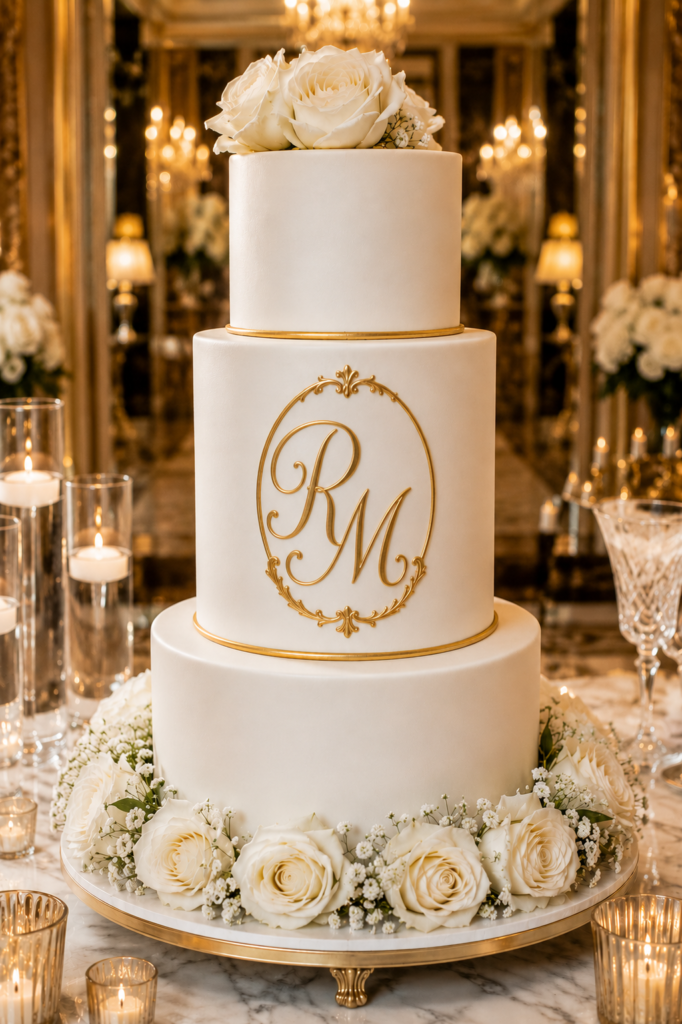
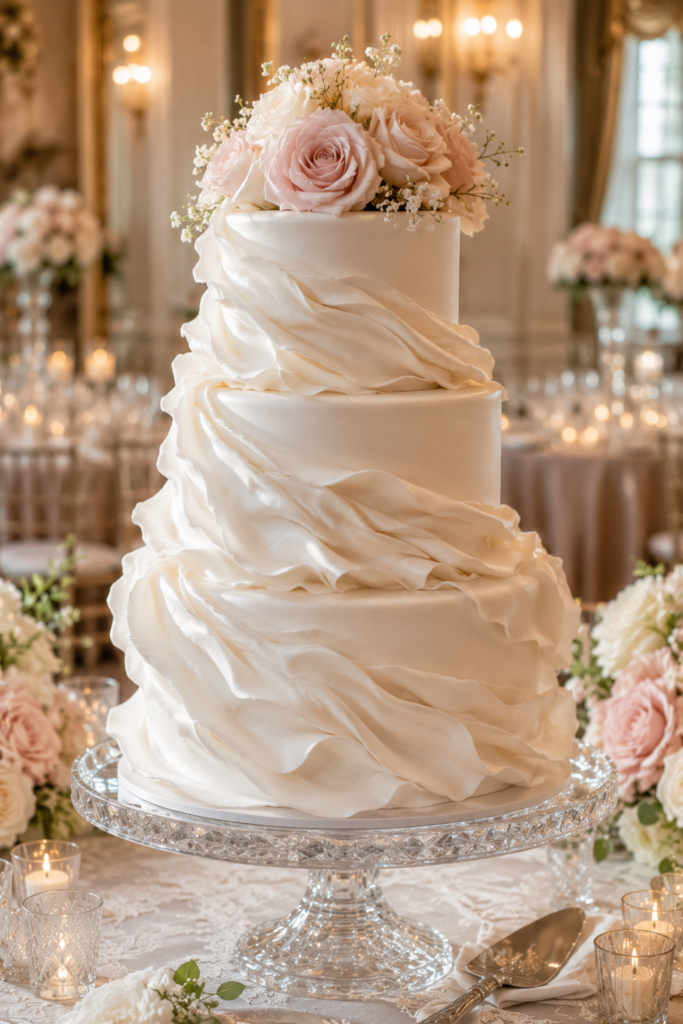
4. Ruffled fondant “fabric” texture Layered fondant ruffles, built from the bottom up like a skirt, give the cake serious movement and a soft, almost textile quality. It’s more forgiving than it looks, since imperfect ruffles just read as organic rather than sloppy.
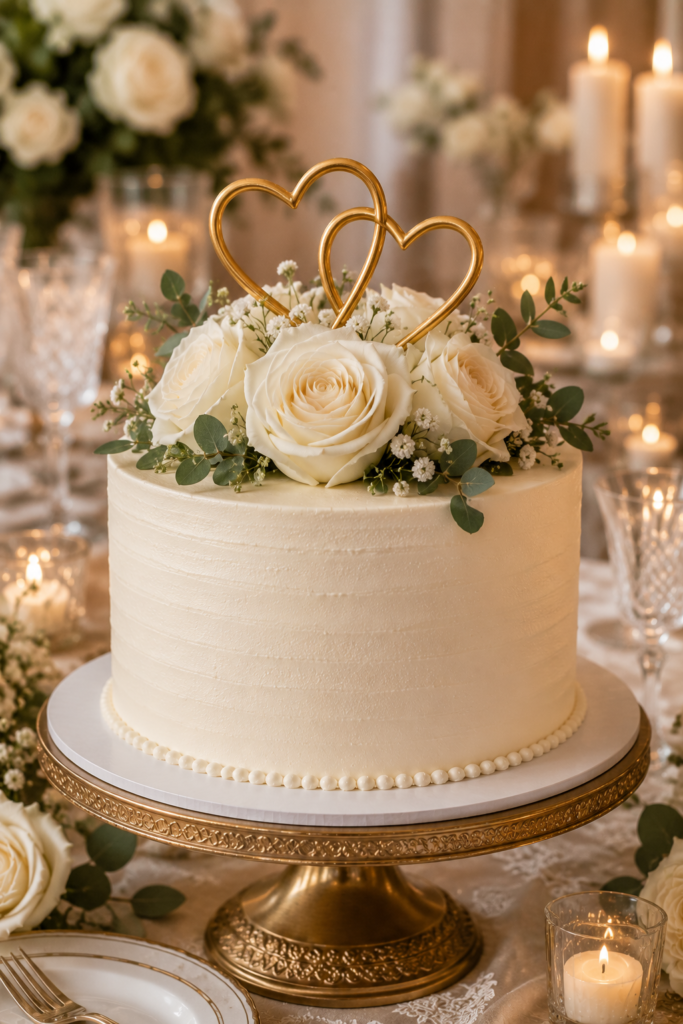
5. Two hearts intertwined as the cake topper Whether it’s carved from wood, made from wire and flowers, or piped in royal icing, a two-hearts motif on top is a simple visual shorthand for the whole occasion. Keep the rest of the cake plain so the topper has room to be the focal point.
Modern and Minimalist Designs
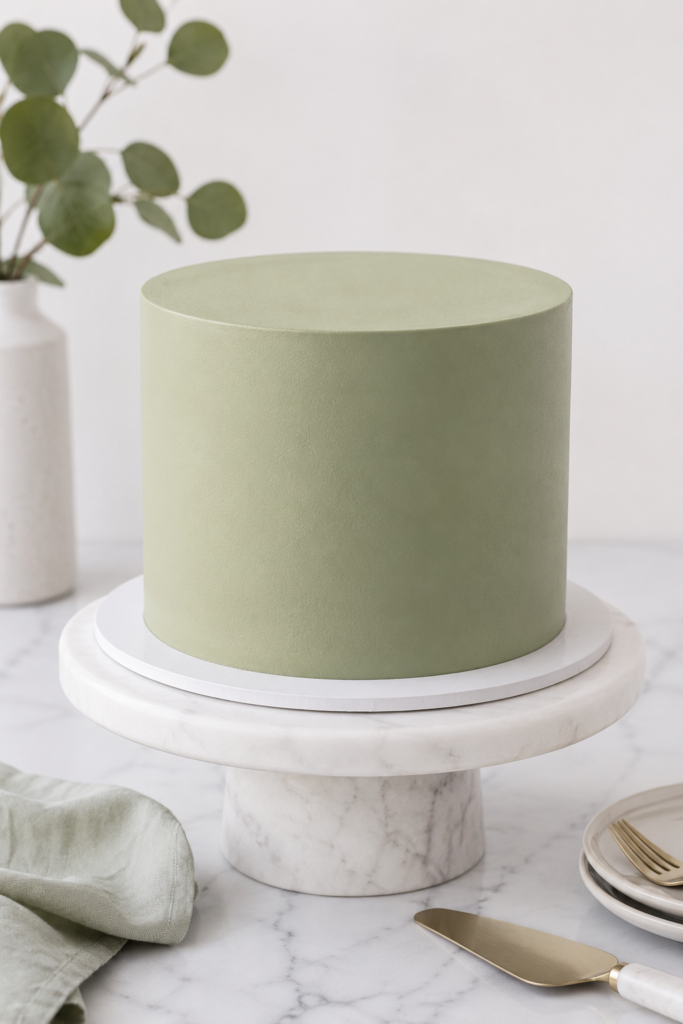
6. Single-tone matte buttercream One of the most requested cakes I make now isn’t ornate at all. It’s a single perfectly smooth tier in a matte, muted color — sage, terracotta, dusty blue — with zero additional decoration. The skill is entirely in the smoothness of the finish, which is honestly harder to nail than piped flowers.
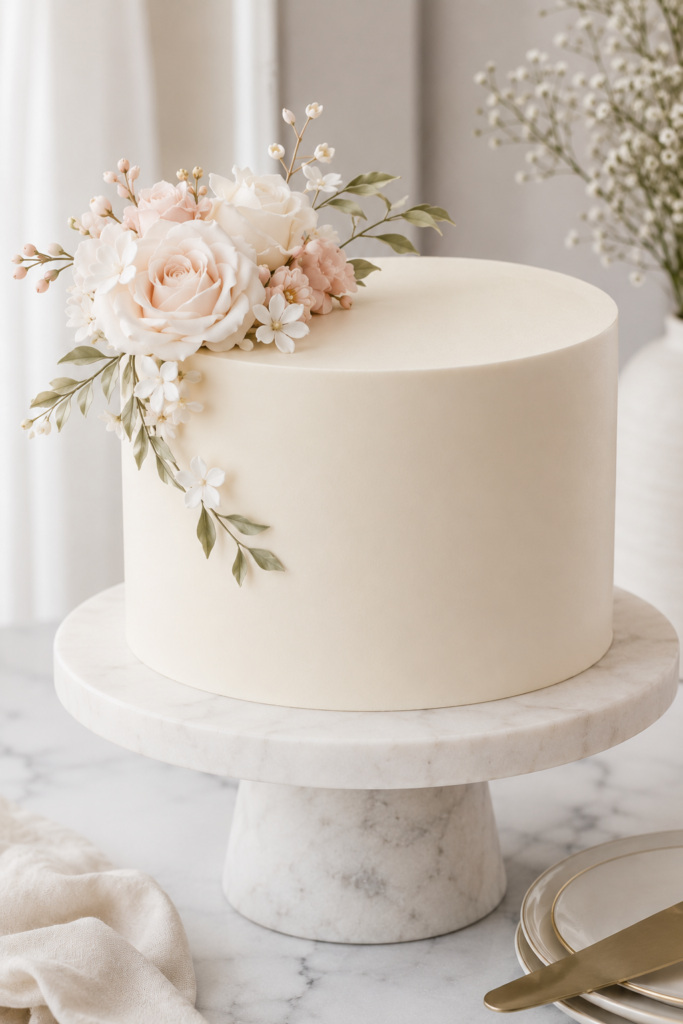
7. Negative space design Decorate only a third or half of the cake and leave the rest bare or lightly textured. A cluster of sugar flowers in one corner with the remaining surface left clean feels deliberate and modern rather than unfinished.
8. Geometric line work Thin gold or dark chocolate lines piped in angular, asymmetric patterns across a pale base give a graphic, architectural feel. This suits couples who describe their style as “clean” or “modern” rather than “romantic.”
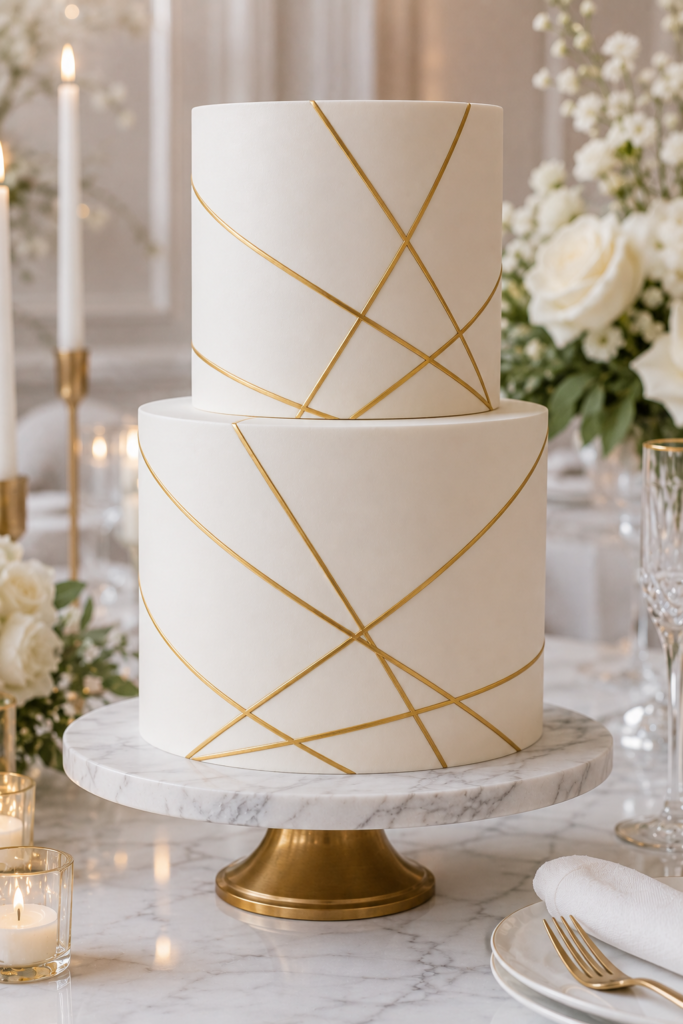
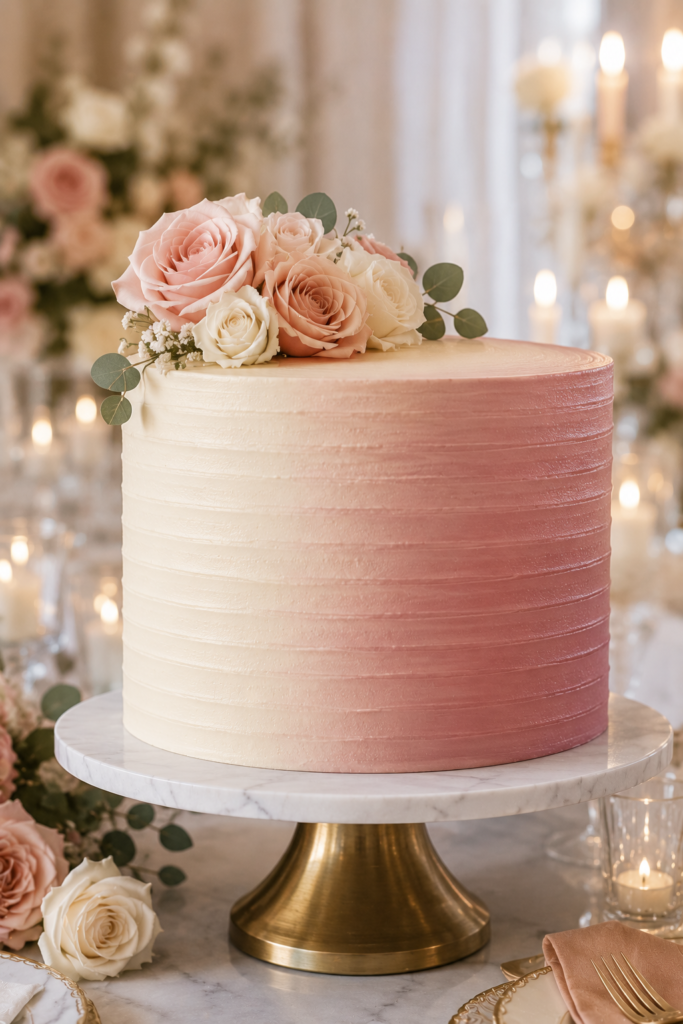
9. Ombré without the gradient cliché Instead of the typical bottom-to-top color fade, try a side-to-side ombré, or fade from matte to glossy rather than light to dark. It reads as more current than the rainbow ombré cakes from a decade ago.
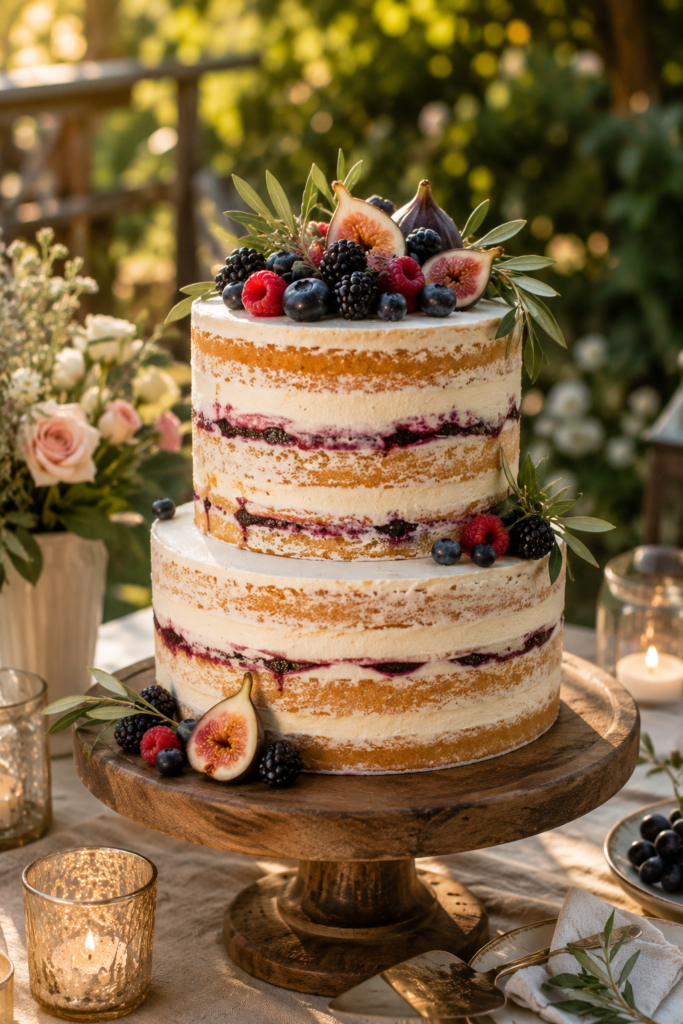
10. Exposed “naked” cake with minimal frosting A lightly frosted cake where the layers and filling peek through between thin frosting bands still works beautifully for anniversaries, especially outdoor or garden celebrations. Add a small cluster of fresh fruit or flowers on top and skip everything else.
Rustic and Garden-Style Cakes
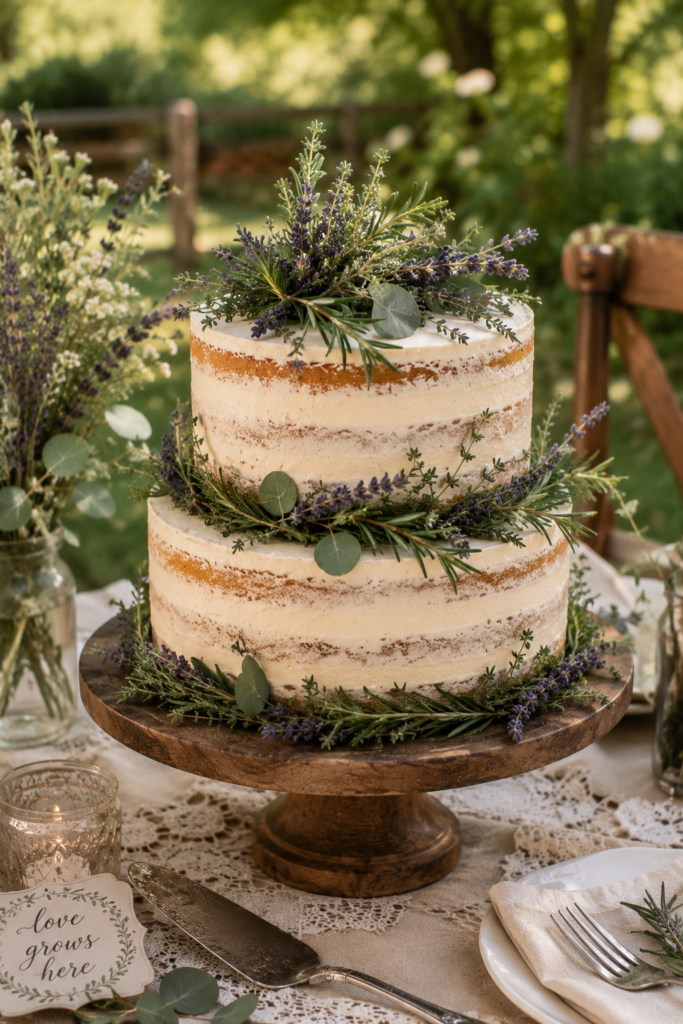
11. Semi-naked cake with fresh herbs Rosemary sprigs, lavender, and thyme tucked into a semi-naked buttercream finish give an earthy, garden-party feel that photographs beautifully in natural light. This pairs well with outdoor or backyard anniversary parties.
12. Textured “bark” finish Using a palette knife to create rough, uneven strokes in buttercream mimics tree bark or plaster texture. It’s forgiving for beginners because imperfections are the point, and it pairs naturally with wildflower toppers.
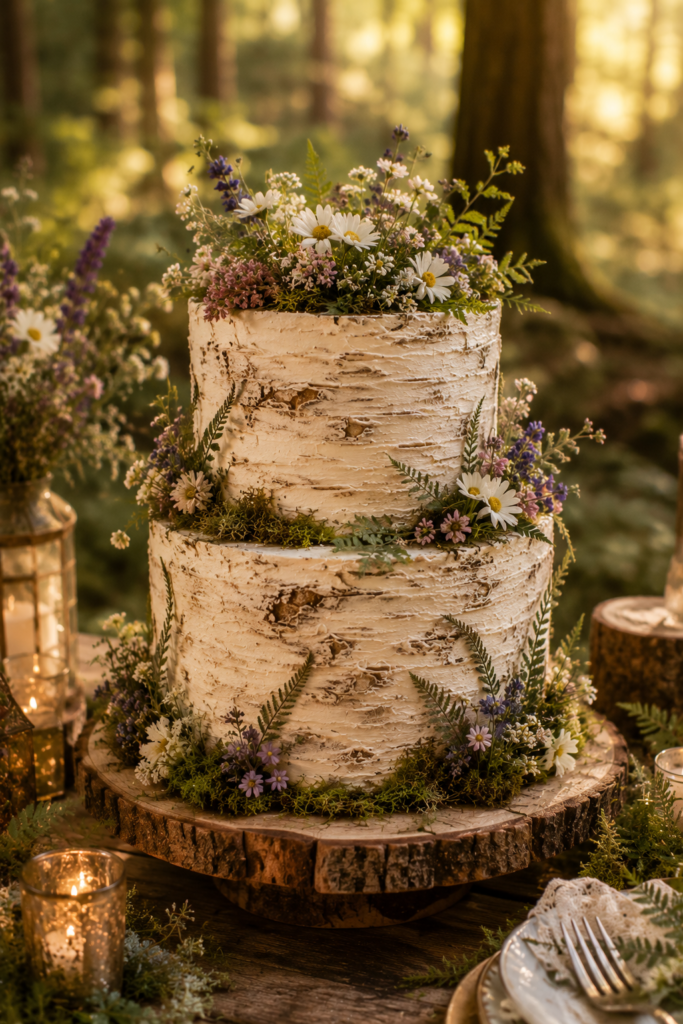
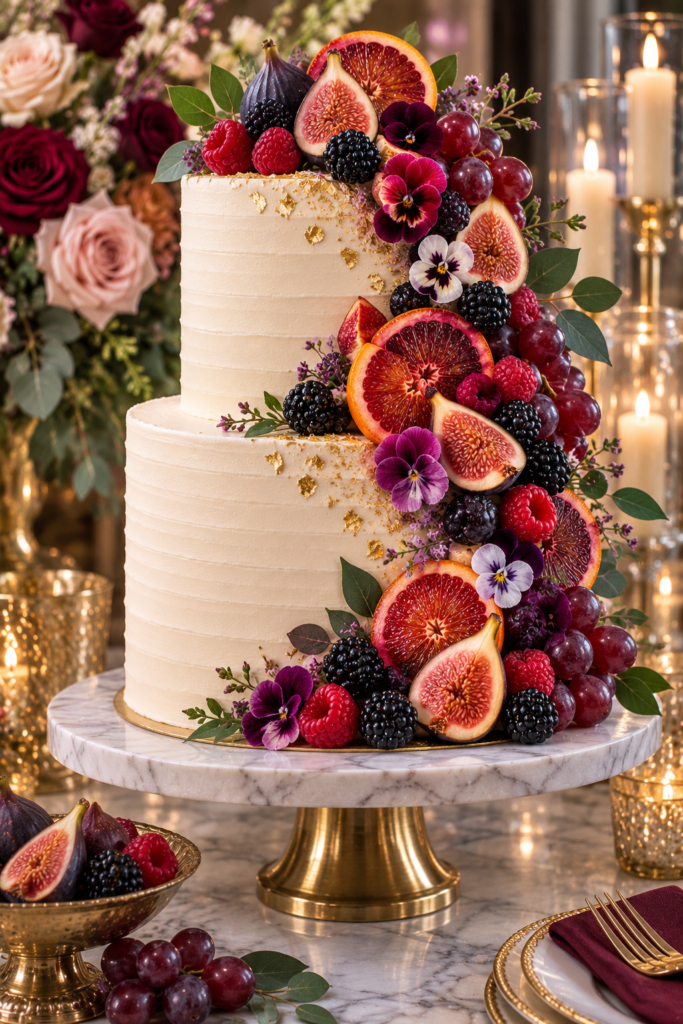
13. Fruit-topped tiers Figs, blackberries, and citrus slices arranged along the top and cascading down one side give a lush, abundant look without requiring advanced piping skills. Brush the fruit lightly with simple syrup or an apricot glaze so it stays glossy through the event.
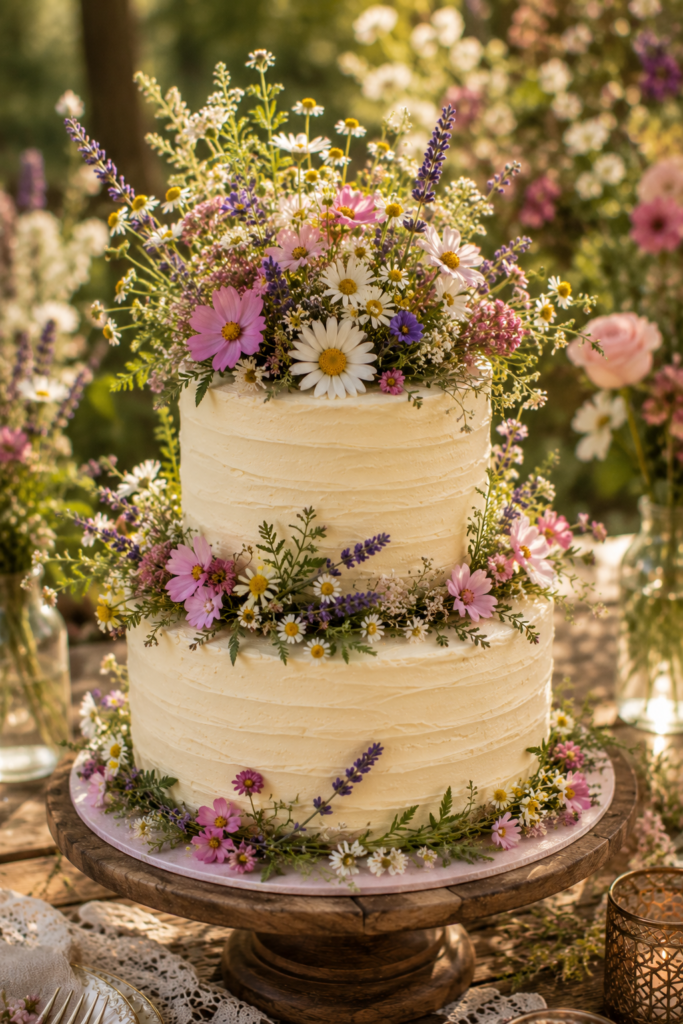
14. Wildflower crown Rather than a single cascading spray, a full “crown” of mixed wildflowers around the top tier gives a looser, more whimsical feel than formal florals. Mix heights and textures — some tall stems, some low clusters — for a genuinely wild look rather than an arranged one.
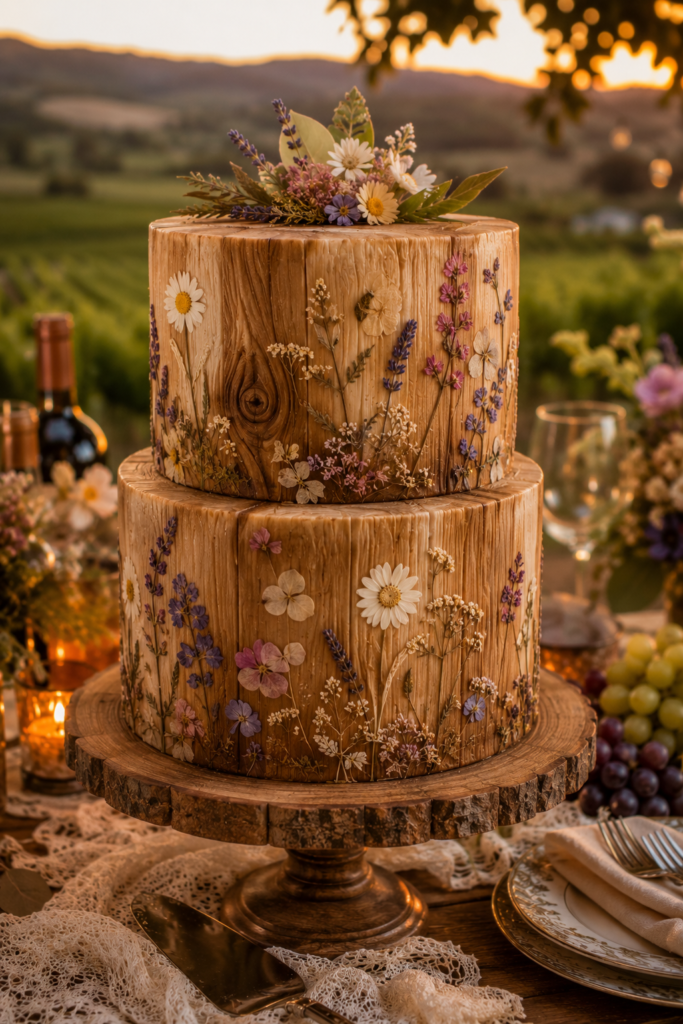
15. Wood-grain fondant with botanical accents Painted or textured fondant that mimics a wood-grain finish, topped with pressed botanicals or dried flowers, suits couples celebrating in a barn, vineyard, or outdoor venue.
Metallic and Statement Cakes
16. Full metallic tier Painting an entire tier in edible gold, copper, or rose gold luster dust creates serious drama, especially for milestone anniversaries like the 25th (traditionally silver) or 50th (traditionally gold). Airbrushing gives the smoothest, most even coverage; hand-painting gives more texture and depth.
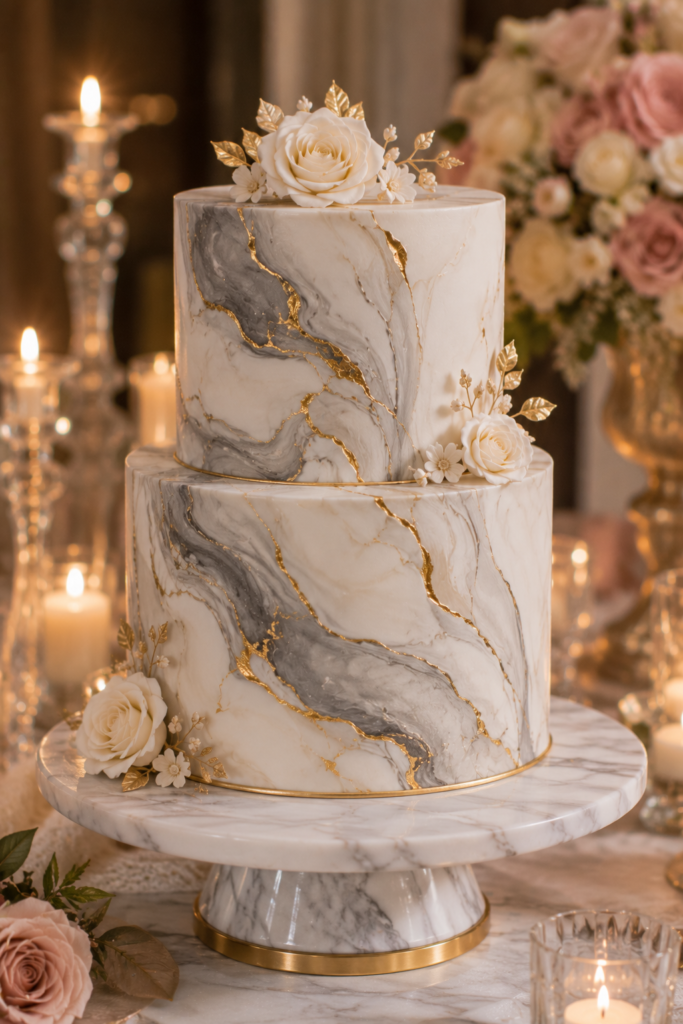
17. Marbled fondant with metallic veining Marbling two or three fondant colors together, then adding thin metallic veining on top, gives a stone or agate look that’s become a popular alternative to florals for couples who want something bold but not sweet.
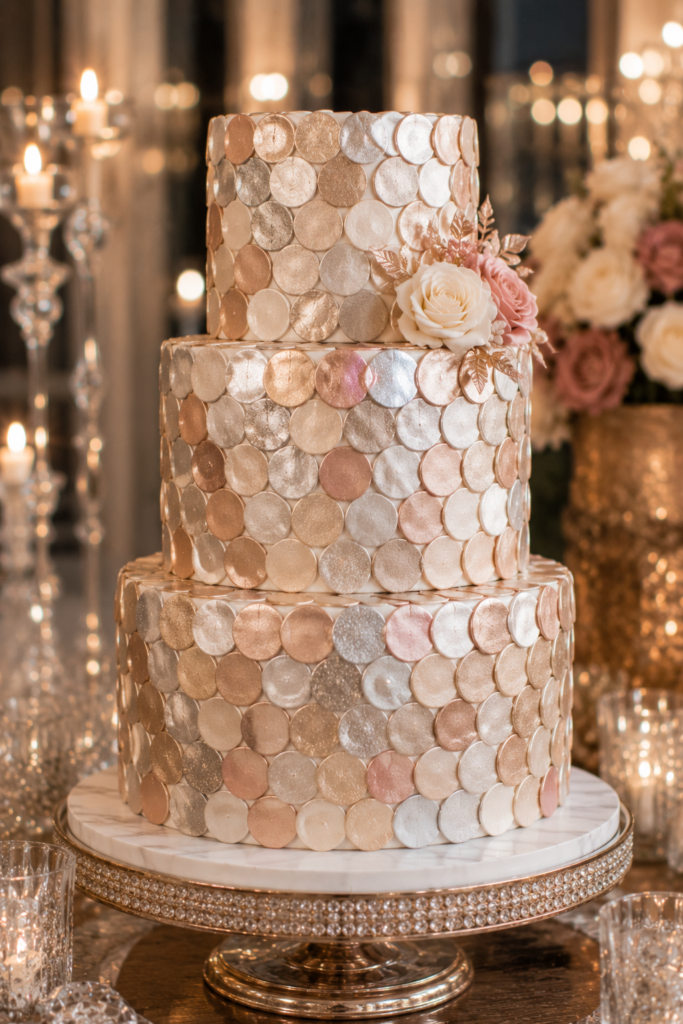
18. Sequin-effect fondant Overlapping small circles of fondant in varying metallic tones create a scaled, almost sequined texture. It takes time to apply but doesn’t require advanced piping skill, which makes it a good option for home bakers who want a showstopper without years of practice.
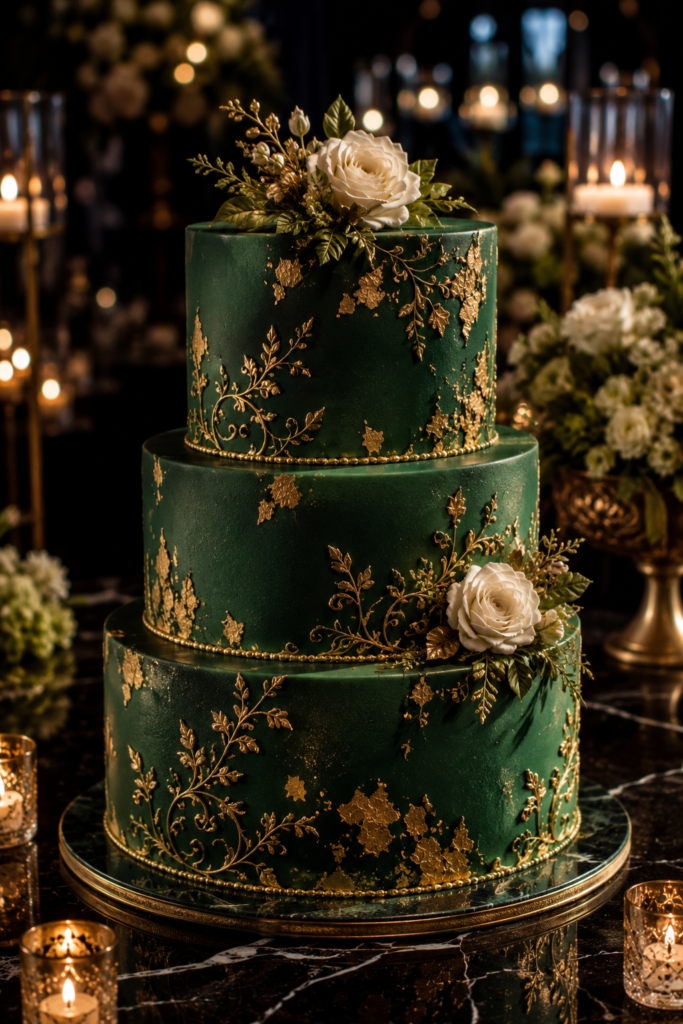
19. Deep jewel-tone tiers with gold accents Emerald, sapphire, or burgundy buttercream paired with gold leaf or gold piping suits evening celebrations and formal vow renewals. Keep the palette to two colors maximum so it reads as intentional rather than busy.
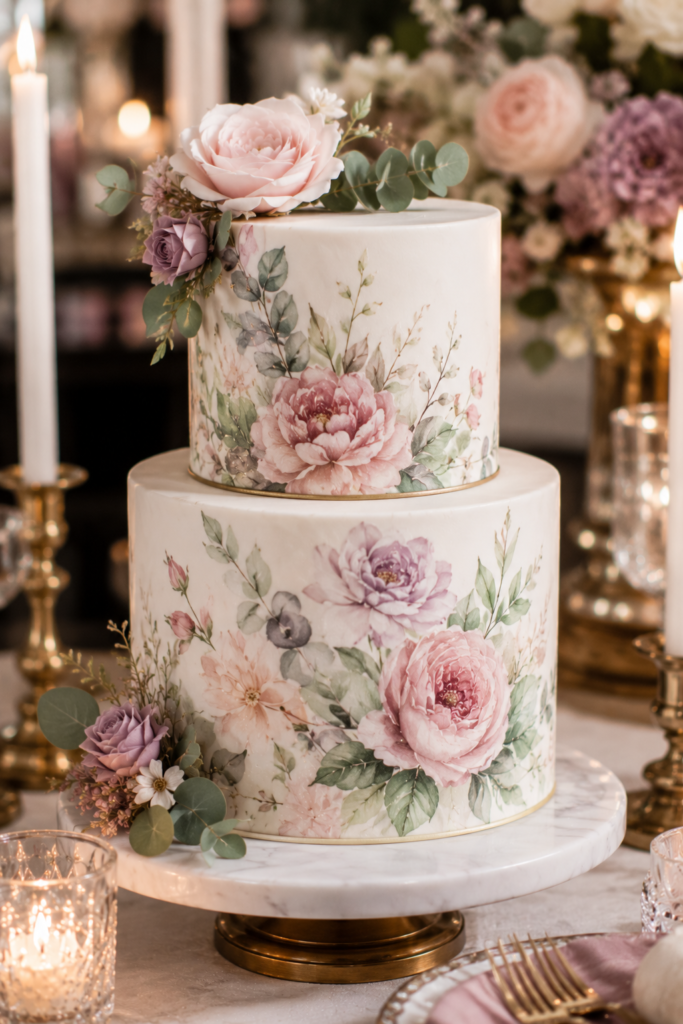
20. Hand-painted watercolor florals Using diluted gel food coloring and a fine brush directly on fondant, watercolor-style florals give an artistic, one-of-a-kind look. It’s genuinely one of the more difficult techniques on this list, so practice on a spare fondant sheet before committing to the real cake.
Personal and Sentimental Touches
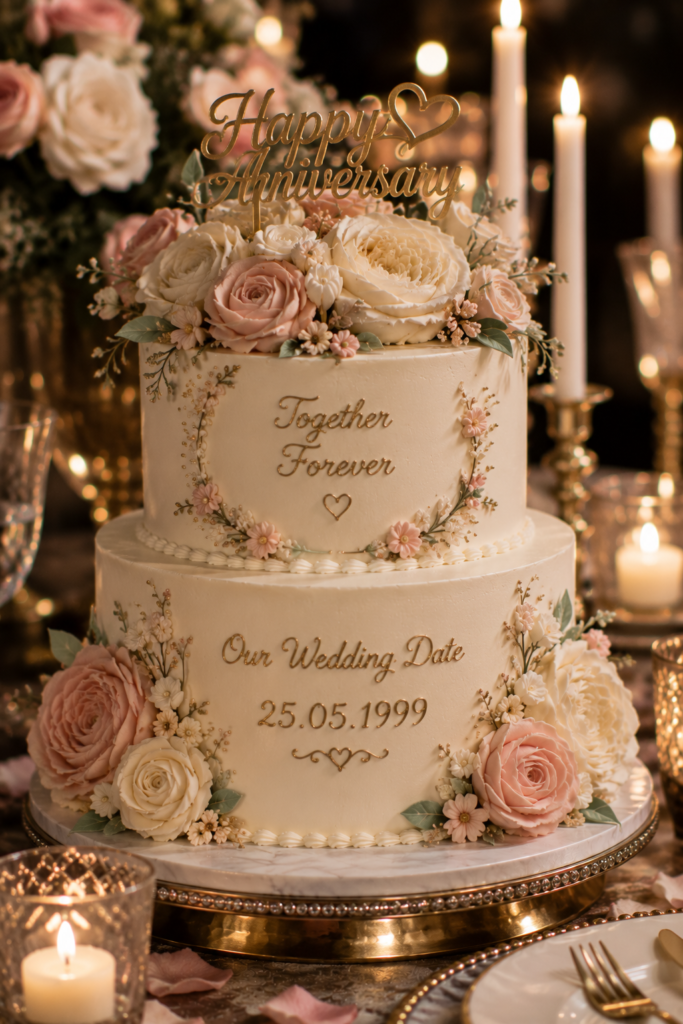
21. The couple’s wedding date or vows piped in icing A short phrase from actual vows, or simply the wedding date, piped in a clean script across the front tier turns a decorative cake into a keepsake. Keep the wording short — under ten words reads as elegant, more than that starts to look cluttered.
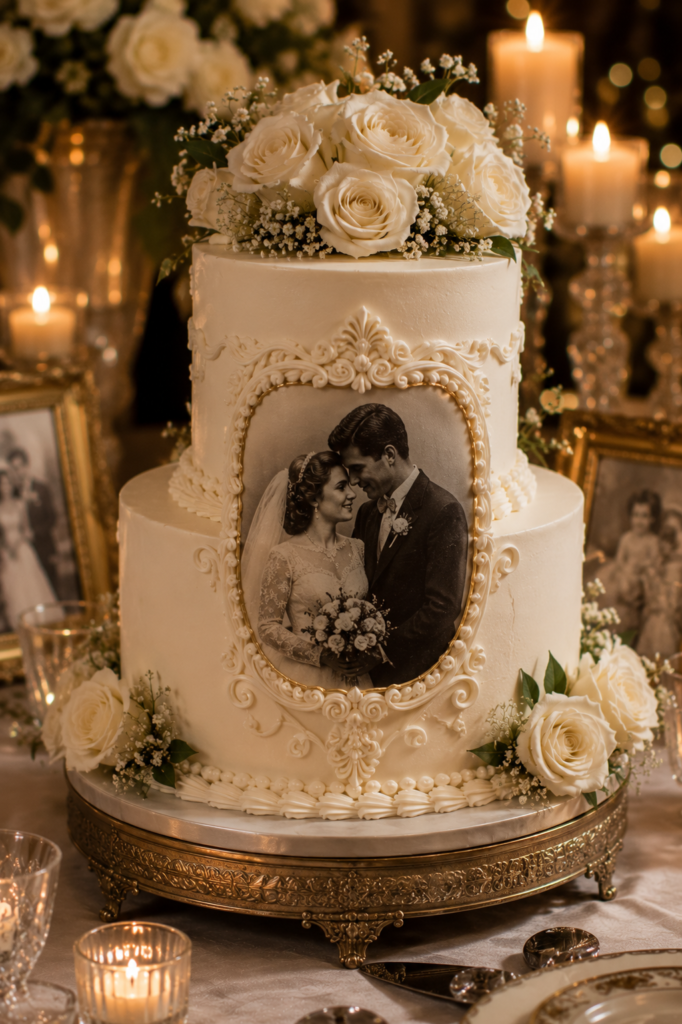
22. Photo-topped cake An edible image print of the couple’s wedding photo, framed in a simple piped border, is one of the most requested designs I get for milestone anniversaries. It’s sentimental in a way no amount of sugar flowers can replicate, and it’s genuinely easy to execute if you order the edible print in advance.
23. Cake that echoes the original wedding cake For milestone anniversaries especially, recreating the shape, flavor, or decoration style of the couple’s original wedding cake — even in miniature — is a detail that consistently gets an emotional reaction. Ask for a photo of the original cake before you start designing.
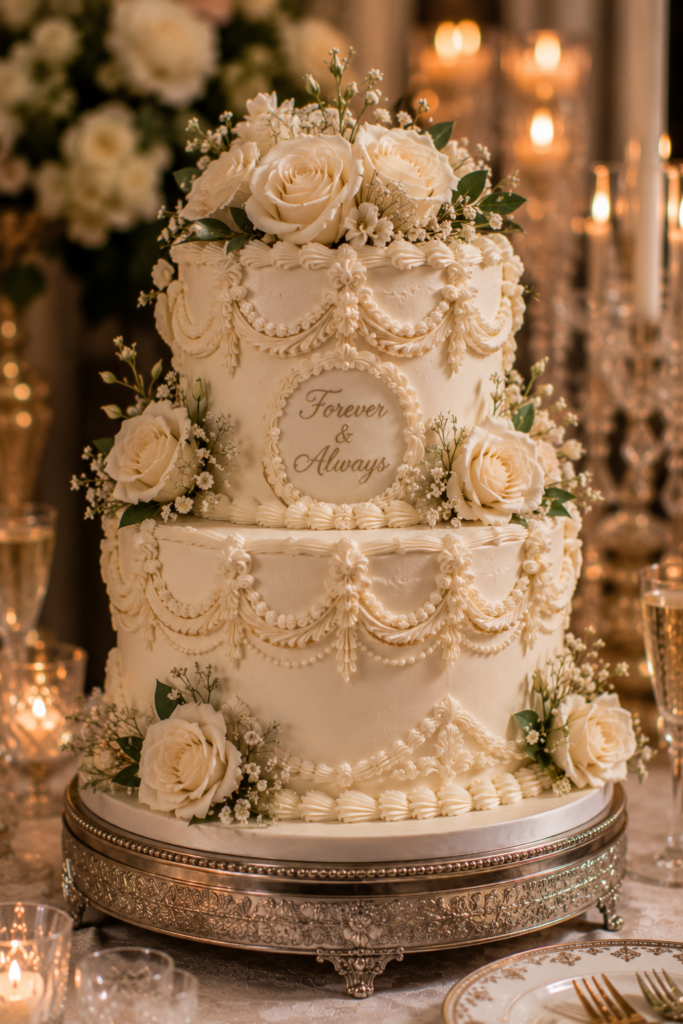
24. Anniversary number as a design element Rather than a small topper, build the anniversary number into the cake itself: a number-shaped cake, a number carved into fondant, or a number formed from piped flowers. This works particularly well for milestone years and gives the cake a clear focal point without needing extra decoration.
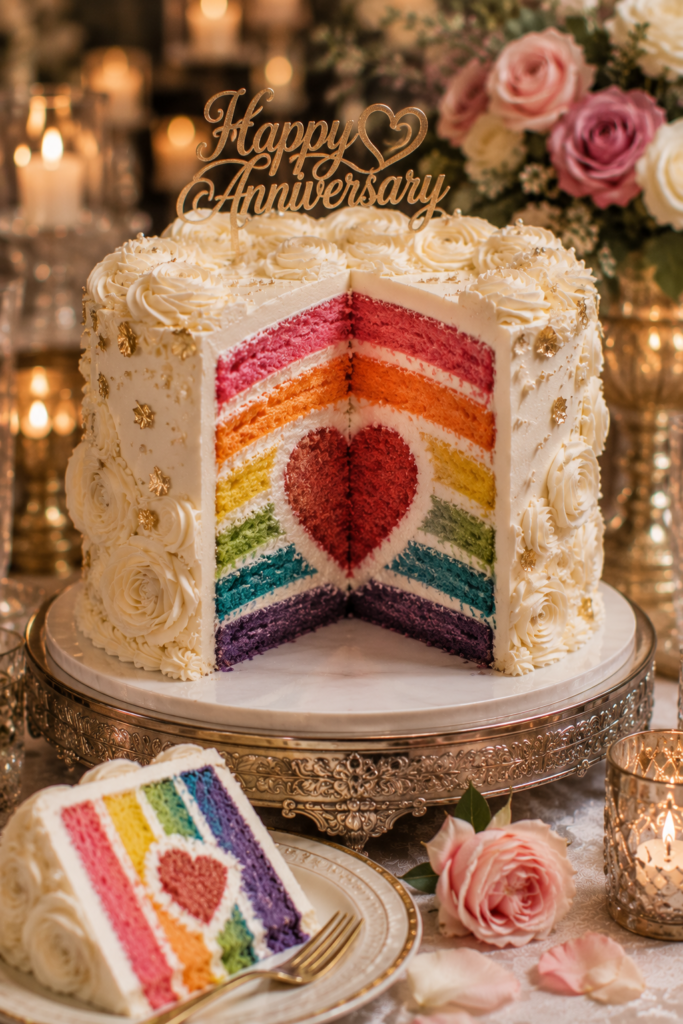
25. A hidden surprise inside A colored or flavored surprise-inside layer, a small love note baked into a sealed cavity, or a pull-apart cake that reveals a message when cut adds a moment of genuine surprise to the cutting itself. This is a favorite for couples who want the cake to do more than just look good — they want it to be part of the experience.
Quick Comparison: Matching Style to Occasion
| Style | Best For | Skill Level | Typical Prep Time |
|---|---|---|---|
| Classic floral cascade | Traditional celebrations, vow renewals | Intermediate | 3–5 hours |
| Minimalist matte tier | Modern, small gatherings | Beginner–Intermediate | 1–2 hours |
| Rustic semi-naked | Outdoor, garden parties | Beginner | 1–2 hours |
| Full metallic finish | Milestone anniversaries, formal events | Advanced | 4–6 hours |
| Photo-topped | Any occasion, especially milestones | Beginner | 30–60 minutes plus print lead time |
These time estimates assume a two-to-three tier cake and don’t include baking or cooling time, which typically adds another half day when you count chilling between steps.
A Few Things I Wish Someone Had Told Me Earlier
Buttercream crusts and smooths best in a cool room, not a warm kitchen — if your kitchen runs hot, chill the cake between coats rather than fighting the heat with more frosting. Fresh flowers should always go in after the cake is fully assembled and chilled, not before, or you risk wilting and color bleed onto the frosting. And if you’re stacking more than two tiers, use dowels or a cake board between each one regardless of how sturdy the frosting looks — gravity does not care how good your piping is.
If this is your first time decorating a tiered cake, practice the technique you’re most nervous about on a single dummy tier a few days ahead, rather than learning it live on the real cake. It’s a small thing, but it’s the difference between a calm decorating session and a stressful one.
Frequently Asked Questions
How far in advance should I decorate an anniversary cake? Buttercream cakes are best decorated one to two days ahead and stored refrigerated, then brought to room temperature a couple of hours before serving. Fondant cakes can be decorated a few days ahead since fondant holds its shape well, but avoid refrigerating fully fondant-covered cakes if possible, since condensation can affect the finish.
What’s the traditional color for a 25th or 50th anniversary cake? Silver is the traditional color for a 25th anniversary, and gold for the 50th. Many couples now treat these as accent colors rather than the whole palette, pairing silver or gold with a soft neutral base rather than covering the entire cake.
Can I use fresh flowers directly in the cake? Only if they’re confirmed food-safe and free of pesticides or chemical treatments. Otherwise, insert stems into floral picks or small waterproof tubes so no part of the flower or stem touches the cake directly.
What’s an easy way to make a cake look more expensive without much extra skill? A very smooth, well-chilled buttercream base does more for the overall look than almost any additional decoration. Most of what reads as “expensive” is actually clean technique on a simple design, not complexity.
How do I choose a design if the couple has very different tastes? Look for one shared element — a color, a flower, a texture — rather than trying to blend two full aesthetics. A minimalist base with one romantic detail, like a small floral cluster, usually satisfies both preferences better than a cake trying to do everything at once.
Should the cake match the wedding colors or the couple’s current style? Either works, but for milestone anniversaries, echoing the original wedding colors tends to land better emotionally, while smaller anniversaries often look more current with the couple’s present-day taste.
Final Thought
The cakes people remember aren’t usually the most technically difficult ones. They’re the ones that felt like they were made for that specific couple — a color they actually love, a detail from their real wedding, a flavor that means something. Pick the technique that fits the story you’re telling, not just the one that looks most impressive in photos. What’s one detail from your own anniversary, or the couple’s, that you’d want the cake to reflect?